



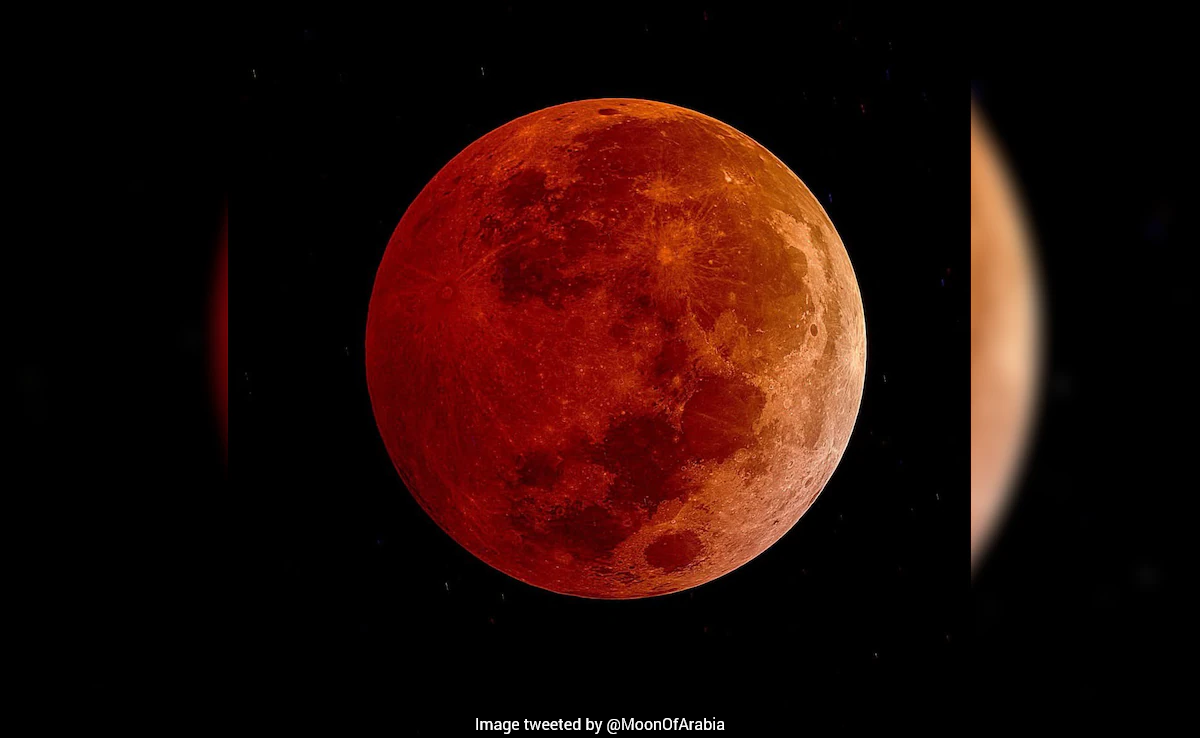
- The total lunar eclipse ended globally around 5:45 pm with the Moon in partial exit phase
- Asia observers in Japan, Australia, and New Zealand saw the eclipse in the evening sky
- Most of North and South America missed the eclipse as the Moon had already set or event ended
Lunar Eclipse 2026: The total lunar eclipse is currently in its final stages for skygazers in Asia, while it has already concluded for much of the Americas. As of approximately 5:45 pm, the "Blood Moon" totality has just ended globally, and the Moon is now in its partial exit phase from Earth's shadow. Countries like Japan, Australia, and New Zealand are seeing the eclipse in their evening sky. For most of North and South America, the Moon has already set or the eclipse has concluded.
During a total lunar eclipse, the Moon passes into the Earth's umbral shadow, giving it a darker appearance. In contrast, a partial lunar eclipse occurs when only a portion of the Moon moves into the Earth's shadow. You can view this event with the naked eye by looking toward the eastern horizon as the Moon rises. No special filters are required.
On X, people from different parts of the world shared mesmersing pictures of the eclipse, turning the night sky into a global event for astronomy enthusiasts.
Check some pictures here:
Lunar Eclipse (Blood Moon) pic.twitter.com/6qTSH6WHUv
— ʿĀmir|عامر (@MoonOfArabia) March 3, 2026
Blood Moon/Lunar Eclipse 3-2026. It literally looks like a suspended beach ball. That's the most fascinating part about it. pic.twitter.com/eG0E2Hsmcz
— Resq🇺🇸 (@Onpurposefarm) March 3, 2026
This morning's total lunar eclipse seen near the midpoint of the event from Tucson, Arizona. #LunarEclipse pic.twitter.com/VTD8B4y5Wu
— Dr. John Barentine FRAS (@JohnBarentine) March 3, 2026
BLOOD MOON (Total Lunar Eclipse) - March 3, 2026
— sxher (@sxherwllm) March 3, 2026
shot from iPhone 17 Promax pic.twitter.com/m7kqjLN8iF
blood moon lunar eclipse from our rooftop
— angel ツ (@JEONGlNAMO) March 3, 2026
shot on iphone 13 pic.twitter.com/ierJ5w7Wvx
Straight out of camera photos of the lunar eclipse I was able to snap before it got clouded. pic.twitter.com/brucbLdxxe
— Alfredo Juárez (@alfrekjv) March 3, 2026
In the Bay Area, the race against the fog rolling in and blocking the view to the blood moon, lunar eclipse was on. Luckily, time was on our side as Karl the Fog was slow to roll in. Data: ISO 1600, f 7.1, 1/8 of a second exposure, Temperature 50° as seen from Walnut Creek, Ca. pic.twitter.com/fiWyIiNsbR
— Brian (@brianyuenABC7) March 3, 2026
Good morning Central Florida.
— Michael Cain (@mdcainjr) March 3, 2026
Early birds were treated with a Lunar Eclipse setting into the horizon.
If you didn't get a chance to see it, well this is what it looked like. The next lunar eclipse we will be able to see won't be until June 2029.#LunarEclipse… pic.twitter.com/ywWJybMclD
Makha Bucha total Lunar eclipse coming out of totality, around 7:12pm in Bangkok pic.twitter.com/NPrHuiPega
— .david (@BayesDays) March 3, 2026
March 3, 2026
— Poison 🕷️ (@xopoisonbaby) March 3, 2026
Lunar eclipse pic.twitter.com/Aghirj8RM3
#EclipseLunar 2026
— Miguel Hernández 📷 (@MitchH1917) March 3, 2026
Capturada en el momento de totalidad máxima, cuando la sombra de la Tierra toma el dominio de la cara de la Luna.
MAR | 3 | MAR | 2026 - 05:34 (UTC-6) 🌕 pic.twitter.com/KFkrw0DgcE
Visibility Conditions In India
In India, only the final phase of the eclipse around moonrise at sunset will be visible. According to the India Meteorological Department, people in most parts of the country will be able to see the final stages of the eclipse at moonrise.
Because the Moon rises earlier in the east, Northeast India and the Andaman and Nicobar Islands will witness the most dramatic views, including the end of the "Blood Moon" totality.
- Total Eclipse Phase: 4:34 PM - 5:33 PM (Visible only in parts of Northeast India).
- Maximum Visibility Window: 6:33 PM - 6:40 PM (Best time for most cities).
- Partial Phase Ends: 6:47 PM or 6:48 PM.
Unlike solar eclipses, a lunar eclipse is completely safe to watch with the naked eye. Those who want to witness this spectacular event are advised to choose a location with an unobstructed view of the eastern horizon. Also, the view can be enhanced with binoculars or a small telescope.
- Delhi and Mumbai: Moonrise between 6:22 pm and 6:42 pm. Viewers will only catch the final 5–25 minutes of the partial phase.
- Bengaluru and Chennai: Moonrise at 6:20 pm. Visible for approximately 15–20 minutes.
Track Latest News Live on NDTV.com and get news updates from India and around the world

