





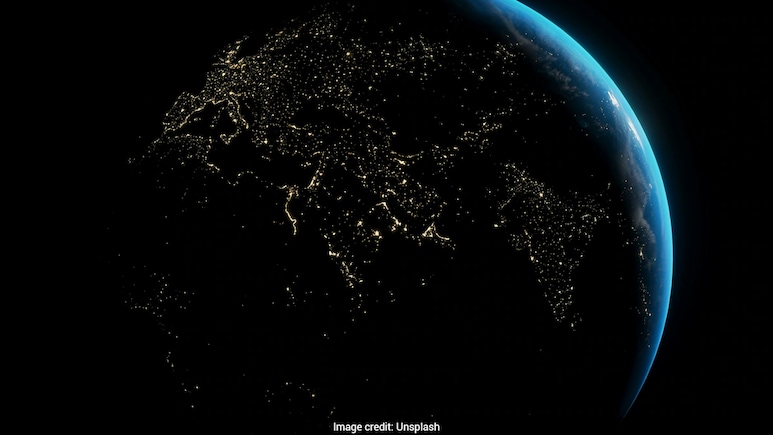
Climate change is affecting Earth in many ways, and new research suggests it is even influencing how fast the planet rotates. Scientists have found that melting glaciers and ice sheets are gradually slowing Earth's rotation and making days slightly longer, reported Forbes.
According to a study by researchers from the University of Vienna and ETH Zurich, Earth's day is currently lengthening at a rate of about 1.33 milliseconds per century. The change is linked largely to climate-driven sea-level rise caused by melting glaciers and polar ice sheets. As ice melts, water moves from the poles into the oceans, redistributing mass around the planet. This shift causes Earth to rotate more slowly, leading to a gradual increase in the length of a day.
Although the change is extremely small, researchers said it can create challenges for satellite navigation, space missions, and global timekeeping systems, all of which depend on precise information about Earth's rotation.
To understand how Earth's rotation has changed over time, scientists studied fossil remains of benthic foraminifera, single-celled marine microorganisms that lived on the seafloor. Using advanced machine-learning techniques, they reconstructed changes in day length over the past 3.6 million years.
The study, published in the Journal of Geophysical Research: Solid Earth, found that no period during the past 3.6 million years experienced a climate-driven increase in day length as rapid as the one recorded between 2000 and 2020.
Researchers explained that the Moon remains the main long-term factor affecting Earth's rotation. Over time, it gradually slows the planet's spin and makes days longer. However, the study suggests that under some scenarios, climate change could surpass the Moon's influence by the end of this century.
The researchers found that accelerated melting of the Greenland and Antarctic ice sheets, along with mountain glaciers during the 21st century, has increased sea levels and shifted mass away from the poles. This process is causing Earth to bulge slightly at the equator and rotate a little more slowly.
Track Latest News Live on NDTV.com and get news updates from India and around the world

