





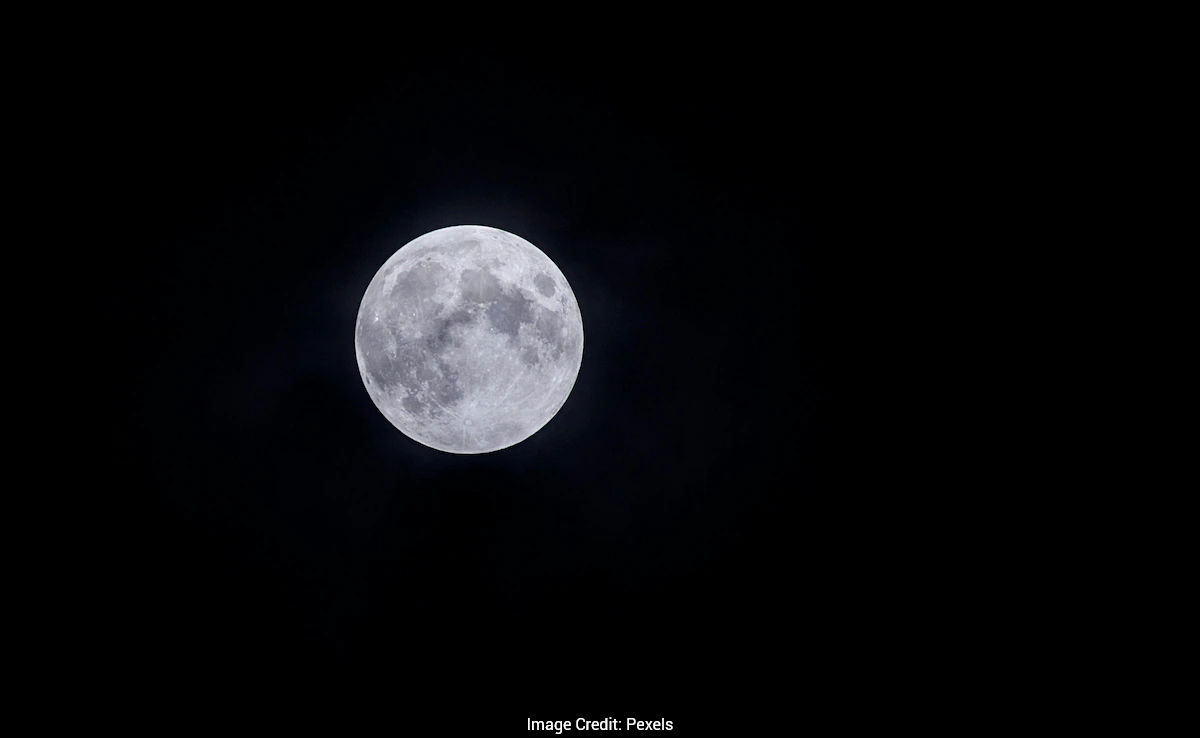
Scientists have long been trying to understand a curious mystery surrounding the Moon. Initial studies of rocks collected from space missions revealed that the Moon once possessed a very powerful magnetic field, even stronger than Earth's. This was surprising because the Moon's small size made it impossible for such a powerful magnetic field to exist, reported the Guardian.
Rock samples collected during the Apollo missions indicated that the Moon's magnetic field was extremely strong in its early stages. Yet, scientists couldn't understand how such a small celestial body could generate so much power.
Now, new research by Claire Nichols and her team at Oxford University has solved this puzzle. The team studied the titanium content of lunar rocks and found that rocks with higher titanium content were linked to the melting of titanium-rich material deep within the Moon, creating a stronger magnetic field.
The researchers also discovered that the Apollo missions may have accidentally collected rocks with higher titanium content, as such rocks are more common in the flat areas where astronauts landed.
This study, published in Nature Geoscience, reveals that this bias in sample selection has led to the misconception that the Moon always had a very strong magnetic field.
According to Nichols and his team, such strong magnetic field events were rare and lasted only a few thousand years. For most of the Moon's early history, its magnetic field was likely very weak.
Scientists believe the upcoming Artemis missions will help confirm this theory.
Track Latest News Live on NDTV.com and get news updates from India and around the world

