




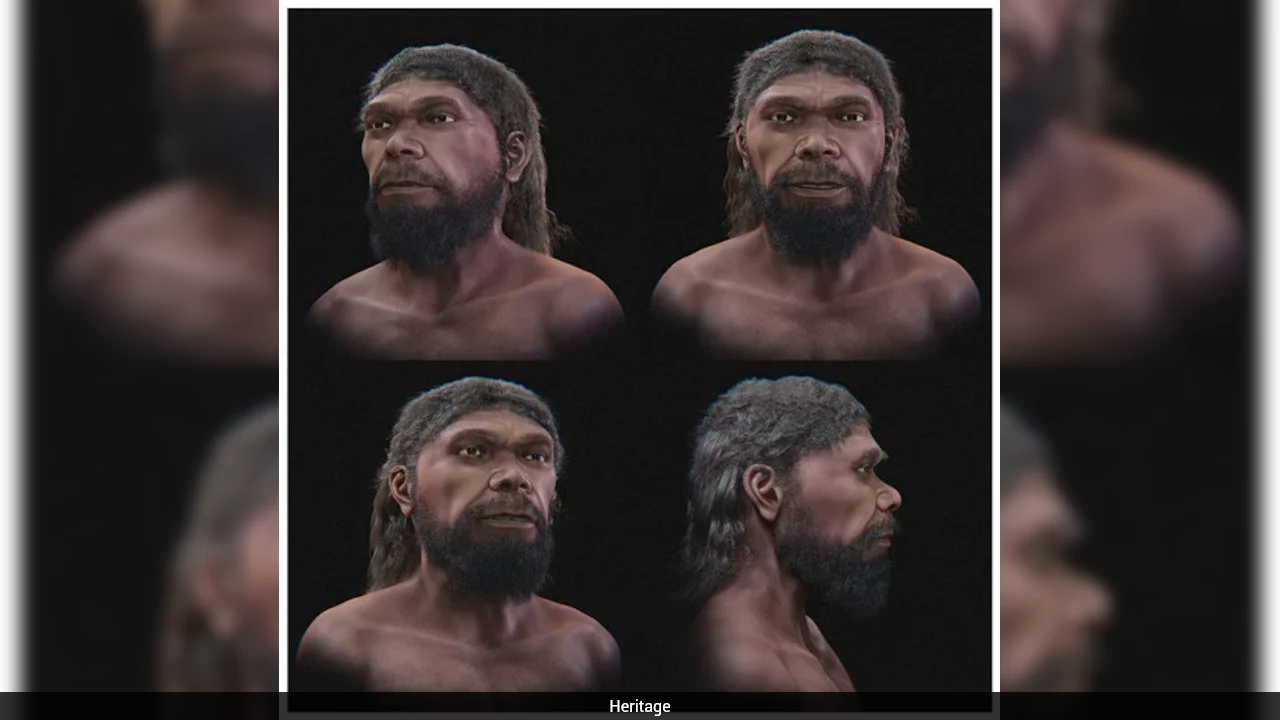
Scientists have digitally reconstructed the face of one of the earliest known members of our species, revealing that humans living around 315,000 years ago looked surprisingly similar to people today. The reconstruction is based on ancient human fossils discovered at Jebel Irhoud in Morocco. The results offer a fascinating glimpse into the appearance of early Homo sapiens and how human facial features have changed over thousands of years.
Brazilian 3D designer Cicero Moraes and his team used advanced computer technology to recreate the face from fossilised skull remains. The reconstructed face shows strong facial features, a prominent jaw and an appearance that would not seem entirely unusual in modern society.
-

-
 "US Protecting Its Interest": S Jaishankar On Trump's Oil Deal With Russia
-
 S Jaishankar's 'Indira' Reminder After Rahul Gandhi's Marco Rubio Jibe
-
 Best Of NDTV World Summit 2026 | Defining Conversations, Big Ideas
-
 PM Modi Says 'Parasite' Congress Hurts 'Honest' Dissent Movements
-
 "Some Dreaming Of Disorder": PM Modi's Dig At Rahul Gandhi
-
 "World That Relied On India's Brainpower Now Trusts Its Mindpower": PM Modi
-
 Non-Oil Trade With India Went Up 50% In 3 Years: UAE Minister At NDTV Summit
-
 "Some Dreaming Of Disorder": PM's "Failed Product Of Congress" Jibe At Rahul Gandhi
-
 'Viksit Bharat Not Just For Us': PM Modi's Top Quotes At NDTV World Summit
-
 Has Indian Cuisine Arrived At The Global Stage? What Vir Sanghvi Believes
The fossils were first discovered in the 1960s during mining activities in Morocco. Initially, scientists believed the remains belonged to an ancient human relative who lived around 40,000 years ago.
However, further investigations changed that understanding. In 2017, researchers identified the fossils as early Homo sapiens and estimated their age at approximately 315,000 years.
For the latest reconstruction, researchers used a digital skull model created from several fossil specimens. They combined this with CT scans of a modern adult and measurements of facial tissue thickness to estimate the ancient person's appearance.
The team also produced different versions of the face, including a realistic image featuring hair, facial hair and skin colour.
However, researchers explained that these details were artistic interpretations because such information cannot be determined directly from ancient bones.
The findings suggest that some recognisable modern human facial features had already developed hundreds of thousands of years ago, even though early humans still possessed certain ancient skull characteristics.
The reconstruction provides valuable insights into human evolution and highlights how modern technology can help scientists better understand our distant ancestors.
The research has been published in the journal Heritage.
Track Latest News Live on NDTV.com and get news updates from India and around the world

