





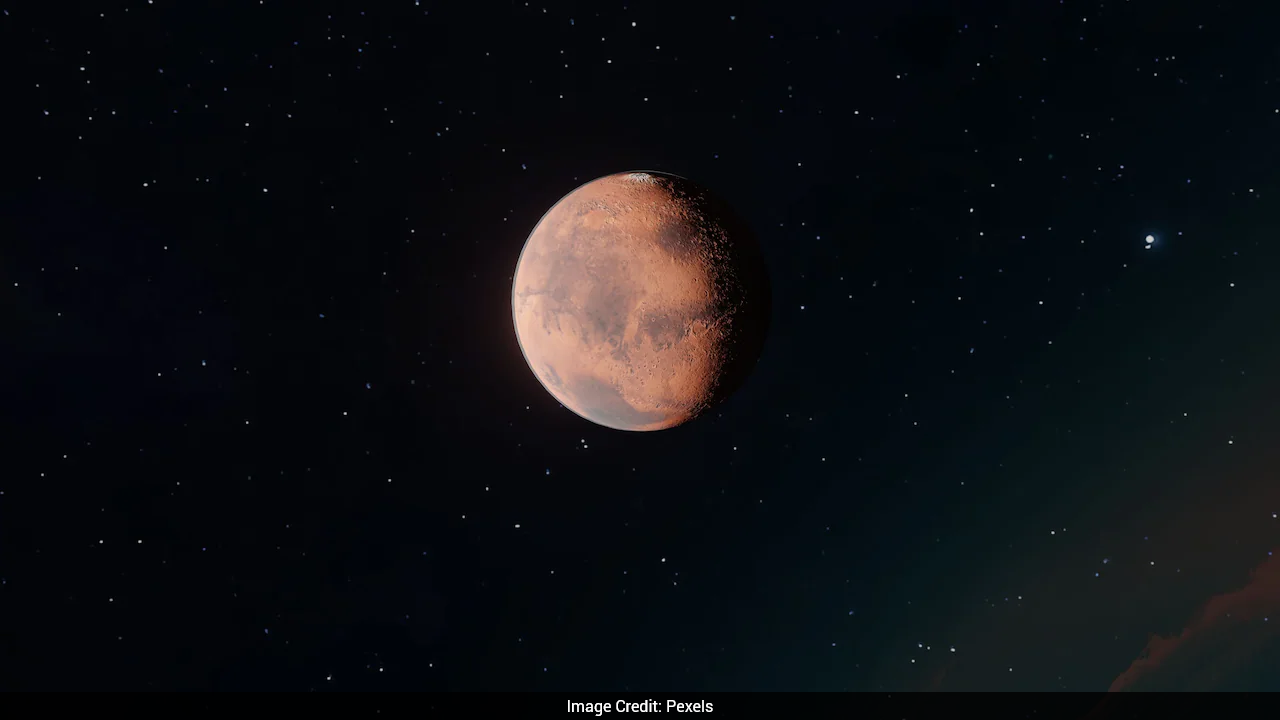
NASA's Perseverance rover has found complex carbon molecules in rocks on Mars, adding to growing interest in signs that the planet may once have supported life. The discovery was made in rocks that scientists have already been studying for possible evidence of ancient microbial life, reported the Guardian.
The Perseverance rover detected organic carbon in mudstones at the Bright Angel outcrop while travelling through Neretva Vallis, an ancient dried-up river that carried water into Jezero crater billions of years ago. The rover made the discovery using its Sherloc instrument.
The form of carbon found is known as macromolecular carbon (MMC). It can come from living organisms, but it can also be produced through geological processes. Because of this, scientists say the discovery is not proof that life once existed on Mars.
Dr Ashley Murphy from the Planetary Science Institute in Arizona said that MMC can be found in different environments and types of rocks. She said it may originate from biological sources such as fossilised organic matter found in microbial mats and coal, but it could also form through reactions between rocks and water or arrive on Mars through meteorites.
The Bright Angel mudstones had already attracted attention in 2024 when the Perseverance rover discovered unusual spots and nodules on their surface that resemble features created by fossilised microbes on Earth. After the scientific findings were published last year, former acting NASA head Sean Duffy said that this very well could be the clearest sign of life that they have ever found on Mars.
In the latest study, Murphy and her team detected the complex carbon by shining Perseverance's Sherloc ultraviolet laser on the rocks and measuring the light reflected back.
Tests on one rock, called the Cheyava Falls mudstone, found macromolecular carbon on its surface. This suggests that the rock was either recently exposed to the Martian environment or that the carbon was able to survive the radiation and chemical oxidation that usually destroy organic material on Mars.
The discovery means that NASA's rovers have now found organic-bearing mudstones more than 2,000 miles apart on Mars. Earlier discoveries were made by the Curiosity rover in Gale crater. The researchers wrote in Science Advances that this indicates the habitability of Mars, and the availability of organics, may have been widespread across the planet billions of years ago.
Professor John Bridges, a planetary scientist at the University of Leicester who was not involved in the study, said the findings provide more tantalising information about the Bright Angel outcrop in Jezero crater. He said they can already see that Jezero was a habitable environment for primitive life, with not only textures suggesting the possibility of life at Bright Angel but also relics of carbon building blocks that would have been present if life had existed in the ancient delta.
Scientists say the Perseverance rover cannot determine whether the complex carbon came from ancient Martian microbes or from non-biological processes. That answer may only come from laboratory tests on Earth. NASA had planned to return Martian rock samples for such studies, but the mission was effectively scrapped in January. A revised mission is now being planned for the 2030s, while China aims to return its own Martian samples in 2031.
Track Latest News Live on NDTV.com and get news updates from India and around the world

