





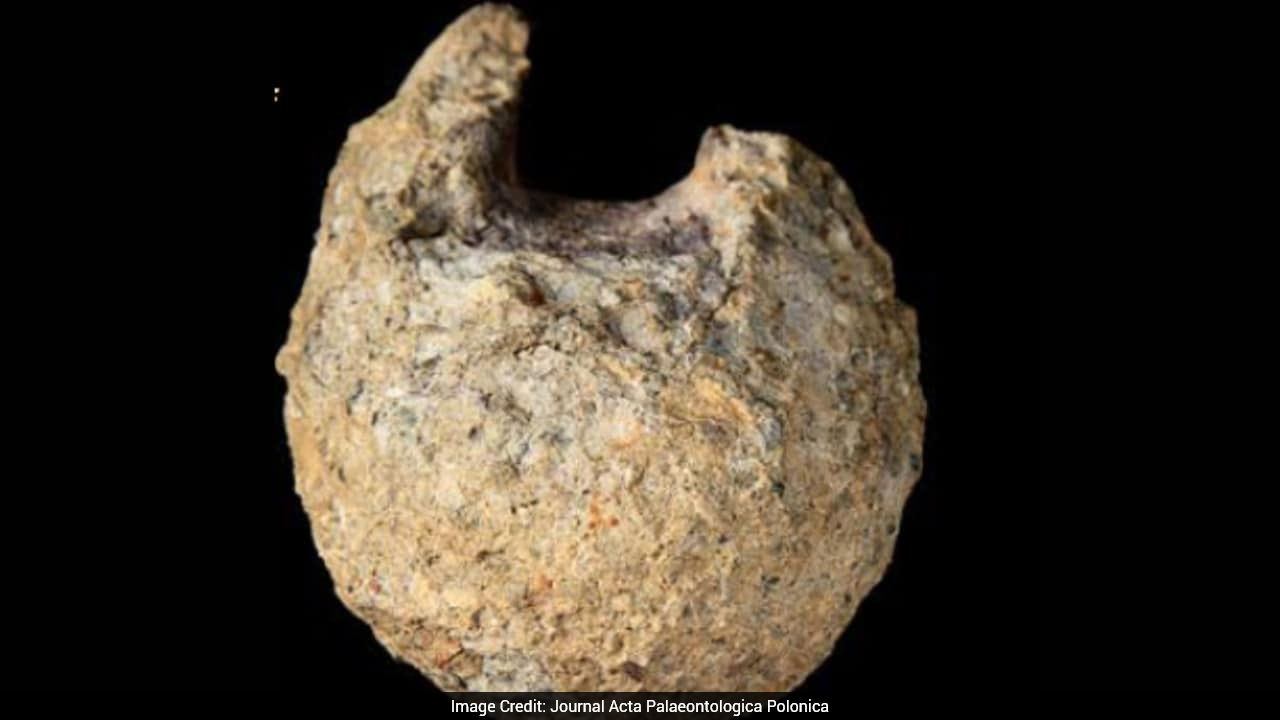
A long-forgotten fossil has helped scientists uncover an important piece of dinosaur history from Antarctica, showing how a discovery made decades ago finally revealed its true identity, reported NYPost.
Scientists have identified the first dinosaur bone ever found in Antarctica, after it had been stored away in a drawer for many years without proper recognition.
The bone was discovered in 1985 during an expedition to Antarctica's James Ross Island led by geologist Mike Thomson, who recorded it as belonging to a large reptile.
It was later kept in the geology collection of the British Antarctic Survey in Cambridge, where it remained in a drawer for decades.
Paleontologist Mark Evans later rediscovered the bone and worked with a team of researchers to compare it with more complete dinosaur fossils.
Evans' analysis confirmed that the bone belongs to a long-necked, plant-eating titanosaur.
The findings were published on Monday in the journal Acta Palaeontologica Polonica.
Scientists said dinosaur fossils are rare in Antarctica because of its harsh ice conditions, even though the continent once had lush forests.
The titanosaur linked to the bone is believed to have been about 23 feet long, which is small compared to others in its group.
Researchers believe the dinosaur may have died young and could have floated from the coast before sinking to the seafloor and becoming fossilized in marine rock.
Mike Thomson, who originally discovered the bone, died in 2020 before it was identified as dinosaur remains using new technology.
Paleontologist Mark Evans, a co-author of the study, said that if he were still alive, he would be delighted to know what this was.
Track Latest News Live on NDTV.com and get news updates from India and around the world

