





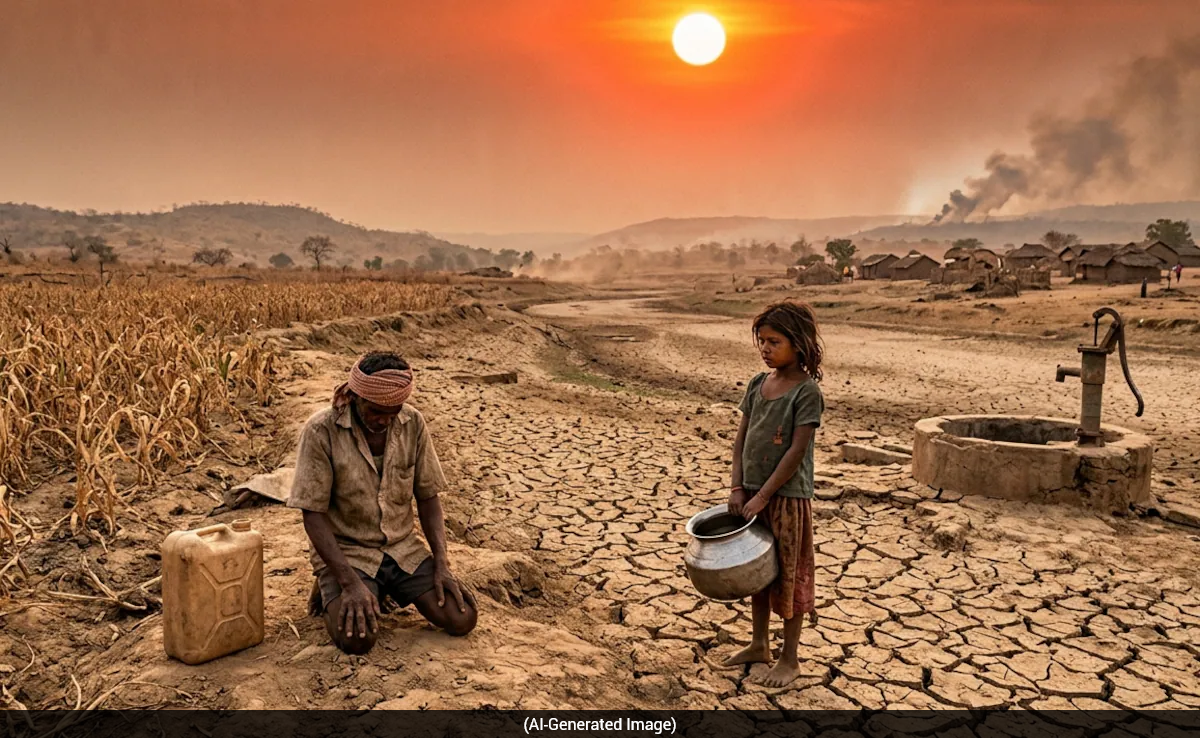
Nearly one in three people across the world could experience severe heatwaves and droughts occurring together up to five times more frequently by the end of this century, according to new research published in the journal Geophysical Research Letters.
Scientists from Germany and China studied so-called compound hot-dry extremes, episodes in which intense heatwaves and serious droughts strike the same area at the same time. Their findings suggest that around 28 per cent of the global population, close to 2.6 billion people, will face at least five times as many of these events by the 2090s compared to today.
When heat and drought occur together, the consequences are considerably worse than either event on its own. Researchers warn of higher numbers of heat-related deaths, a greater risk of wildfires, significant damage to food production and wider economic instability.
"Heat and drought amplify each other," said climate scientist Di Cai of the Ocean University of China. "In compound hot-dry extremes, they lead to water restrictions and unstable food prices. For outdoor workers, it is dangerous."
The research team drew on data from 152 climate simulations based on eight climate models used in the IPCC's Sixth Assessment Report. Under current government policies, global temperatures are projected to rise by 2.7 degrees Celsius by 2100. On that trajectory, the world as a whole would see 2.4 times as many compound hot-dry events as it does today, with individual episodes lasting nearly three times as long at their peak.
However, the impact will not be shared equally. Tropical nations and lower-income countries, which have contributed the least to global greenhouse gas emissions, are expected to suffer the most.
"For lower-income countries, there is a huge unfairness here," said Cai. "It is hard to fund air conditioning. It is hard to fund health care. There is no backup if water runs out. It is not just a climate science issue; it is about basic, daily life."
The study also offers a more hopeful scenario. Renewed commitment to the 2015 Paris Agreement, alongside additional binding long-term pledges, could reduce the proportion of people exposed to fivefold increases in these extreme events from 28 per cent to 18 per cent. That would mean roughly 900 million fewer people affected.
"The choices we make today will directly affect the daily lives of billions of people in the future," said Cai.
Monica Ionita, a climatologist at the Alfred Wegener Institute in Germany, stressed the gravity of the findings. "When you get to almost 30 per cent of the global population affected by this, it is very critical," she said. "It should make us consider much, much more deeply our actions in the future."
Track Latest News Live on NDTV.com and get news updates from India and around the world

