






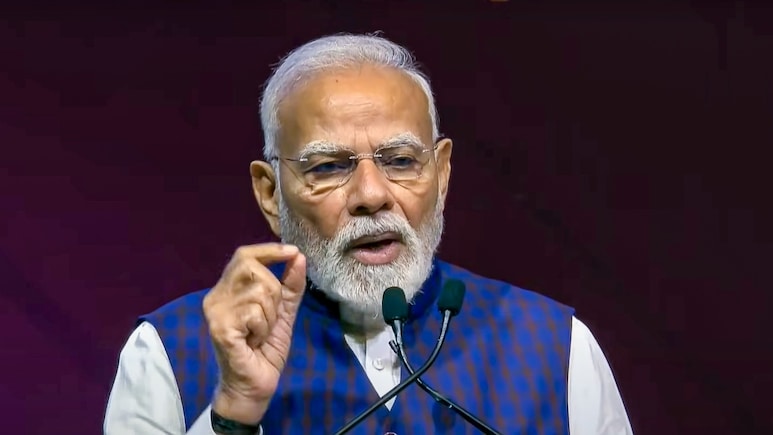
The headlines last week read like dispatches from a war room. Oil tankers rerouting around the Strait of Hormuz. Brent crude climbing by the hour. Fertiliser and diesel prices twitching in sympathy across continents. The war in Europe digging in for another summer with no armistice in sight. Into the middle of this frightened, churning world walked an Indian Prime Minister, boarding a flight to Abu Dhabi with the calm of a man who knew exactly what he had gone to fetch. Six days later, after Abu Dhabi, The Hague, Gothenburg, Oslo and Rome, PM Modi flew home. He brought back no souvenirs. He brought back three shields, raised around a billion and a half people. Energy. Economy. Defence. The three things no nation can improvise once the world is already ablaze.
The storm, and the strategy
Understand first what kind of crisis this is. Not a single shock but a convergence of them. A war in West Asia threatening the arteries of global oil. A war in Europe that has scrambled the continent's energy and its grain, sending frightened capital racing back to whatever it imagines safe. In such a moment, lesser governments freeze, issue statements and wait for the weather to change. PM Modi did the opposite. He read the map of India's vulnerabilities, picked five countries that each held a piece of the answer, and went to collect.
The First Shield: Energy
Roughly a fifth of the world's oil passes through the Strait of Hormuz, and a large share of India's crude comes from precisely that neighbourhood. When PM Modi recently urged citizens to go easy on petrol and to think twice before buying gold, the Prime Minister was not preaching austerity, he was getting the nation a little time while he went out to secure its fuel supplies.
Abu Dhabi as the first stop was no accident. The Emirates, even while absorbing attacks on their own soil, committed 5 billion dollars in fresh investment to India and reaffirmed to keep our refineries humming. Then in Oslo, where no Indian PM had set foot in more than four decades, PM Modi went looking not for yesterday's oil but for tomorrow's fuel. Norway is among Europe's largest gas suppliers and a serious force in green hydrogen and offshore wind. The two nations sealed a Green Strategic Partnership, and the wider India-Nordic summit produced a Green Tech and Strategic Partnership across all Nordic states. The message is simple. India will neither be held hostage by a single strait nor left behind in the energy transition.
The Second Shield: Economy
If energy keeps the lights on, the economy decides whether a country grows in the dark or shrinks in it. In The Hague, before PM Modi, Tata Electronics signed with ASML, the one Dutch firm on earth holding a monopoly on the extreme ultraviolet lithography machines without which no advanced chip can be made. This move provides Rs 91,000 crore semiconductor Fab at Dholera and quietly admits India into the most exclusive industrial club in the world.
Sweden holds some of Europe's richest deposits of critical minerals, the raw material of tomorrow's batteries and chips, and a new corridor will weave 6G, artificial intelligence and quantum computing into the partnership. Rome supplied the grand connective tissue. India and Italy elevated their ties to a Special Strategic Partnership and set a trade target of Euro 20 billion by 2029, while pushing forward the India Middle East Europe Economic Corridor, a route that will one day carry Indian goods to Europe in days rather than weeks, sidestepping the very chokepoints now under threat
The Third Shield: Defence
A nation that cannot defend itself is finished. This third shield was the quietest of the three, and the most far-reaching. In Abu Dhabi, India and the UAE advanced a framework defence cooperation agreement of a breadth that would have seemed fanciful a decade ago. In Sweden, the defence major Saab is now building its first military equipment plant anywhere outside its home country, at Jhajjar, India's first 100 per cent foreign-funded defence manufacturing project. The Netherlands committed to a defence industrial roadmap linking manufacturers and research centres on both sides. The thread is unmistakable. India no longer wishes to remain the world's largest importer of arms. It means to make them at home, with the finest partners, on its own soil. Aatmanirbharta has stopped being a slogan. It has become a supply chain.
And the world rose to honour
There was a quieter dimension too. In Sweden, PM Modi was conferred the Royal Order of the Polar Star, that nation's highest honour. In Oslo, King Harald V invested him with the Grand Cross of the Royal Norwegian Order of Merit. And in a fitting coda, the UN Food and Agriculture Organisation handed him the Agricola Medal, for a food security net feeding some 800 million Indians and supporting over 110 million farmers. PM Modi accepted each in the name of the people of India. A generation ago this country went out into the world asking to be understood. Today, the oldest monarchies of Europe rise to honour her. That shift, even more than any joint statement, is the truest measure of New India's strength.
The Opposition's hypocrisy
The Opposition Congress sees none of this. Not the chip. Not the Saab line at Jhajjar. Not a Norwegian king's Grand Cross. It sees only an occasion to carp and rant. The hypocrisy is breathtaking. In November 1948, with Independence barely 15 months old, Bapu's assassination nine months past and Partition's refugees still sleeping on railway platforms, the then PM Jawaharlal Nehru took a full month to tour Europe. He returned and wrote, that what wearied him at home was the "pettiness and narrow-mindedness" of his own countrymen. Nehru went to Europe for a full month and came home complaining about Indians. PM Modi goes to the world for Indians and comes home with what India needs, which is called statecraft.
The thread that binds them
Step away from the itinerary and the design stands clear. Energy from the Gulf and the Arctic. Economic muscle from chips, minerals and trade corridors. Defence built at home alongside the world's best. Three shields, raised in six days, against a storm that has paralysed several nations. The leaders of five capitals did not host PM Modi out of mere protocol. They hosted him because, in a world running scared, India has become the rare safe harbour where the prudent still place their longest bets. That standing was not gifted to us. It was earned, capital by capital.
A closing thought
The Colosseum has watched many empires, but on Tuesday evening, it watched something exemplary. PM Modi understands that in an age of fire, the wise nation does not shout. It builds. PM Modi spent six days raising three shields for a billion and a half people. The shields will certainly outlast the storm.
(The author is a Senior Advocate Practising in Supreme Court of India)
Disclaimer: These are the personal opinions of the author

