






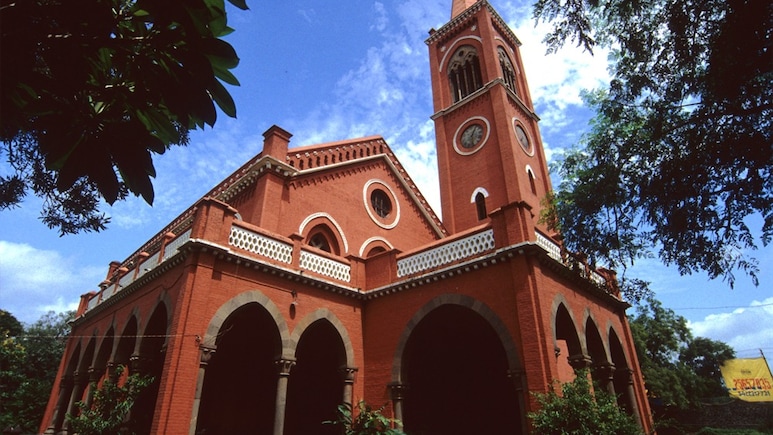
On the occasion of the visit of the Honourable Prime Minister of India Shri Narendra Modi to Israel on 25th and 26th February, 2026, his second visit to strengthen a great friendship and strategic partnership between the two countries, we take a look at the deep bonds of culture and history between India and the Jewish community. This history goes back 3,000 years and is a significant reminder of India's warmth and hospitality to visitors since ancient times. In recent times, there has been a warm recognition of the bonds between the countries and the significant development of strategic ties.
In keeping with India's ancient tradition of warmth and hospitality to visitors, the Jewish community was welcomed in India and flourished here, even 3,000 years ago. They were a prosperous community and well-integrated in society and business. It is notable to see that one of the grandest synagogues in the world was made in Pune, India.
The Ohel-David Synagogue in Pune was built by the eminent Indian businessman and shipbuilder David Sassoon in 1863. The synagogue is a well-known landmark in Pune. The Jewish community lives happily and flourishes in India, and the Sassoon shipbuilding docks in Mumbai have been a shining example of the success of this community in this country.
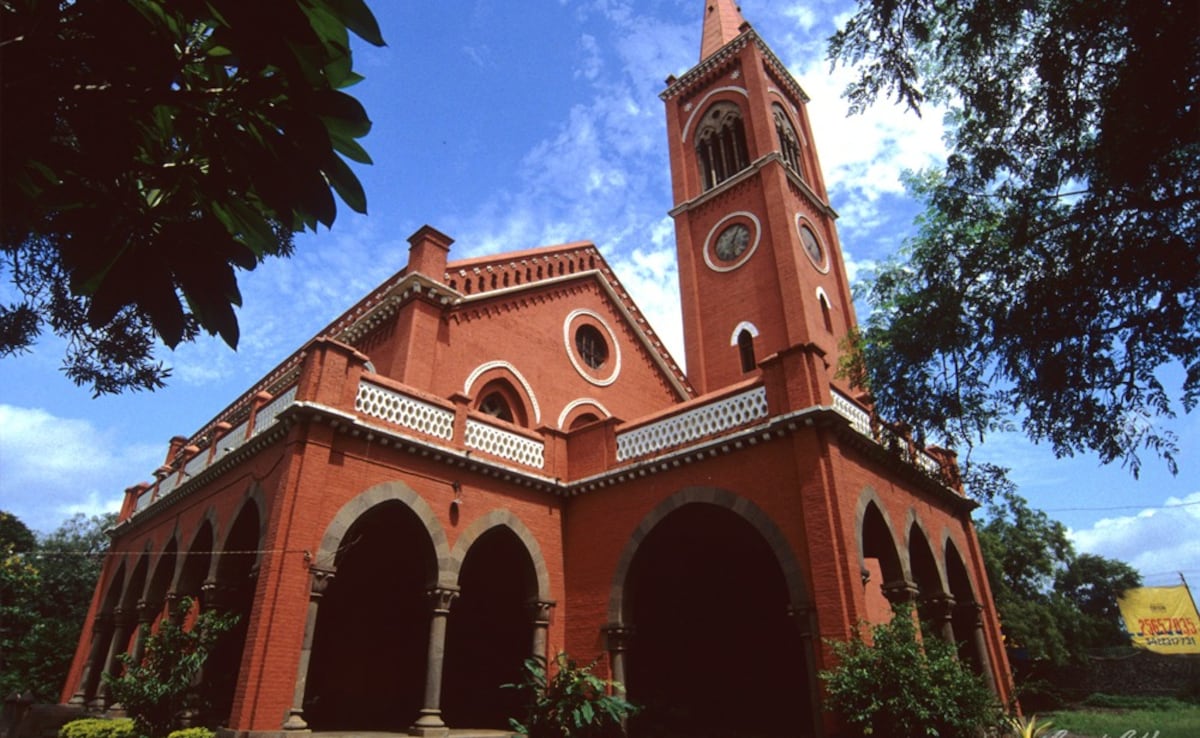
This house of worship was built by the noted Indian businessman and shipbuilder David Sassoon in 1863, in Pune. The synagogue is a well-known landmark in Pune. The Jewish community lives happily and flourishes in India. Photo Credit: Photograph by Benoy K Behl
David Sassoon (1792-1864) was a Baghdadi Jewish merchant who settled in Mumbai after fleeing persecution in Iraq. He built a vast trading empire and funded major public institutions, including docks, libraries and synagogues in Mumbai and Pune. The Sassoon legacy reflects the prominence of Jewish entrepreneurs in India and forms part of the shared historical memory of India and the Jewish diaspora.
The Jewish community of Mumbai is the largest in India and is vibrant till today. Though it has been dwindling, there are 3,500 to 4,000 individuals in Mumbai. There are two groups among them: the Bene Israel, who have been here for centuries, and the Baghdadi Jews, who came here in the 18th-19th centuries.
Five centuries ago, the Jews were welcomed to Mumbai and were given special privileges, as well as allowed to practise their faith. Many of the community took to trade and commerce, while others took to professions such as medicine. Synagogues and a Jewish cemetery were also built here. Over the centuries, Jews have not only contributed to the economy of Mumbai but have also helped to shape the cultural landscape of the city.
Historic synagogues across Maharashtra, Kerala and West Bengal reflect centuries of peaceful coexistence and the absence of antisemitism in India. These synagogues today serve as cultural bridges in India-Israel relations, highlighting a shared heritage that predates modern diplomatic ties.
The Jews in Kerala, also known as the Cochin Jews, have been settled in India since very early times. In fact, they trace their roots back to the ancient period. Initially they were based in the ancient port town of Kodungallur (previously known as Muziris) and then Kochi. They made their mark in the spice trade, as well as in handicrafts. In the 1950s, there was mass emigration to Israel, and very few Jews are left in Kerala. However, there are important heritage sites of the Jewish faith and worship.
The Jewish community in Kerala are believed to have settled in the Kodungallur region, even as early as the reign of King Solomon in the 10th century BCE. They later shifted to the Cochin area, perhaps on account of floods. They were granted privileges by local Hindu rulers, as is seen in the 10th-century copper plate inscriptions.
The Jews established many synagogues in Kochi, which include the well-known Paradesi Synagogue, which was built in 1568 in Mattancherry. The site attracts many tourists and stands as a tangible reminder of the historic links between India and the Jewish diaspora.
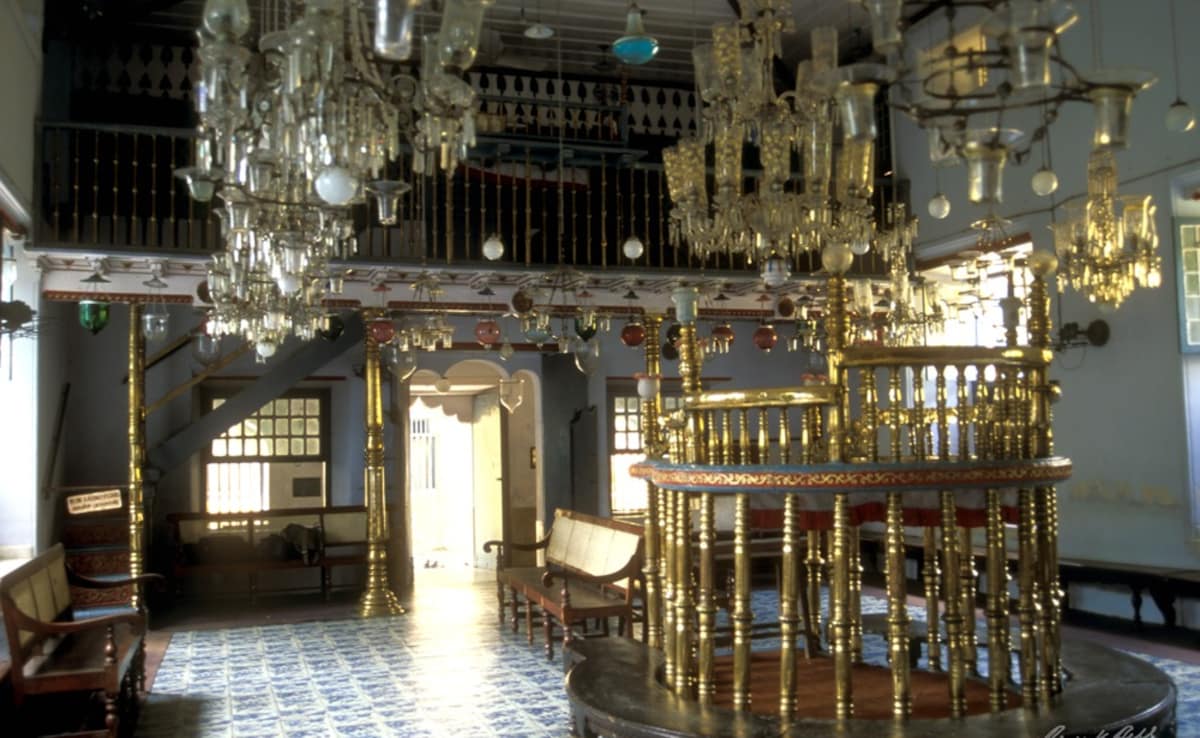
The Jewish Synagogue, one of the oldest in the Asian region, was built in 1568 CE. Located at Mattancherry, the synagogue still has the scrolls of the Old Testament and copper plates which record the grants of privilege bequeathed by the Hindu rulers of Kochi. It was rebuilt by the Dutch after having been partially destroyed in the war of 1662 CE. The exquisite hand-painted blue Chinese tiles reveal the cultural interactions which took place in Kerala. Photo Credit: Photograph by Benoy K Behl
The Cochin Jews are today one of the smallest religious communities in India, but they have a very rich heritage and legacy preserved in museums and cultural heritage sites. It is notable that India has preserved this ancient culture, going back 3,000 years.
Cooperation In Modern Times
The Battle of Haifa (23 September 1918) was fought during World War I when Indian cavalry units of the British Indian Army captured the city from Ottoman forces. Soldiers from princely states such as Jodhpur, Mysore and Hyderabad played a decisive role, and many who lost lives are buried in Haifa today. The battle is commemorated annually in both India and Israel, symbolising early military cooperation and the sacrifice made by Indians.
Teen Murti Chowk in Delhi was renamed Teen Murti Haifa Chowk in 2018 by Honourable PM Modi and Honourable PM Netanyahu.
Malabar Street in Israeli cities such as Rishon Letzion commemorates the Malabar Coast of Kerala, from where many Cochin Jews emigrated to Israel. The name reflects the transplantation of Indian Jewish heritage into Israeli society. Such place names symbolise the enduring cultural imprint of Indian Jews within Israel's national fabric.
Baroda (Vadodara) in Gujarat was historically associated with the Bene Israel Jews who prospered under princely patronage. The Gaekwad rulers welcomed Jewish families who integrated into commerce and education. These communities later formed part of the migration stream to Israel, contributing to people-to-people ties between Gujarat and Israel.
A statue of Maharaja Digvijaysinhji Ranjitsinhji, the "Good Maharaja" of Nawanagar (Gujarat), was unveiled on November 11, 2025, in Moshav Nevatim, Israel, honouring his compassionate rescue of nearly 1,000 Polish children, including many Jews, during World War II. The monument honours his legacy of providing refuge at Balachadi.
(Benoy K. Behl is an Indian documentary filmmaker, art historian and photographer)
Disclaimer: These are the personal opinions of the author

