






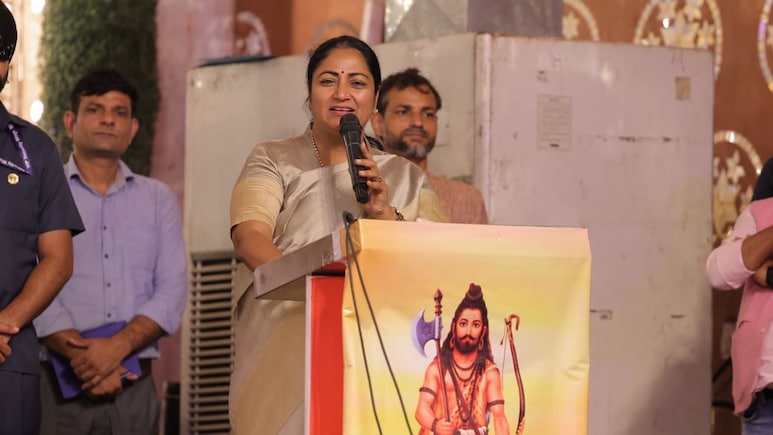
Delhi has always been a city that absorbs political noise, but rarely has it seen the kind of administrative exhaustion that defined the years before Rekha Gupta took office. From bureaucratic paralysis to decaying civic systems, from confrontational politics to an over-reliance on publicity, the capital had slowly slipped into a state where governance became synonymous with spectacle. The contrast in the first six months of Rekha Gupta's tenure is, therefore, not merely striking; it is structural. Delhi has not just gained a new Chief Minister - it has regained a sense of order.
To understand the depth of the shift, one must look at how earlier governments began their terms. Sheila Dikshit inherited a city in the 1990s where the Delhi Vidyut Board was collapsing and pollution levels were pushing the Supreme Court into unprecedented interventions. Her initial months were dominated by reaction rather than reform. Arvind Kejriwal, on the other hand, entered office on the back of an anti-corruption movement but spent his early months locked in institutional conflict - filing FIRs against political rivals, staging protests against constitutional authorities, and fighting administrative battles that froze governance rather than moved it forward. What Delhi received in those crucial early months was a leadership preoccupied with narratives, not neighbourhoods.
The Bharatiya Janata Party (BJP) government under Rekha Gupta's first months could not be more different. The transformation began with Delhi's most visible failure of the previous decade: its public transport network. For years, the Kejriwal government advertised its commitment to buses but delivered only around 2,000 in eleven long years. Depot collapses, repeated tender failures, and constant "coming soon" announcements left the Capital in a state of permanent shortage. In sharp contrast, within months of taking charge, the new administration managed to deploy 1,028 DEVi electric buses at a pace unheard of in Delhi's political memory. The early months also saw the stabilisation of a long-term induction plan - 3,337 electric buses already on the roads, nearly 2,000 more scheduled by March 2026, and an additional 510 by the end of 2026 - giving Delhi, for the first time, a credible roadmap to full transport electrification. The city's most basic need, mobility, finally moved from political theatre to measurable delivery.
The correction in the electricity sector was equally swift. Delhi had been burdened by two decades of decisions that prioritised optics over sustainability. Sheila Dikshit was forced to privatise Delhi Vidyut Board (DVB) after years of accumulated losses, and the Kejriwal administration attempted to mask structural weaknesses through subsidy politics, ultimately leaving behind ₹27,000 crore in regulatory assets. The first six months of Rekha Gupta's tenure reversed this trend entirely. A ₹3,847 crore allocation to the power department reoriented the sector toward long-term stability, infrastructure strengthening, and financial discipline. For the first time in many years, Delhi's electricity planning reflected responsibility rather than populism.
Perhaps the most dramatic departure from the past is visible in the government's approach to women's safety. The early Dikshit years saw Delhi become the epicentre of rising NCRB crime data, culminating in the Nirbhaya tragedy. The Kejriwal administration responded with symbolic gestures-free bus rides that later revealed inflated slip counts and no corresponding improvement in institutional safeguards. The BJP government's first months have instead ushered in a model built on empowerment, opportunity, and structural safety. The passage of Delhi's night-shift employment bill for women, credit-free loans to expand financial autonomy, and a rationalised Pink Card travel system rooted in transparency have together created the first genuinely holistic women's safety architecture the Capital has seen in years.
Just as significant is the one area where Delhi had grown almost numb: corruption. The Sheila Dikshit years were marred by streetlight scams, tanker procurement allegations, and questions over public advertising expenditure. The Kejriwal era, which entered power on an anti-graft wave, eventually became synonymous with the excise policy scam that led to the arrest of senior AAP leaders. In stark contrast, Rekha Gupta's administration has completed its opening months without a single allegation, a single scandal, or a single question mark. Transparency has been restored not through slogans, but through the quiet enforcement of accountability.
Delhi's healthcare system has also seen a kind of early-month transformation that neither of the previous regimes managed. Dikshit struggled with incomplete hospital projects and chronic shortages; Kejriwal's highly publicised mohalla clinics suffered from poor maintenance, limited diagnostic capability, and closures that went largely unnoticed behind the noise of publicity. The BJP administration has already expanded Ayushman Bharat coverage to ₹10 lakh per family, introduced the Ayushman Vaya Vandana Yojana for senior citizens, built 238 Ayushman Arogya Mandirs, and significantly enhanced treatment capacity with 300 dialysis machines across 16 hospitals, with 150 more on the way. Healthcare in Delhi has not been this organised in its early months for decades.
Education, too, has benefited from a level of focus that previous governments simply did not exhibit this early in their terms. While the Dikshit years were marked by outdated infrastructure and the Kejriwal administration relied heavily on advertising to mask deteriorating maintenance and widening learning gaps, Rekha Gupta's government has already introduced CM Shri Schools - clean, future-ready institutions backed by ₹100 crore in the 2025-26 budget. With enhanced science and computer labs, AI-enabled learning tools, NEP-aligned curriculum, teacher training programmes, and modern sports facilities like the 200-metre track at Hiran Kudna, the early reforms have prioritised quality over publicity.
Even Delhi's most vulnerable citizens have felt the difference. Pension amounts that remained stagnant and often delayed under previous regimes have been modernised to reflect actual living costs: ₹2,500 for seniors aged 60-69 years, ₹3,000 for seniors above 70, additional support for seniors from SC, ST and minority backgrounds, and strengthened assistance for women in distress and persons with disabilities. The emphasis has shifted from announcements to dignity.
And then came the moment that truly defined the new administration's intent: Delhi's largest-ever ₹1 lakh crore budget. Unlike the fragmented, reactionary early budgets of previous governments, this one laid out a coherent vision for Delhi's next decade - cleaner Yamuna banks, safer public spaces, reliable connectivity, stronger water security, empowered women, and a renewed civic architecture.
Taken together, these six months reveal something unmistakable. Delhi has experienced more structural reform, more institutional repair, and more clean governance in the opening half-year of the BJP government's term than what it saw in the opening months of either the Sheila Dikshit or Arvind Kejriwal administrations. This is not a political claim; it is a comparison measurable in numbers, institutions, and outcomes.
For a city that had grown used to drama, delay, and decay, the first six months of the Rekha Gupta government feel like the rediscovery of an older idea, one Delhi had almost forgotten: that governance is not about theatre, but about work. And Delhi, at long last, is working again.
(The author is National Spokesperson of the BJP)
Disclaimer: These are the personal opinions of the author

