






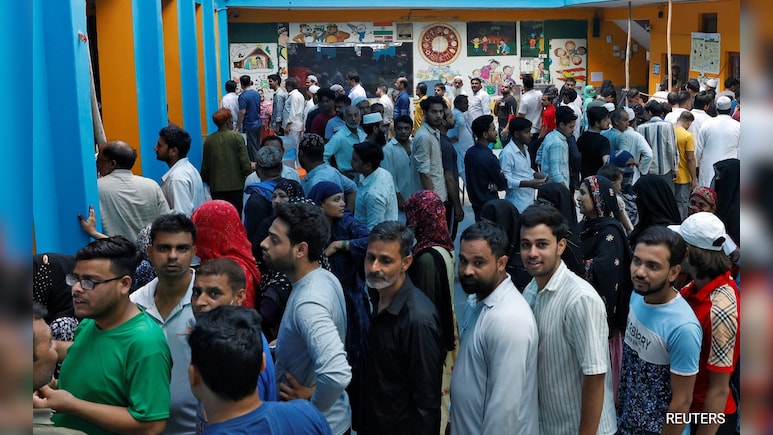
The idea of holding Lok Sabha and state Assembly elections together - popularly called "One Nation, One Election" (ONOE) - is back at the centre of India's political agenda. The Joint Parliamentary Committee (JPC) examining the Constitution (129th Amendment) Bill, 2024, has been holding consultations across states, with its chairman PP Chaudhary claiming that an overwhelming majority of stakeholders consulted so far favour simultaneous polls.
Reports suggest the government is now eyeing a 2029 rollout instead of the more distant 2034 timeline originally discussed, which would require aligning the terms of several state assemblies - some through early elections - so that voting across the country converges into a single cycle. If not all states, an Indian Express report suggests that BJP-ruled states (22 currently) could dissolve their assemblies ahead of the 2029 general election to hold simultaneous polls.
Why BJP Wants Simultaneous Polls
The government's stated case for ONOE rests on efficiency: fewer elections mean lower costs, less disruption to governance from the repeated imposition of the Model Code of Conduct, and reduced strain on security forces and administrative machinery that otherwise shuttle between one election and the next almost throughout the year.
The high-level committee headed by former President Ram Nath Kovind, which submitted an extensive report recommending a phased move to simultaneous elections, argued that frequent polls create policy paralysis and disincentivise long-term governance decisions.
Why Opposition Is Against It
Opposition parties, including the Congress, AAP, TMC, DMK, CPI(M), and the Samajwadi Party, have pushed back hard. Their core objection is constitutional: they argue that synchronising election cycles would require dissolving state assemblies before their full terms, undermining federalism and the autonomy of state governments. The Congress has called it a move that could alter the "basic structure" of the Constitution.
Beyond the legal argument lies a more political one - that a nationally dominant party with superior organisational reach, funding and media visibility could use a single, unified campaign to override state-specific concerns, effectively nationalising every election.
What Research Says
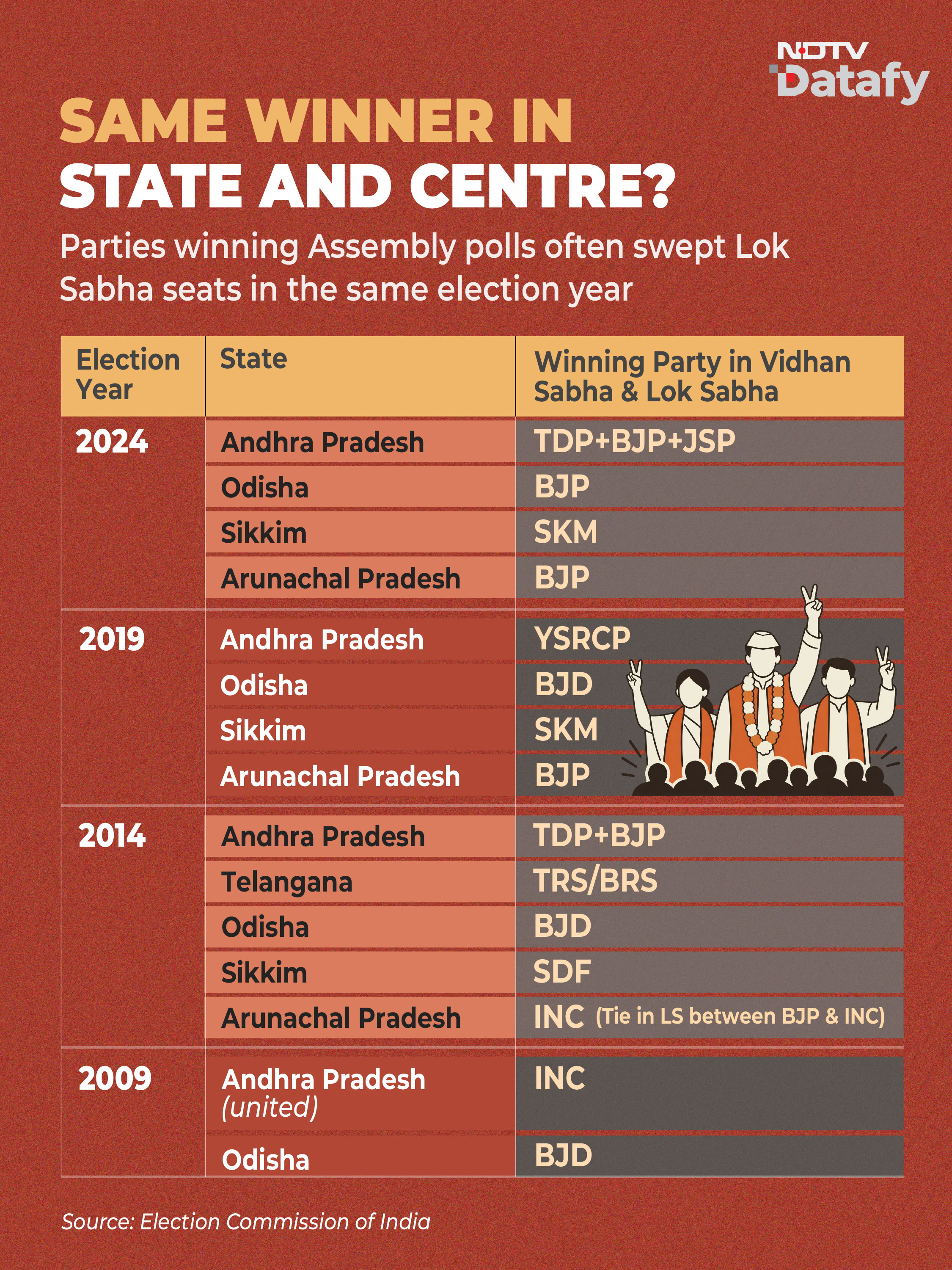
This political worry is backed by some data. Studies on past simultaneous elections - including analysis cited by the Association for Democratic Reforms (ADR) and referenced in the Kovind committee's own report - have found a strong tendency among voters to back the same party for both the Lok Sabha and the Assembly when the two votes happen on the same day.
The ADR's submission to the JPC went as far as arguing that this "steamrolling" effect is precisely why the ruling party has been keen to push for simultaneous polls, since it tends to align votes in its favour at every tier of government.
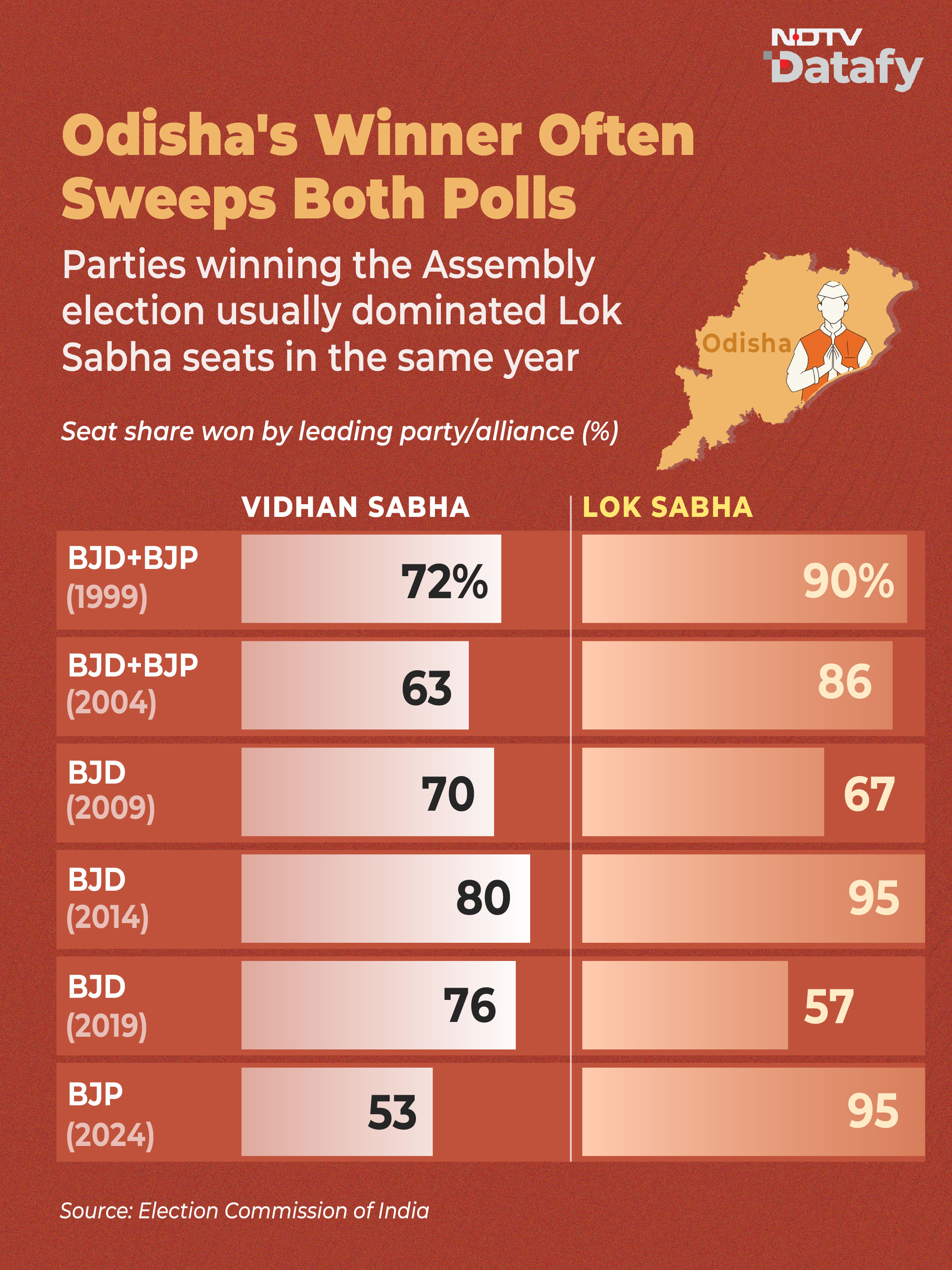
This pattern isn't just theoretical. India currently holds simultaneous Lok Sabha and Assembly elections in four states - Andhra Pradesh, Sikkim, Arunachal Pradesh and Odisha - and in each of these, the same party has typically swept both state and national contests together, reinforcing the idea that a shared ballot day narrows the gap between state and national voting behaviour.
History That Cuts Both Ways
India actually had simultaneous elections as the norm from 1952 to 1967, a period when the Congress party dominated both the Centre and all states, except for intermittent periods in a few states like Kerala and Odisha. That alignment broke down in 1967, when the Congress lost power in a large number of states (8/16) even as it held on to a reduced majority at the Centre - a result widely seen as the moment separate election cycles began to take root, driven partly by dissolutions and defections that threw state and national timelines out of sync.
On the surface, this history seems to support the idea that a national, incumbent party benefits most from synchronised polls - since a wave in its favour nationally would be expected to carry down to the states.
Why Regional Parties Might Not Lose Out
Here is where the picture gets more complicated. Simultaneous polls have not always favoured the national party in office. Regional outfits such as the YSR Congress Party (YSRCP) in Andhra Pradesh and the Biju Janata Dal (BJD) in Odisha have historically won large numbers of Lok Sabha seats in their states even while sitting entirely outside both the NDA and UPA alliances, precisely in a setting where the Assembly and Lok Sabha polls were held together.
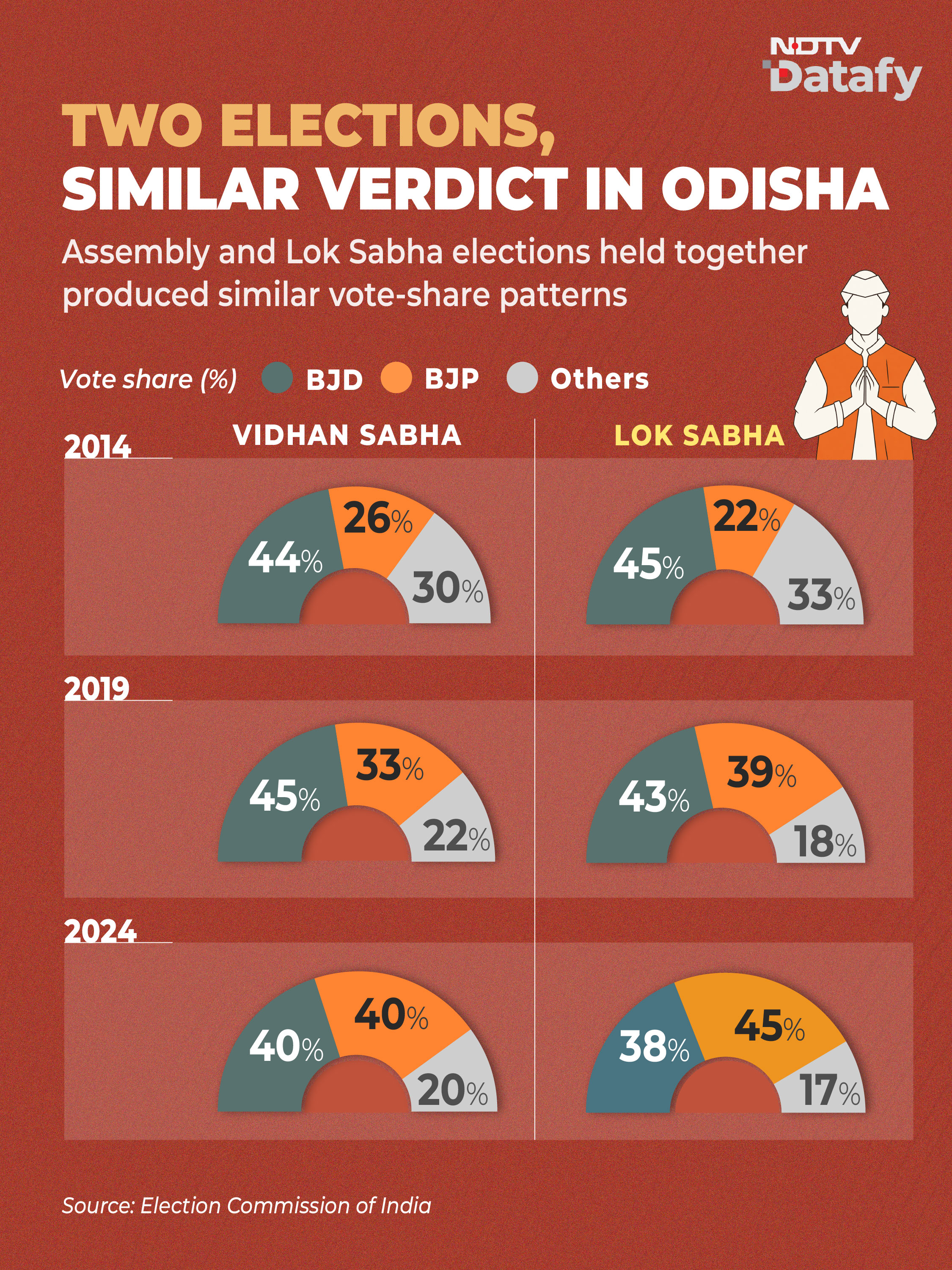
The Kovind panel's own report cites Odisha in 2014 as an example: the BJP swept the Lok Sabha polls nationally, yet the BJD not only held its ground in the state but actually increased its vote share in both the Assembly and Lok Sabha elections held on the same day.
The explanation lies in how Indian voters actually behave. Because most voters tend to press the same button for both ballots when they vote together, split-ticket voting is rare - but that tendency doesn't automatically favour whichever party is strongest nationally. It favours whichever party has the strongest organisation and the most popular leadership on the ground, wherever the vote is being cast. In a state with an entrenched regional party and a dominant local leader, that alignment effect works in the regional party's favour, not the national party's.
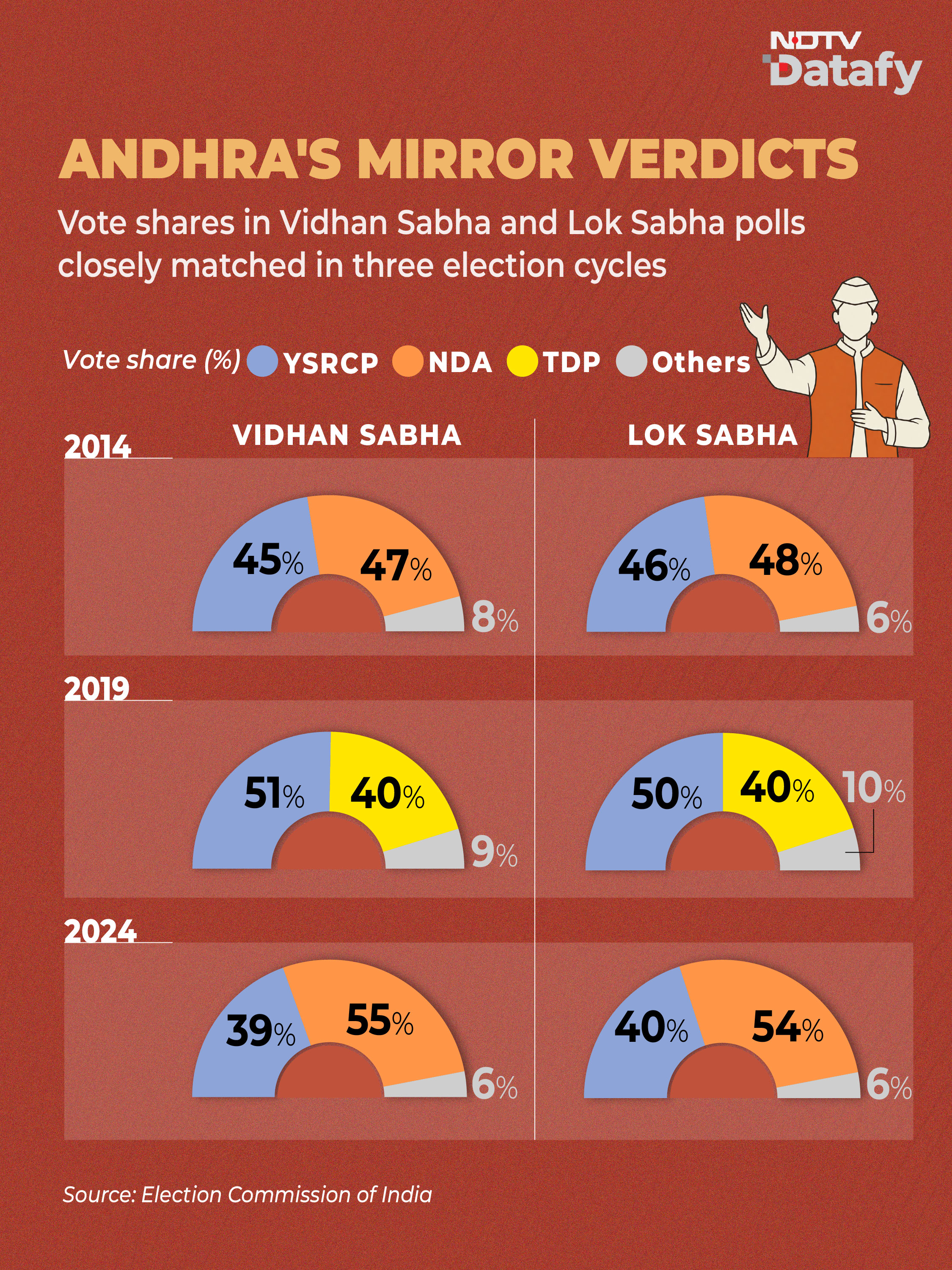
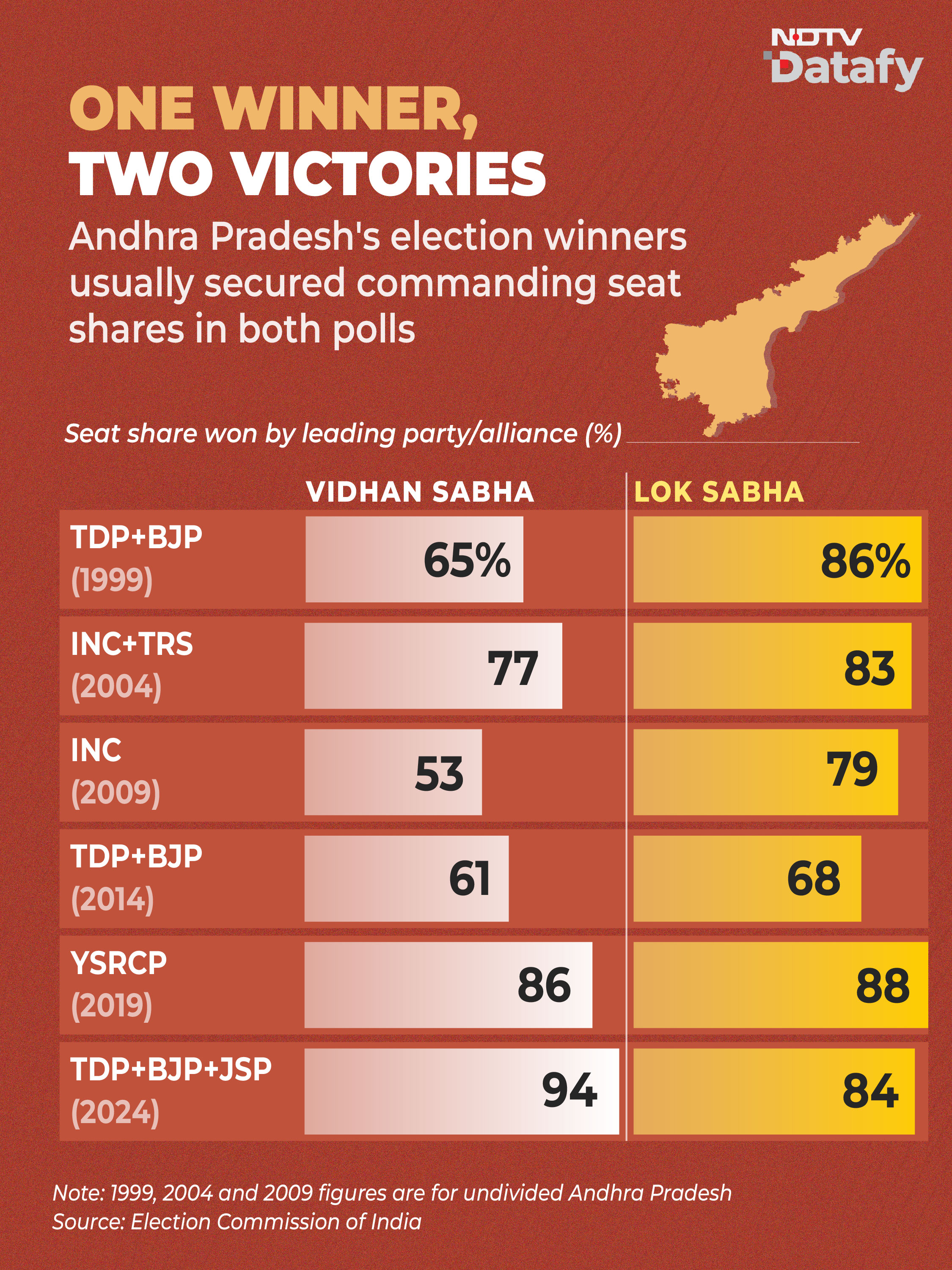
The national election verdict is effectively an aggregation of the results of state elections during Lok Sabha polls. Congress got more than 350 seats in all Lok Sabha elections in 1952, 1957, and 1962. How did this happen? Because while it had stalwart leaders at the national level led by Nehru, it had very strong leadership in the states: Morarji Desai (Bombay), Neelam Sanjeev Reddy (Andhra), Bidhan Chandra Roy (Bengal), Govind Ballabh Pant (UP), K Kamraj (Madras), Yashwant Rao Chavan (MH), and Krishna Singh (Bihar). They helped Congress win state elections and also the maximum number of MPs from their respective states in national elections.
Who Benefits?
The honest answer is: it depends on where you're standing on the map. In states with entrenched, well-organised regional parties and popular regional leaders - Kerala, Telangana, Uttar Pradesh, Bihar, Jharkhand, Jammu & Kashmir, Odisha, Andhra Pradesh, Tamil Nadu, among others - simultaneous elections could likely reinforce the regional party's dominance rather than dilute it, simply because voters at the ballot box tend to reward organisational strength and leadership more than they punish a party for staying outside national alliances.
ONOE, in other words, isn't a straightforward tool for national-party dominance. It is better understood as an amplifier - one that magnifies whichever political force, national or regional, already commands the strongest organisation and the most credible leadership in a given state.
(Amitabh Tiwari is a political strategist and commentator)
Disclaimer: These are the personal opinions of the author

