






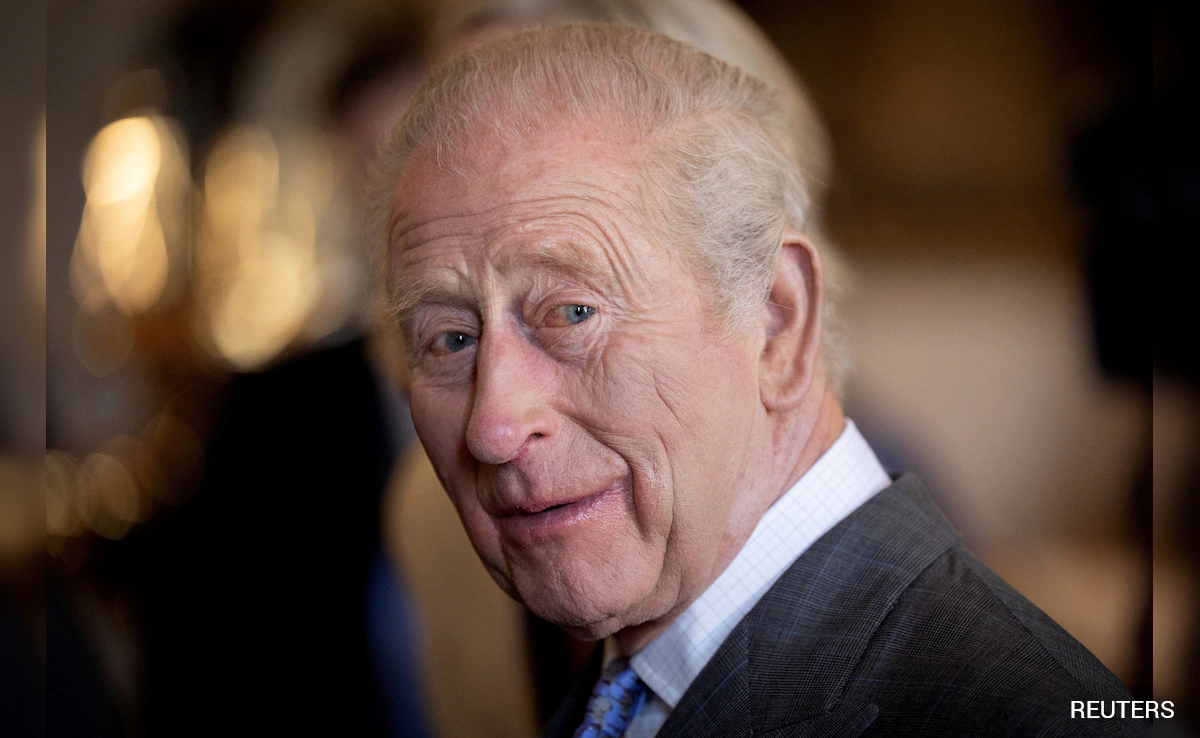
It's 250 years since the US dumped George III, but as his most recent successor celebrates America's Semiquincentennial in Washington DC it seems royalty is back in vogue. Monarchy-loving Donald Trump is so excited at hosting King Charles III and Queen Camilla, he's predicting their three-day junket will "absolutely" help repair the tattered special relationship, which has been plunged into the deep freeze because of Prime Minister Keir Starmer's refusal to join in the president's Iran folly.
Such was the intemperance of Trump's response - describing Starmer as "not Winston Churchill," torpedoing a UK deal to return the Chagos Islands to Mauritius and threatening to hike trade tariffs - that some British politicians called for the royal visit to be cancelled.
After this weekend's alarming events at the White House Correspondents' Dinner, concerns were raised too that the king could be in physical danger from the rising tide of political violence in the US. Buckingham Palace swiftly made clear that Charles would not be deterred, although tweaks have been made to the most public-facing events in Washington and Virginia.
It's for the best that the visit is proceeding as planned.
Charles, a polite, restrained figure, will be put in an invidious position if Trump badmouths Starmer in the king's presence. The prime minister is, after all, head of a government that serves in his name. Charles was said to have been upset when the president cast aspersions on British soldiers' bravery, prompting a rare Trump almost-apology. Any threats to undermine UK sovereignty over the Falkland Islands, as part of a program of punishment for allies that hung back over Iran, would be uncomfortable for the royals.
But the potential awkwardness is worth the risk given the positives of repairing what has become a strained relationship. A breach in the friendship between these two longstanding allies is to nobody's benefit. And if Trump can be bewitched by pageantry, to the extent that cordial relations can resume, then a garden party and state dinner is clearly worthwhile.
While Charles will address a joint session of Congress and meet the Trumps at the White House, whomever organized the festivities has made sure he won't be sent into the lion's den of a live Oval Office tete-a-tete. That's wise given how these get-togethers can end up making "great television," in the president's description - with all the horror that would entail for the royal entourage. Indeed, there will be few opportunities for the two men to appear unscripted in front of a mic. As at their Windsor Castle gathering in September, expect little more than shouted questions as the VIPs float past in tuxes and lounge suits.
For the sake of repairing tattered diplomatic relations, let's hope the state visit proceeds uneventfully and the president enjoys his fill of royal glamour. Setting aside Trump's idiosyncratic love of ceremonial gold and baubles, however, there are serious questions about the future role of Charles and his family as a meaningful tool of British diplomacy.
Although some Americans can still be charmed by royal glitz, back home the allure of "the firm" - as the Windsors are known - has been tarnished by the long involvement of the king's brother Andrew with the deceased pedophile financier Jeffrey Epstein. Charles has stripped the former prince, now known as Andrew Mountbatten-Windsor, of his titles, and the royal sibling is under police investigation over suggestions he leaked confidential government information to his friend. Mountbatten-Windsor denies wrongdoing, including allegations he had sex with the Epstein victim Virginia Giuffre.
Charles and Camilla, who has otherwise been a laudable campaigner against sexual violence, have refused the pleas of Giuffre's family and other Epstein victims to meet them. An unnamed Buckingham Palace source told the BBC this was out of fear of the impact on "any potential legal action." If, as the royals insist, their primary concern is for abuse victims then they might have found a way around this. What better way to distance the institution from Mountbatten-Windsor's disgrace?
In the wake of the scandal, there are plenty of Brits starting to wonder whether the royals are worth the eye-watering sums they cost the nation.
Monarchists argue that the royals boost Britain's soft power, with exhibit A Charles' jaunt this week. But this would be less true if the White House were not inhabited by Trump. Even in his case there are limits to what's gained.
The fragility of a diplomatic strategy based on the flummery of kings and queens is obvious from the speed with which relations deteriorated after the US president's last UK state visit less than eight months ago. There are only so many times Britain can point the sovereign in the direction of the president and hope. At some point elected politicians have to repair things themselves - or deal with the consequences.
The UK has other assets: its global reach, culture, world-class universities, technological aspirations and even its residual economic heft. Better this than the infantilizing effect of asking the world to wonder at our princes and princesses, particularly given their inevitable human foibles. If Charles can successfully schmooze the president, then he will have gone a distance toward earning his keep. Let's hope that in future, normal service can resume, and both Britain and the US are able to enter a more grown-up era of foreign policy governed by substance - meaningful dialogue, not bluster and bling.
(Rosa Prince is a Bloomberg Opinion columnist covering UK politics and policy. She was formerly an editor and writer at Politico and the Daily Telegraph, and is the author of "Comrade Corbyn" and "Theresa May: The Enigmatic Prime Minister.")
Disclaimer: These are the personal opinions of the author

