







On November 10 last year, a bomb blast in front of the Red Fort in Delhi killed 15 people, marking the biggest terrorist attack in the national capital in over a decade, since a blast outside the Delhi High Court in 2011. The latest blast was a security failure, especially in Delhi. However, the events leading to it - back-to-back raids in Faridabad and the seizure of explosives and weapons - averted a major tragedy. After all, a terrorist has to succeed only once.
The latest United Nations Security Council's (UNSC) Analytical Support and Sanctions Monitoring Report, released last month, brings an al-Qaeda-linked group into the picture. The report has held al-Qaeda in the Indian Subcontinent (AQIS) responsible for the attack. A National Investigation Agency (NIA) chargesheet said the Anzar Ghazwat ul-Hind (AGuH), an offshoot of AQIS, was primarily responsible for the attack. AGuH has been responsible for several attacks in Jammu & Kashmir, and even in Punjab.
Born out of Necessity
Al-Qaeda in the Indian Subcontinent was formed due to the external pressure the core al-Qaeda leadership faced in 2014. Its then-chief, Ayman al-Zawahiri, established a Pakistan-based affiliate of the organisation in September 2014, which would focus on operations in India, Bangladesh, and Myanmar. It was established as "Qaedat al-Jihad fi'shibhi al-qarrat al-Hindiya" (al-Qaeda in the Indian Subcontinent). The announcement came two months after Abu Bakar al-Baghdadi's Islamic State in Iraq and Syria (ISIS) established a so-called "Caliphate".
The surge in ISIS's popularity, alongside the deaths of Osama bin Laden (2011) and Taliban founder Mullah Omar (2013), severely weakened al-Qaeda's influence in Afghanistan and Pakistan. Having pledged allegiance to the Taliban and abstained from operating in Afghanistan, al-Qaeda viewed Pakistan as an attractive base for expansion, while identifying India, Bangladesh, and Myanmar as key areas to maintain core leadership dominance due to rival group activity elsewhere.

Ahmad Farooq, the founding deputy emir of AQIS (left), and AQIS' founding emir, Asim Umar (right), as shown in an As-Sahab AQIS video released in October 2021. (ctc.westpoint.edu)
AQIS was formed by jihadi fighters from various groups in Pakistan, including the Tehreek-i-Taliban Pakistan (TTP), an ideological progeny of al-Qaeda, Harkat-ul-Jihad al-Islami (HuJI), Harkat ul Mujahideen (HuM), Jaish-e-Mohammad (JeM), Jundullah, Indian Mujahideen, Lashkar-e-Taiba (LeT), Turkistan Islamic Party (TIP), and Islamic Movement of Uzbekistan (IMU). Asim Umar, a former commander of the TTP, was appointed its chief in 2014. He was killed in a US-Afghan raid in 2019. Usama Mahmoud, a.k.a. Abu Zar, is the current chief of the jihadist group.
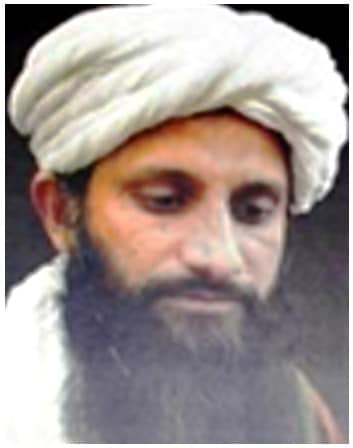
Asim Umar, the first chief of AQIS
The Ideology of AQIS
It follows the same ideology as al-Qaeda, that is, Salafi-Jihadism. The adherents of Salafism believe that the first three generations of Islam, from Prophet Muhammad, form pure Islam, and that generations after that have digressed from the core principles. The term comes from the Arabic term al-Salaf al-Salih, meaning 'pious' predecessors of Islam, which refers to the first three generations. Extremist groups, including al-Qaeda, AQIS, and ISIS, view jihad as a primary vehicle for promoting and instituting Salafi ideals.
Like all Salafi-Jihadist groups, AQIS also seeks to establish an Islamic rule governed by Shari'a law. Additionally, AQIS is responsible for advancing the ideology of al-Qaeda in South Asia, and especially the narrative of Ghazwat ul-Hind, which is mentioned in the Hadith. Ghazwatul-Hind refers to predicting a significant military or ideological struggle involving Muslims in the Indian subcontinent. Upon its establishment, the group announced six core objectives - waging jihad against the US and the disbelievers of tawhid (monotheism), establishing Shari'a rule, liberating Muslims in the Indian subcontinent, establishing a caliphate, fighting for the Taliban, and creating a just Muslim society.
The group's ideology and priorities are also reflected in the title of its magazine. Its media wing, Al-Sahab, regularly publishes a magazine titled Nawa-i Gazawatul Hind, which was changed from Nawa-i Gazawatul (Voice or the Battle for India) to Nawa-i Afghan Jihad (Voice of the Afghan Jihad). The rebranding took place when the US and the Afghan Taliban signed the Doha Accords, and the group repositioned itself from the AfPak region to Kashmir and the rest of India.
Piggybacking on Local Groups
AQIS can be understood as an umbrella organisation which unites different jihadist groups under the banner of al-Qaeda in South Asia, to avoid Fitna (discord) among groups.
In June 2017, AQIS published a 20-page "Code of Conduct" which reiterated the group's goals of attacking military targets in Afghanistan, Pakistan, India, Myanmar and Bangladesh. Since its inception, AQIS has not conducted any attack on Indian soil until the 2025 Delhi blast, which is attributed to its offshoot Ansar Ghazwatul-Hind. Its attacks have been limited to Pakistan and Bangladesh, and the most significant incident was reported in 2014, when AQIS fighters hijacked the Pakistani warship PNS Zulfiqar to attack a US warship. However, they failed in the operation.
Despite its best efforts, for years, AQIS has struggled to establish a presence in India, especially in Kashmir, primarily because of an intense crackdown on al-Qaeda networks in the country and the presence of several local militant groups in the region. While Afghanistan remained under the Taliban's control, Pakistan has had several Islamist jihadist groups; Kashmir and Bangladesh became the only two major regions to exert influence. Rather than building its own mass organisation, it has had to piggyback on groups like Ansar Ghazwat ul-Hind in Kashmir or Ansar al-Islam in Bangladesh.
The connection between AQIS and AGuH goes back to Kashmir. Zakir Musa, a former member of the Kashmir-based militant organisation Hizbul Mujahideen (HM), founded AGuH in 2017 after pledging allegiance to al-Qaeda. This followed AQIS's attempts to establish a foothold in India. In 2016, after Burhan Wani was killed in an army encounter, AQIS released a message directed at Kashmiri Muslims, asking them to follow Wani. A year later, Musa formed AGuH. He was killed in an operation in 2019.
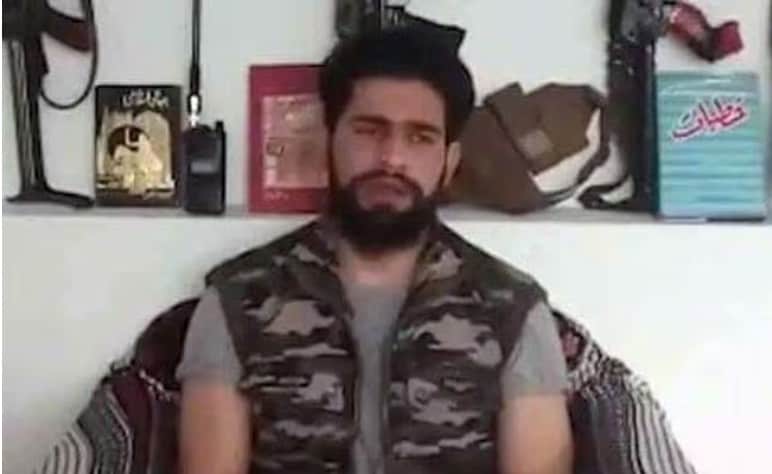
Zakir Musa became a terrorist in 2013
Kidnappings, Charity, Hawala
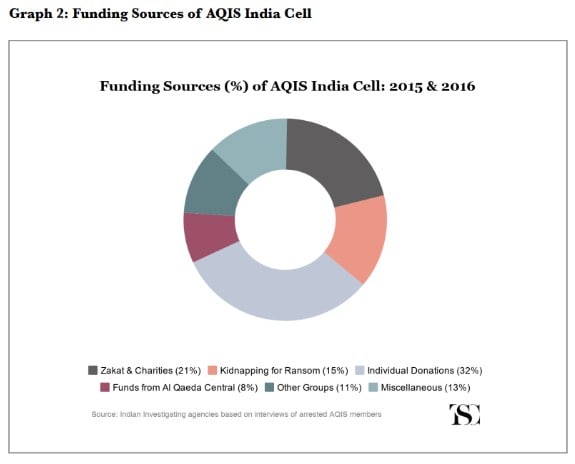
Al-Qaeda has relied on the hawala payment system to transfer and raise funds. While its affiliates have independent sources for funding, open-source evidence suggests that AQIS gets funds from al-Qaeda, which raises funds from charities and private donors.
Other sources of funding also exist, which include kidnappings for ransom (KfR), proceeds from counterfeit currency and state sponsorship, presumably from the Afghan Taliban. In one KfR instance, AQIS militants reportedly kidnapped former Pakistan PM Yousaf Raza Gilani's son, Ali Gilani, and Anwar Shah, son of the Chief Justice of Sindh High Court. Ali Gilani was kept as a prisoner for three years. Pakistan claims he escaped, but intelligence assessments say millions of dollars were paid for his release.
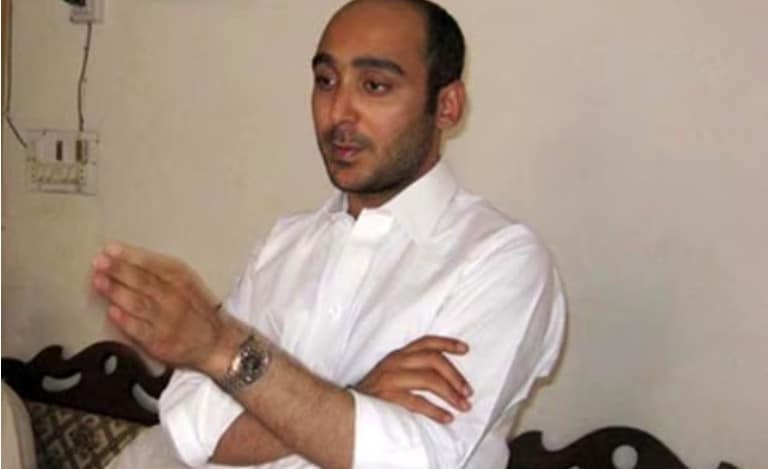
Ali Gilani was kidnapped in 2013
Ali Gilani was kidnapped in 2013. A Soufan Centre assessment outlines the sources of AQIS' funding between 2015 and 2016, which is unique because some of its funds are used by the core leadership of al-Qaeda.
In 2015, the Delhi Police Special Cell arrested Mohd. Abdul Rehman in East Delhi, who was later convicted under UAPA. He was a member of AQIS, and in the indictment report, the police mentioned that he met the top brass of Lashkar-e-Taiba - Zakiur Rehman Lakhwi, the 26/11 mastermind, and Hafiz Saeed. At least 17 people were indicted, and evidence suggests that AQIS received funds from Pakistan's ISI-backed LeT, establishing a link between the two groups. Rehman also received $20,000 from LeT over a period of two years, which he used for activities within AQIS.
Another suspect, Abdul Sami, a member of AQIS, underwent a five-year-long training at a Lashkar training camp. LeT and its senior leadership have had strong ties with al-Qaeda.
The Future of AQIS
The ongoing survival of AQIS is largely enabled by the support of the Afghan Taliban. Multiple reports from the UNSC confirm that the Afghan Taliban provides safe havens to jihadist organisations, including AQIS and Tehreek-i-Taliban Pakistan. Consequently, AQIS will likely continue to thrive as long as al-Qaeda's core leadership retains Taliban backing, especially in the ungoverned territories in AfPak regions, providing more resilience. Even with India's efforts to establish diplomatic ties with the Afghan Taliban, AQIS remains a persistent threat. UNSC documentation further confirms this relationship.
AQIS has failed to achieve its objective of having considerable influence in the subcontinent, especially in India, where Indian intelligence agencies have cracked down on terrorist networks in multiple coordinated raids. Despite calling for lone-wolf attacks - first theorised by al-Qaeda in the Arabian Peninsula (AQAP) in its Inspire Magazine in 2010, and adopted by ISIS - the group has failed to establish a ground in India.
AQIS propaganda has been India-centric for the last six years. In the February 2026 edition of its magazine, an article called Kashmir the gateway to Ghazwa-i-Hind suggests that the group will continue to focus on building a ground in Kashmir through local jihadist groups.
Assam has been the primary focus of AQIS since 2021, after J&K. AQIS in October 2021 released a video titled "Don't Sit Idly by Grieving," calling for people to perform Hijrah (migration) in Kashmir and Assam. The National Investigation Agency busted at least nine AQIS cells in Assam between 2022 and 2023, arrested several people, including Bangladeshis who were affiliated with Ansar al-Islam (Bangladesh).
AQIS is likely to persist in leveraging local affiliates like AGuH or seeking to reactivate dormant jihadist networks within India to broaden its reach. Nevertheless, Indian intelligence agencies maintain a decisive advantage over AQIS. The NIA regularly dismantles AQIS operations, including a nationwide operation in July 2026 across 20 locations targeting online radicalisation campaigns associated with both ISIS and AQIS. Despite setbacks such as the Red Fort attack impacting the investigative track record, intelligence authorities continue to demonstrate high operational efficiency in thwarting these threats.
More than AGuH, AQIS is a regional organisation seeking to establish a foothold in the Indian subcontinent by leveraging smaller, locally embedded groups. Its relationship with AGuH illustrates how AQIS can use regional affiliates to extend its reach and pursue operations that the central al-Qaeda leadership could not accomplish directly.
(Divyam Sharma studies terrorism, security and society at King's College London, with a specialisation in wargaming and OSINT)
Disclaimer: These are the personal opinions of the author

