






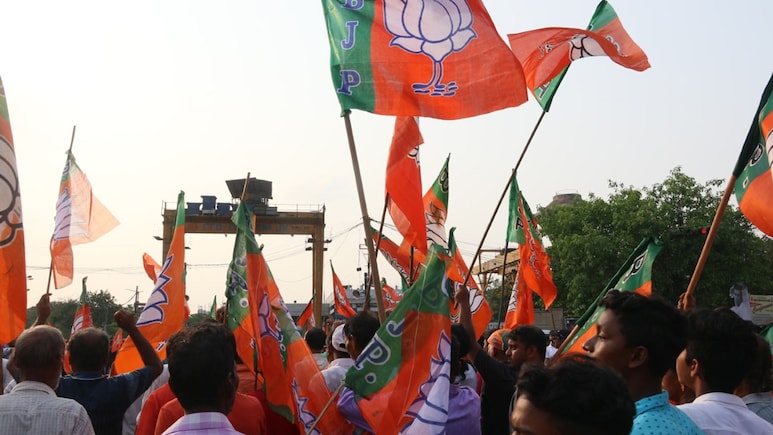
In any election, for any political party, voting is never shaped by a single issue, a single agenda, or one isolated political plank. Elections are always fought on multiple layers. That is the context in which this election in West Bengal also has to be understood.
As the principal opposition force in Bengal, the BJP too has adopted multiple strategies in its campaign. What is striking this time is the visible shift from its 2021 approach. In that Assembly election, the campaign was far more sharply defined by Hindutva, particularly hardline Hindutva, with the slogan of Jai Shri Ram dominating almost every political theatre. The slogan itself had become a mode of politics.
But electoral politics is also a process of trial and error. And the BJP appears to have understood something important about Bengal. Mamata Banerjee's deployment of Bengali identity politics has worked, to a large extent, as a counter to hyper-Hindutva.
There is a broader social understanding that Bengali identity has historically been mixed, Aryan and non-Aryan strands, layered histories, and plural inheritances. Socially and culturally, Bengalis often see themselves as pluralistic, heterogeneous, and, in a broad sense, secular. Because of that, a monolithic Hindutva framework does not always sit naturally with Bengal's political culture. Sanatan civilisational themes may have resonance, but in the electoral arena, aggressive Hindutva as a singular campaign idiom has limits in Bengal. And the BJP seems to have recalibrated accordingly in 2026.
That does not mean Hindutva has disappeared. It remains the party's core ideological anchor. 'Jai Shri Ram' is still present. Even after the first phase of polling, on Friday, while travelling along the banks of the Ganges at Gwalior Ghat, Prime Minister Narendra Modi heard supporters raising Jai Shri Ram slogans, and he responded in kind. After some time, that was seen as a signal that the slogan remains part of the campaign grammar. But noticeably, in the opening stretch of the campaign, PM Modi had emphasised Jai Maa Kali, Jai Maa Durga, invoked Mahishasur Mardini, and spoke of divine protection for Bangla. That itself reflected a tonal adjustment.
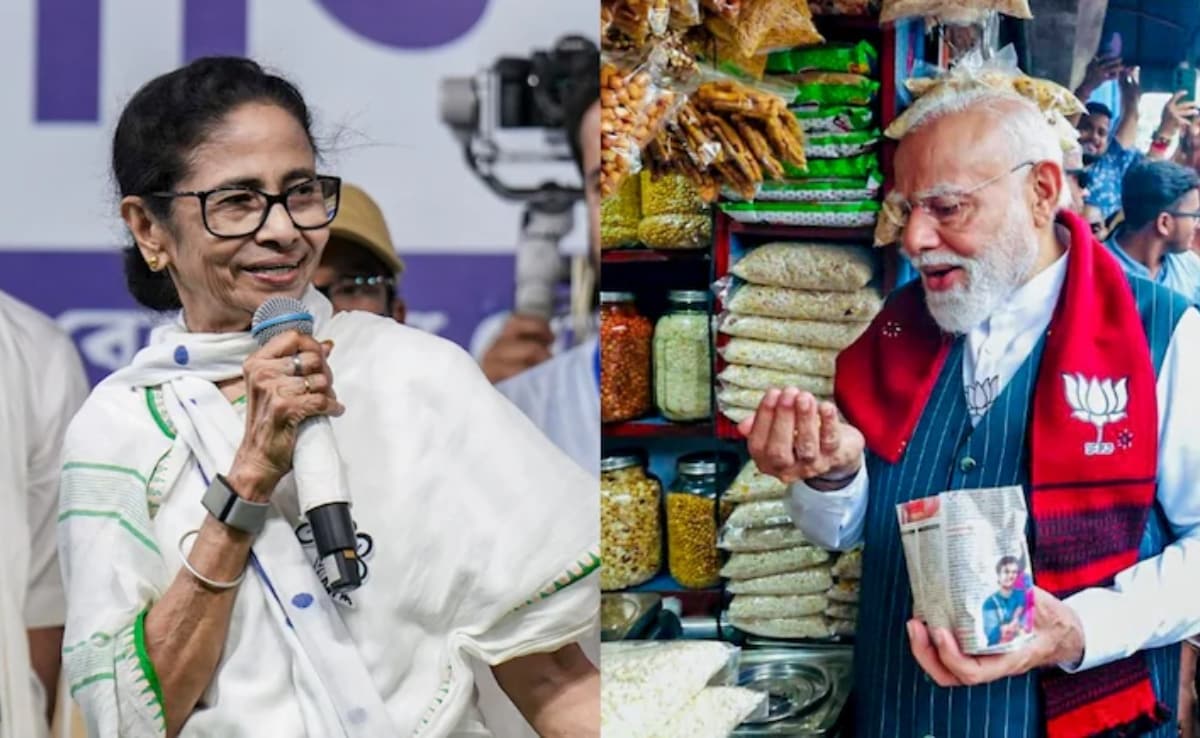
The larger strategic shift, however, is unmistakable: from Hindutva to Parivarta, change. Even on Friday, in a press conference, Home Minister Amit Shah made that point directly. He said this is not about changing an MLA, a cabinet, or even merely changing a chief minister. This is about changing Bengal. That formulation matters. The BJP is presenting itself not as the force creating change, but as the vehicle through which the people of Bengal are changing the regime. PM Modi too, in Panihati, framed it similarly: Bengal wants freedom - freedom from violence against women, freedom from unemployment, freedom from deteriorating law and order, and what he repeatedly described as 'jungle raj'.
This election's slogan is less "religious mobilisation" and more "regime change". The Parivartan rallies reflect this. Four or five major yatras have revolved around that theme, and almost every top BJP leader has been part of what can only be called a carpet-bombing campaign strategy centred on change. Through this shift from hyper-Hindutva to Parivartan, the BJP is trying to activate anti-incumbency. And after 15 years in power, anti-incumbency, as many would say, is almost a law of political nature.
Photo Credit: PTI
District by district, there are visible signs of discontent. And the BJP believes it is the only viable beneficiary of that mood because the Left and Congress remain organisationally weak.
Though the Congress has shown signs of renewed aggression. Mamata Banerjee long occupied much of Congress's traditional political space in Bengal. Rahul Gandhi appears conscious of that. That is why Adhir Chowdhury has again been fielded from Murshidabad. Rahul Gandhi has campaigned in North Bengal, sharply attacked Mamata Banerjee, and is returning for the second phase.
The Congress seems to sense that there is an anti-Trinamool undercurrent. There used to be a cynical saying in some Left circles: 'Aage Ram, Pore Bam', let Ram come first, then the Left can revive later. But this time, even the Left realises that if the BJP fully captures Opposition space, the future of the Left itself could be in question. That has made them more aggressive, too.
But the BJP, meanwhile, has broadened its strategy further, raising infiltration, or ghuspethiya, and border concerns and trying to consolidate Bengali anxieties not through Ayodhya or Ram Mandir, which interestingly has not been central this time, but through security and identity politics.
Even among women voters, the BJP has sought to challenge one of Mamata Banerjee's strongest social constituencies.
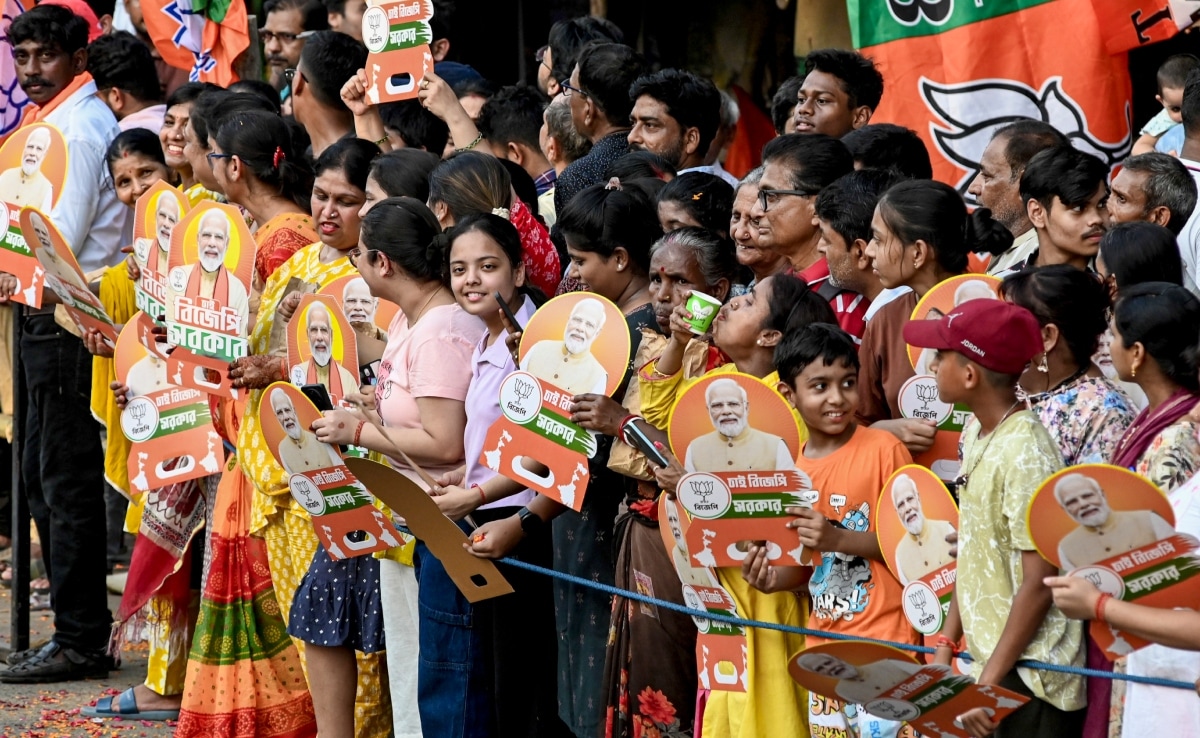
The women's reservation issue has been used politically. PM Modi has framed the BJP as the protector of women. He has even referenced remarks made by Mamata Banerjee after the RG Kar episode, questioning how a chief minister could suggest women should avoid moving out at midnight, and turned that into a larger critique about women's security. Even the symbolic presence of Abhaya's mother, Ratna Debnath, at Panihati lent emotional and political weight to PM Modi's visit.
All this shows that the strategy this time is layered, calibrated, and multi-pronged.
And at the centre of much of this is Amit Shah. In many ways, this entire strategic shift bears Amit Shah's imprint. His extended stay in Kolkata itself is significant. Staying for days, holding meetings late into the night with BJP leaders, personally reviewing constituency-wise calculations, and repeatedly telling candidates: increase the margin, increase the margin.
It is not only about winning seats. It is about generating confidence and creating the atmosphere that victory is within reach and that each candidate has a duty not merely to win, but to win decisively.
That has psychological value. Even after the first phase, the intensity of preparation for the second phase has not slowed. From PM Modi's carefully staged visuals on the Ganges, to his visit to Belur Math, to Amit Shah's party office meetings, to the way media footage is being deployed, everything appears tightly scripted. It is difficult not to feel this has been planned long in advance.
Every move looks choreographed. And that is where "The Importance of Being Amit Shah" becomes politically relevant. Beyond slogans and speeches, there is an architecture behind the campaign.
This is not a spontaneous election effort. It is managed, sequenced, and executed with precision. And that is why, in the 2026 West Bengal election, apart from the controversy over SIR and voter deletions, the change in campaign strategy itself has emerged as one of the most important political stories of the election.
(The author is Contributing Editor, NDTV)
Disclaimer: These are the personal opinions of the author

