






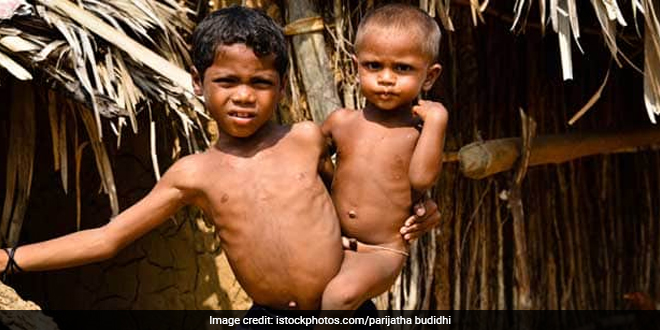
President Droupadi Murmu's assertion that children are not merely beneficiaries of welfare schemes but "architects of the nation's bright future" is both inspiring and sobering. She also said that ensuring good nutrition for a child is an investment in human capital.
President Murmu made these statements while speaking at an event to commemorate the milestone of serving 5 billion meals and 25 years of service to the cause by Akshaya Patra Foundation at Rashtrapati Bhavan Cultural Centre on Tuesday (March 17).
As an implementing partner of the Government of India's flagship PM POSHAN initiative, Akshaya Patra - the not-for-profit organisation- has been serving fresh, nutritious meals to millions of children studying in government schools across India. It places nutrition at the heart of India's ambition to become a Viksit Bharat by 2047.
Yet this vision collides with a stark reality. Millions of Indian children continue to suffer from stunting and wasting - conditions that silently erode the country's human capital.
Despite flagship schemes like the Mid-Day Meal Programme, POSHAN Abhiyaan, and ICDS (Integrated Child Development Services), malnutrition persists due to weak implementation, poor inter-departmental coordination, and data gaps.
Cost of malnutrition
India has made measurable progress, but the scale of the challenge remains daunting. According to the United Nations' 2025 State of Food Security and Nutrition in the World (SOFI) report released on July 28, 2025, more than 172 million people in India were undernourished in 2024, much lower than 243 million in 2006. India may have reduced the number of undernourished people, but globally, India ranks 48th out of 204 countries assessed for undernourishment.
Nutrition pointers for children from India's own data from NFHS-5 (2019-21) [National Family Health Survey] show stunting at 35.5% and wasting at 19.3%. These numbers are not just statistics; they represent diminished cognitive potential, reduced productivity, and intergenerational cycles of poverty.
Stunting reflects chronic undernutrition and directly impacts brain development, learning outcomes, and future earnings. Wasting, on the other hand, signals acute malnutrition and is associated with a higher risk of mortality. Together, they form a silent crisis that undermines India's demographic dividend.
Research suggests that malnutrition contributes to nearly 0.6 million child deaths annually in India. Beyond mortality, it leads to lifelong consequences - lower educational attainment, reduced workforce productivity, and increased healthcare burdens. A malnourished child today is a less productive adult tomorrow, weakening the very foundation of a developed economy.
Uneven progress across states
While national averages show marginal improvement, they conceal deep regional disparities. In fact, stunting and wasting increased in about one-third of Indian states between NFHS-4 and NFHS-5.
States like Bihar, Uttar Pradesh, Jharkhand, and Madhya Pradesh continue to report high levels of child malnutrition. For instance, districts in Madhya Pradesh have reported over 40% underweight prevalence in some areas, highlighting persistent gaps in implementation and outreach.
Child malnourishment in Gujarat became the topic of discussion in the Legislative Assembly recently (March 12). During a discussion on the budgetary demands of the Women and Child Development Department, Congress MLA Jignesh Mevani raised the matter saying, "...that 40 out of 100 children are malnourished. A very large section of them are tribals."
Of course, the data was opposed by Gujarat's Women and Child Development Minister Manisha Vakil who replied that the Opposition was relying on figures from the NFHS (2019-21) and not the Poshan Tracker system, "where only 11.4% of children in Gujarat" were malnourished as of January 2026.
Meanwhile, states like Kerala and Tamil Nadu have achieved relatively better outcomes due to stronger public health systems and social indicators.
Community-led nutrition interventions in Maharashtra have significantly reduced severe malnutrition in tribal areas by focusing on local food, parental awareness, and grassroots participation. Similarly, Odisha's targeted nutrition missions and real-time monitoring systems demonstrate the importance of accountability and convergence.
Tamil Nadu's long-standing success with school meals shows how sustained political commitment and administrative efficiency can yield results. These examples underline a key lesson: nutrition outcomes improve when policies are localised, community-driven, and consistently monitored.
For a healthy future
To translate President Murmu's vision into reality, India must adopt a multi-dimensional strategy. Health, education, sanitation, and nutrition programmes must work in tandem rather than in silos.
Nutrition interventions must begin from pregnancy through the first two years of life-the most critical window for brain development.
Addressing anaemia, ensuring institutional deliveries, and improving maternal nutrition are foundational.
Real-time monitoring (like POSHAN Tracker) and district-level accountability can help target high-burden areas.
India's aspiration to become a developed nation by 2047 hinges not just on economic growth, but on the quality of its human capital. A nation cannot rise if a third of its children are stunted and one-fifth are wasted.
President Murmu's statement reframes the debate: children are not passive recipients of welfare-they are the foundation of India's future. Investing in their nutrition is not charity; it is nation-building.
The path to Viksit Bharat runs through India's anganwadis, schools, and households. The question is not whether India can afford to invest in child nutrition- it is whether it can afford not to.
(The author is Contributing Editor, NDTV)
Disclaimer: These are the personal opinions of the author

