






Something unusual has been happening in our High Courts these past few weeks. One after another, some of the most recognised women in India have walked in, asking judges to scrub fake versions of themselves off the internet. In early September, the Bombay High Court ordered the removal of AI-generated deepfakes of Shruti Haasan. Shilpa Shetty sought urgent relief against obscene AI content carrying her face. Aishwarya Rai Bachchan went to the Delhi High Court over the misuse of her image by AI tools. The courts moved quickly. But sit with the uncomfortable part. These are women with fame, money and the best lawyers in the country, and even they must now fight to keep their own faces. What about the woman who has none of those things?
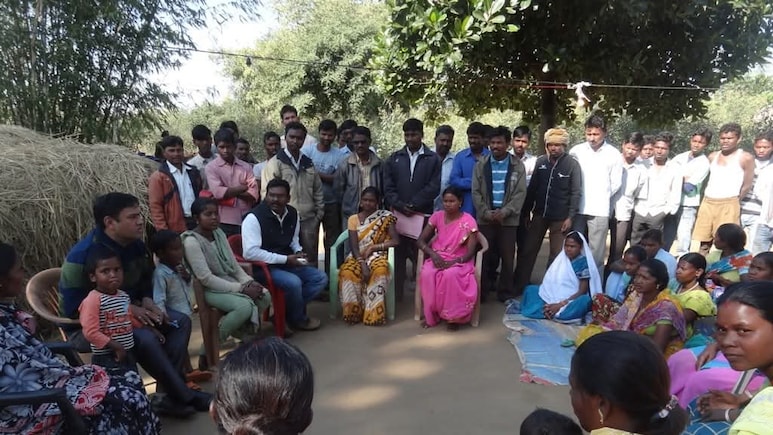
I have met her. As district collector of Hazaribag and later Garhwa, I sat with self-help groups in tribal villages: women under a tree, counting small savings to the last rupee, repaying loans with a discipline most corporations cannot match. One evening, a woman who sold lac and mahua told me the price the trader had given her. It was a fraction of what her produce fetched three districts away. She lacked neither intelligence nor industry. She lacked information, and the means to ask. She is on every page of my eight books on artificial intelligence, because she, not the actress, is the person this technology will finally be judged by.
For Indian women, this technology wears two faces, and the ugly one arrived first. Researchers who audited deepfake videos found that 96 per cent were non-consensual sexual imagery, almost all of it targeting women. One study counted a 550 per cent rise in four years; the research firm Graphika logged 24 million visits to so-called undressing websites in a single month. The tools are free, instant, and fluent in Hindi. In a country where a woman's reputation still polices her freedom, one fabricated clip can end an education or a marriage, and sometimes a life. The International Labour Organization adds a colder entry to the ledger: the clerical jobs most exposed to automation are where working women cluster, leaving women's employment more than twice as exposed as men's. Left to itself, the machine age goes after her face and her desk in the same decade.
The second face is the one that keeps me writing. The same technology now speaks and listens in every scheduled language; Bhashini covers all 22, and UPI already takes voice commands in Hindi. And it has arrived just as Indian women surge into work: female labour force participation has climbed from 23 per cent to nearly 42 per cent in six years. Ten crore women stand organised in self-help groups. Over a crore have become Lakhpati Didis. McKinsey once put the prize of women's equality at 770 billion dollars added to India's GDP. For the first time, a tool capable of closing that gap can reach the last hamlet. Which face wins is not a technical question. It is a policy choice, and we are making it right now, mostly by not making it.
Every earlier revolution demanded an entry ticket of a woman before it would serve her: literacy, English, a laptop, capital, or simply permission to travel. This one demands none. A tireless assistant speaking Santali on a shared phone meets her exactly where she is. My lac seller could ask today what Kolkata pays, draft the reply, fill the form, in her own tongue, without anyone's leave. Multiply her by ten crore organised women and you are looking at the largest female-earning event since the self-help movement itself.
But design is destiny, and women are barely in the design room. Only one in five AI professionals worldwide is a woman. India's version of this failure is crueller because our pipeline is full: about 43 per cent of our STEM graduates are women, among the highest shares on earth, yet they thin to roughly a quarter of the technology workforce. The consequences are not abstract: a global giant scrapped its hiring algorithm after it taught itself to downgrade resumes containing the word women's. UNESCO found female-voiced assistants designed to answer abuse with flirtatious deference. Audits found facial recognition failing on darker-skinned women at over thirty times the rate for lighter-skinned men. Machines learn our prejudices with perfect diligence unless someone in the room objects. The surest safeguard is arithmetic: make the room half women, in our skilling missions, our datasets, our standards bodies.
Protection, meanwhile, comes before participation; a woman who fears her photograph will not upload her resume. India's IT rules on synthetic content, in force since February with visible labels and three-hour takedowns, are a genuine beginning, and Denmark points further, legislating copyright over every citizen's face and voice, so that a deepfake becomes theft, not mischief. But law on paper is not law in Garhwa, where a tribal woman cannot navigate a grievance portal in English. She needs what I would call a Digital Didi at the block level: a trained local woman who files the complaint, triggers the takedown and walks with her to the police station. The model is proven: over a lakh BC Sakhis already carry banking to village doorsteps, the way ASHA workers once carried health and rewrote India's mortality map. And reach her first: roughly a third fewer Indian women than men use mobile internet, and no algorithm can empower a woman it cannot find.
One more thing, because what gets measured gets mercy. Every AI scheme, skilling mission and platform in this country should publish a single number: the share of its users and earners who are women. The day that figure appears on dashboards in Delhi, a thousand design decisions in Bengaluru will quietly change.
In a Kasturba Gandhi Balika Vidyalaya in Garhwa, a school for girls who had once dropped out, a student stood up during my visit and asked: Sir, can someone like me become someone like you? The room laughed, then went very quiet, because every girl there knew the honest answer carried odds I did not have the heart to state. The machine age has changed those odds in both directions at once. It can put the world's finest tutor in her pocket, and the world's ugliest weapon against her face. The famous women of this September had courts and counsel to defend them. That girl will have only the rules we write, the rooms we staff and the numbers we choose to count. Artificial intelligence will be judged in India by many measures. History will use just one: what it did to her.
(Dr. Manish Ranjan is an IAS officer and the author of eight books on Artificial Intelligence. A recipient of the Prime Minister's Award and the National e-Governance Award, he studied at the Goldman School of Public Policy, UC Berkeley, and Saïd Business School, University of Oxford)
Disclaimer: These are the personal opinions of the author

