





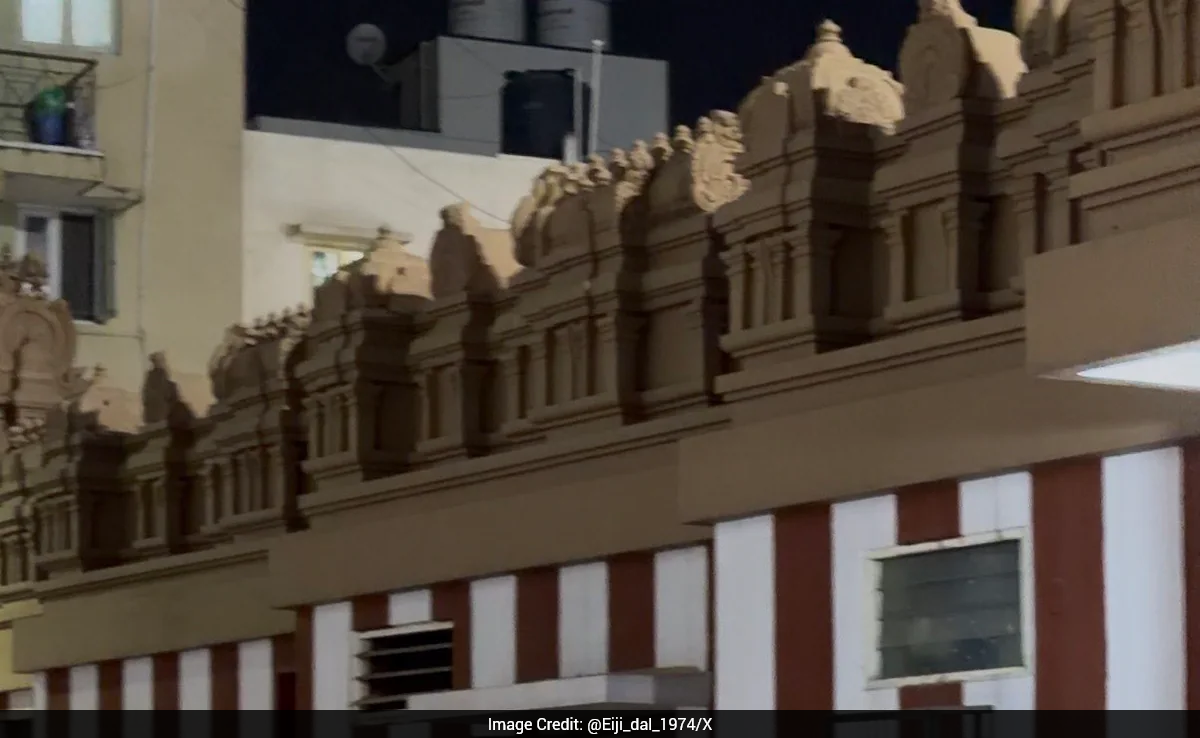
- A foreign traveller highlighted the striped walls commonly seen on Indian temples
- The stripes typically feature white and brick-red colors symbolizing purity and power
- White represents purity while brick-red signifies divine power in temple stripes
A foreign traveller recently drew attention to the distinctive striped walls often seen on temples across India, sharing a photograph of a temple along with an observation about their symbolic meaning. The post quickly caught the interest of social media users who appreciated the cultural insight.
In the post, the user explained that he finds the striped walls of Indian temples fascinating. He stated that he had seen these walls before, but hadn't paid much attention to them until recently, when he learned about the hidden meaning behind them.
Symbolic Significance Of Colours
According to the user, the colours used in these stripes on temples have their own symbolic meaning. He explained that white signifies purity, while brick-red represents divine power.
The photo shared with the post showed traditional white and brick-red stripes on the temple's outer walls. This type of pattern is commonly seen in many temples across the country.
Check Out The Post Here:
I love the striped temple walls in India 🇮🇳
— パリのエイジ (@Eiji_dal_1974) March 6, 2026
I never really paid attention to them before, but I recently learned that the colors symbolize holiness (white) and divine power (brick red)✨✨✨ https://t.co/pUaHyHtyU3 pic.twitter.com/JREAVaOAx4
Social Media Reaction
The post attracted attention on social media, with many users praising the traditional temple architecture and its cultural connotations.
One user commented, "Yes. The red signifies feminine energy and white masculine energy. Together they symbolise the harmony of Shiva and Shakti."
Another user noted, "I see this white and red/saffron color stripes in stalls here in Japan, specially during festivals."
Track Latest News Live on NDTV.com and get news updates from India and around the world

