





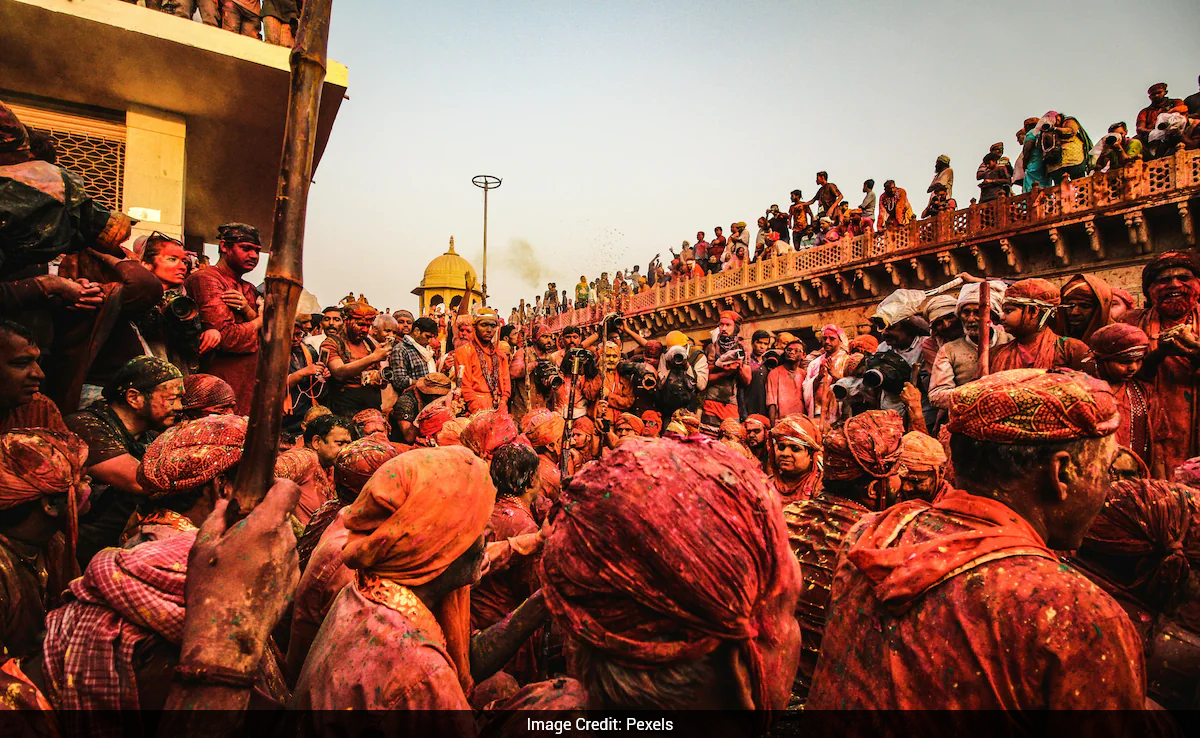
Holi, the festival of colours, is celebrated differently in various parts of India. Each region brings its own traditions, music, and local flavour to the festival. Holi, the festival of colours, is celebrated on the full moon night of Phalguna, known as Phalguna Purnima. However, according to Drik Panchang, a total lunar eclipse will occur on the evening of March 3, directly affecting the religious calendar.
While the Purnima tithi runs from March 3 into March 4, the visible eclipse on March 3 evening has made that time unsuitable for Holika Dahan in many regions. As a result, some states will perform Holika Dahan on March 2 and celebrate Holi on March 3. Others will hold Holika Dahan on March 3 and mark Holi on March 4.
Here are eight unique ways to celebrate Holi in India:
Vrindavan, Uttar Pradesh: Holi in Vrindavan evokes the vibrant spring season. Flower petals flutter in the air, music fills the streets, and as the streets become colourful and decorated with flowers, crowds gather together to celebrate.
Barsana, Uttar Pradesh: Holi is celebrated as a vibrant tradition in Barsana. Sticks and shields, teasing songs, laughter, and colours fill the streets.
Sujhanpur Tira, Himachal Pradesh: Holi here creates a fair-like atmosphere. The Chaugan grounds fill with processions, performances, and large gatherings for several days, immersing the entire town in celebration.
Sangla Valley, Himachal Pradesh: Holi in Sangla falls during the Faguli season and is uniquely marked by Kinnauri culture. Masked dances, dholak beats, and community gatherings create the local rhythm.
Shantiniketan, West Bengal: Holi in Shantiniketan is a spring festival centered around art and community. Orchestrated song and dance, light colour exchange, and a campus-town atmosphere make it a vibrant spectacle.
Dol Utsav, West Bengal: The Dol Utsav features swings, songs, and group colour exchange. The celebration is community-centered, with music and springtime joy everywhere.
Manjal Kuli (Ukuli), Kerala: In parts of Kochi, Holi turns turmeric yellow during Ukuli or Manjal Kuli. Turmeric water is used instead of powder, songs fill the streets, and small groups celebrate with playful fun.
Hampi, Karnataka: Hampi is a confluence of colour and heritage sites. Market streets fill with people, festivities spill into open fields, and the day often ends peacefully along the riverbank.
Track Latest News Live on NDTV.com and get news updates from India and around the world

