There are 195 countries in the world, which are home to at least thousands of communities, each possesses ancient knowledge, follows various traditions, and takes pride in its culinary heritage. Each ethnic group also celebrates festivals and grieves the dead in its own way. For some, it could be a tradition, while others can label it 'peculiar'.
The Toraja community in Indonesia has a unique way of celebrating the dead. They grieve the death, but they celebrate the departed ancestors, even babies. Travellers who have visited the Tana Toraja Regency, a landlocked part of South Sulawesi Province in Indonesia, have reported that the community has a tradition of living with the dead.
But that's not all. They used to bury the babies who died before growing a tooth in the trees. Why? The reason might seem odd, but it is humbling at the same time.
Why Toraja Community Buries Dead Babies In Trees
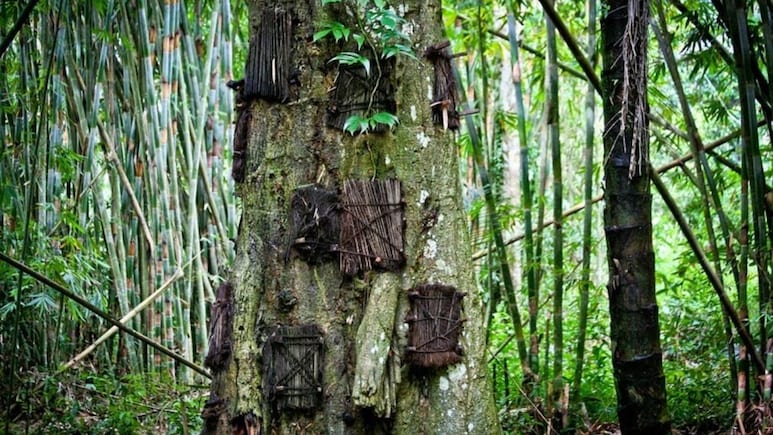
According to Visit Toraja, the local ethnic group has many burial practices, but the one that surprises many is the interment of dead babies in trees. There are many tree burial sites, where one can find dead babies placed inside living and lush green trees, especially in the village of Kambira.
This practice was reserved for babies who died before teething. Following the death, a tree, usually a jackfruit, which locals call a Tarra tree, was selected because people believed that infants and babies without teeth had soft bones, like the pulp of the fruit. Young babies are also considered pure in the Toraja community. They are believed to be untouched by any sin.
"We bury the babies in this tree so the wind can waft away their souls," explained Stefan, a local guide, told Chris Dunham, writer of Life and Death in Tana Toraja, Indonesia, an article published in Transitions Abroad in 2008.
How The Toraja Community Buried Dead Babies In Trees
Following the death of an infant, a shallow period of recess was observed. Once the tree was chosen, the baby was wrapped in ferns, interred in the living tree, and the site was later covered with a palm tree bark.
The community believed that the tree would be the new mother of the dead child, and hence, the graves were carved on the opposite side of the tree to the house of the original parents. Over time, the tree would grow around the burial site. The community believed that this burial practice allows the baby to return to the lap of Mother Nature.
Vishal Tandon, a travel influencer, reported that the white milk sap released by the tree, also called latex, is believed to be the milk that would nurture the dead baby.
If you visit Kambira, you will notice multiple graves on a single tree, and all these sites are over 50 years old. Thus, this indicates that the Toraja community discontinued the tree burial tradition half a century ago because modern science has reportedly decreased the rate of infant deaths.
Also Read | Why An Indonesian Tribe Doesn't Bury Or Cremate Its Dead But Preserves Their Bodies
Track Latest News Live on NDTV.com and get news updates from India and around the world
