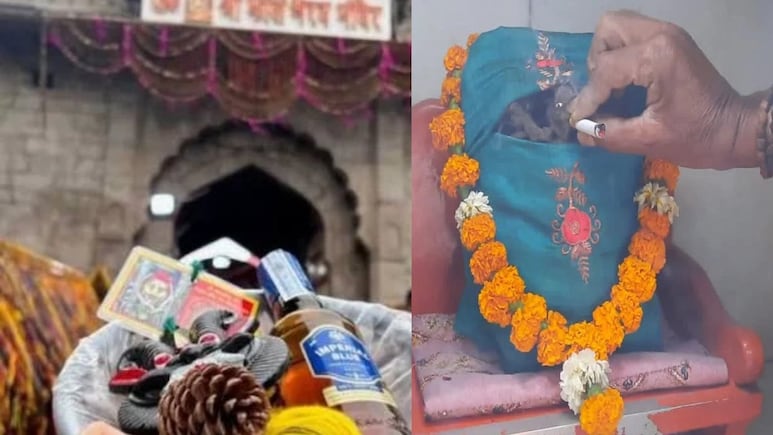
Flowers, coconuts, sweets and incense sticks are familiar sights at Indian temples. But every once in a while, a shrine with a rather unconventional offering catches the Internet's attention.
From devotees leaving bottles of whisky at a temple to placing cigarettes before a deity, these local traditions often leave people curious about the stories and beliefs behind them.
The latest to find itself in the spotlight on social media is the Lutru Mahadev Temple in Himachal Pradesh's Solan district, where devotees offer lit cigarettes and beedis to Lord Shiva.
Videos and photographs of the ritual have been doing the rounds on social media, with the unusual sight of cigarettes smouldering inside a natural rock formation that represents Lord Shiva.
The What And How
Situated in a cave on a hill near Arki, the temple is dedicated to Lord Shiva and is known for its naturally formed Shivling, which has several small cavities on its surface.
Devotees place lit cigarettes or beedis in these openings, and smoke can be seen emerging from other holes in the rock. This has led to the popular belief that Shiva is smoking the offering.
Scientifically, the phenomenon is associated with the cave's natural formation and airflow, which may help the cigarettes continue smouldering.
For devotees, however, the ritual is an expression of faith. Some believe that offering cigarettes and making a wish at the shrine can bring blessings and help fulfil their prayers.
A 405-Year-Old Temple
The temple is believed to have been built in 1621 by the unnamed ruler of the erstwhile Baghal princely state. Local legend says the king built it after Lord Shiva appeared in his dream and asked him to establish a shrine on the hill.
The temple is housed inside a large cave, approximately 61 feet long and 31 feet wide, and attracts devotees throughout the year, particularly during Mahashivaratri.
At Lutru Mahadev, the cigarette offering is rooted in the local belief that Lord Shiva accepts tobacco as an offering. Shiva is traditionally associated with asceticism and, in popular religious culture, with bhang. Some local accounts also trace the cigarette ritual to a shepherd or ascetic who is said to have first placed a lit cigarette in one of the Shivling's natural cavities. Others followed, and the practice gradually became associated with the shrine.
Devotees now place lit cigarettes and beedis in the holes of the naturally formed Shivling, often while making a wish or seeking the deity's blessings. The smoke emerging from other openings is interpreted by worshippers as a sign of Shiva accepting the offering.
But Lutru Mahadev is not the only shrine in India where the offerings look different from what one might expect. Across the country, local legends, folk traditions and the stories associated with particular deities have shaped some rather unusual forms of worship.
Where Liquor Is Offered
One of the best-known examples is the Shri Kal Bhairav Temple in Ujjain, Madhya Pradesh. Dedicated to Kal Bhairav, a fierce manifestation of Lord Shiva, the temple is known for its tradition of offering liquor to the deity.
Devotees bring bottles of alcohol, which are handed to the priest. The priest pours some of the liquor into a shallow vessel and holds it near the deity's mouth as part of the ritual.
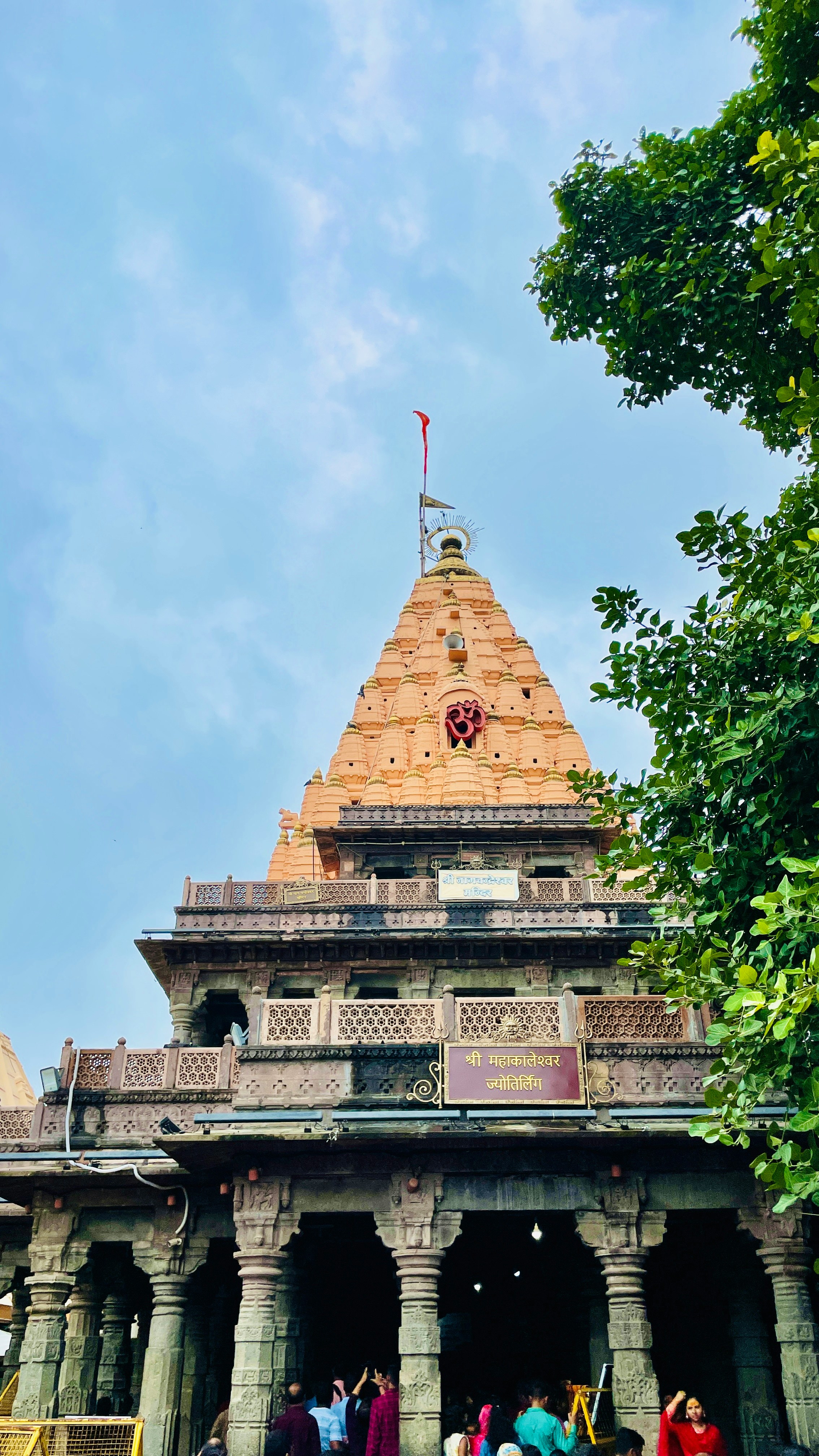
One of the best-known examples is the Shri Kal Bhairav Temple in Ujjain. Photo: Usplash
The remaining liquor is generally returned to the devotee as prasad.
Alcohol is offered because the deity is worshipped as a fierce manifestation of Lord Shiva. In certain Tantric traditions, liquor is among the ritual offerings made to Bhairava.
It is also associated with the Panchamakara tradition, which includes five ritual elements beginning with the letter 'M', one of which is madya, or alcohol.
Devotees believe that offering liquor pleases Kal Bhairav and helps them seek his protection and blessings.
Shri Kal Bhairav Mandir, Bhairavgarh
Delhi has its own version of this tradition at the Kilkari Bhairon Temple near Purana Qila. Here, devotees offer whisky, rum, vodka and other alcoholic drinks to Bhairon Baba.
The practice is linked to the belief that the deity was fond of liquor. The offering has also traditionally been distributed as prasad, although the practice of distributing alcohol has attracted administrative and public safety concerns.
Then there is the Khabees Baba shrine in Sitapur, Uttar Pradesh, where liquor is offered in memory of a saint believed to have lived around 150 years ago. Unlike conventional temples, the shrine does not have an idol or a priest. Instead, devotees pour liquor over two slipper-shaped structures believed to represent the saint's feet. A small portion is collected and distributed as prasad.
According to local accounts, Khabees Baba was known for drinking in the evenings and was believed to have healing abilities. Devotees continue to visit the shrine, particularly during Guru Purnima, to pay their respects and seek blessings.
Cigarettes And Beedis Are Part Of The Offering Too
If cigarettes at a Shiva temple sound unusual, the Khapri Temple in Kodibag, Karnataka, has a tradition that takes things a step further.
During its annual jatra, devotees offer cigarettes, beedis and country liquor to the deity. Some also perform aarti using lit cigarettes.
The custom is associated with a local legend about Khapri, believed to have been an African healer who came to the region around 300 years ago.
According to folklore, he was known for treating people with herbal medicines and helping the local community. After his death, he came to be worshipped as a deity, and the offerings are believed to have continued in his memory.
The annual festival attracts devotees from Karnataka as well as neighbouring Goa and Maharashtra. Interestingly, people from different religious communities also participate in the celebrations.
In Gujarat, the Mamadev Temple in Surat's Katargam area is another shrine associated with cigarette offerings.
Devotees reportedly bring cigarette packets, sometimes even imported brands, believing that the offering can help fulfil their wishes. According to accounts from the temple, the practice is linked to the belief that Mamadev was fond of smoking.
When Toy Aeroplanes Become An Offering
At Talhan village near Jalandhar, Punjab, a Gurudwara became widely known for devotees offering miniature aeroplanes.
The practice was associated with the Shaheed Baba Nihal Singh Gurdwara, popularly called the Hawai Jahaj Gurdwara. People hoping to move abroad, secure visas or find opportunities overseas would offer toy aeroplanes while praying for their wishes to come true.
The tradition reportedly began around 15 years ago and became so popular that shops selling miniature aircraft appeared outside the gurdwara. However, in August 2023, the gurdwara management stopped accepting toy aeroplanes following an advisory from the Akal Takht, which had asked the Sikh religious management to discourage the practice.
Fish, Meat And Toddy Finds A Place Too
In Kerala, the Parassinikadavu Muthappan Temple has a distinct set of offerings that reflect the region's folk traditions. Dedicated to Muthappan, the shrine is closely associated with Theyyam, a ritual performance in which an artist embodies the deity.
Unlike the vegetarian offerings commonly associated with many temples, Muthappan worship includes fish, meat and toddy, a traditional fermented palm drink. These offerings are connected to local beliefs about the deity and his close relationship with ordinary people and their everyday lives.
The temple's own list of rituals mentions offerings such as fish, toddy, cooked grains and other food items. The practice is an important part of the region's religious and cultural identity.
Another example is the Kamakhya Temple in Guwahati which follows ritual traditions that differ from those of many other Hindu temples.
Animal sacrifice, including goats and pigeons, is associated with certain worship practices, while fish and other offerings also feature in some rituals.
Track Latest News Live on NDTV.com and get news updates from India and around the world
