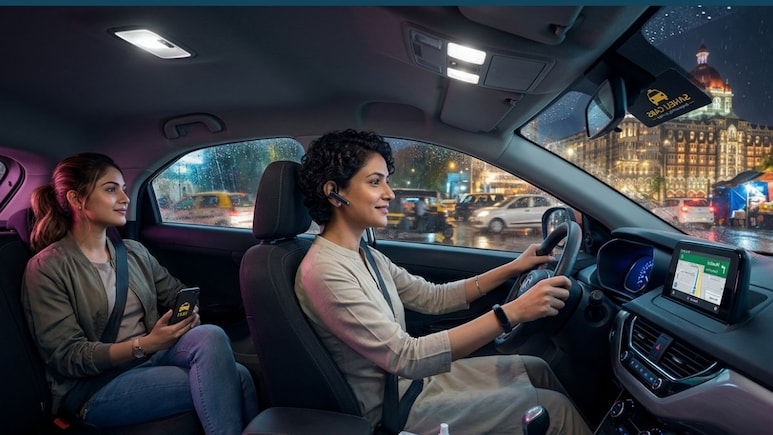
- Women Preferences feature lets US female riders choose women drivers for safety and comfort
- India’s women-only ride services are small scale, with low female driver participation
- Limited women drivers and safety tool failures challenge women-only ride solutions in India
When the ride-hailing giant Uber announced that women drivers and riders in the United States could now request trips only with other women, the move was positioned as a response to a long-standing demand: safety and comfort.
The feature, called "Women Preferences", allows female passengers to prioritise women drivers and lets women drivers choose to pick up female riders.
The company said the pilot programme last year showed that women felt "more comfortable in the back seat" and "more confident behind the wheel". Around one-fifth of Uber's drivers in the US are women, though the ratio varies widely between cities.
The feature allows women to reserve rides in advance with women drivers or adjust their preferences in the app to increase the likelihood of being matched with one. In cities where teen accounts exist, teenagers and their parents can also request women drivers.
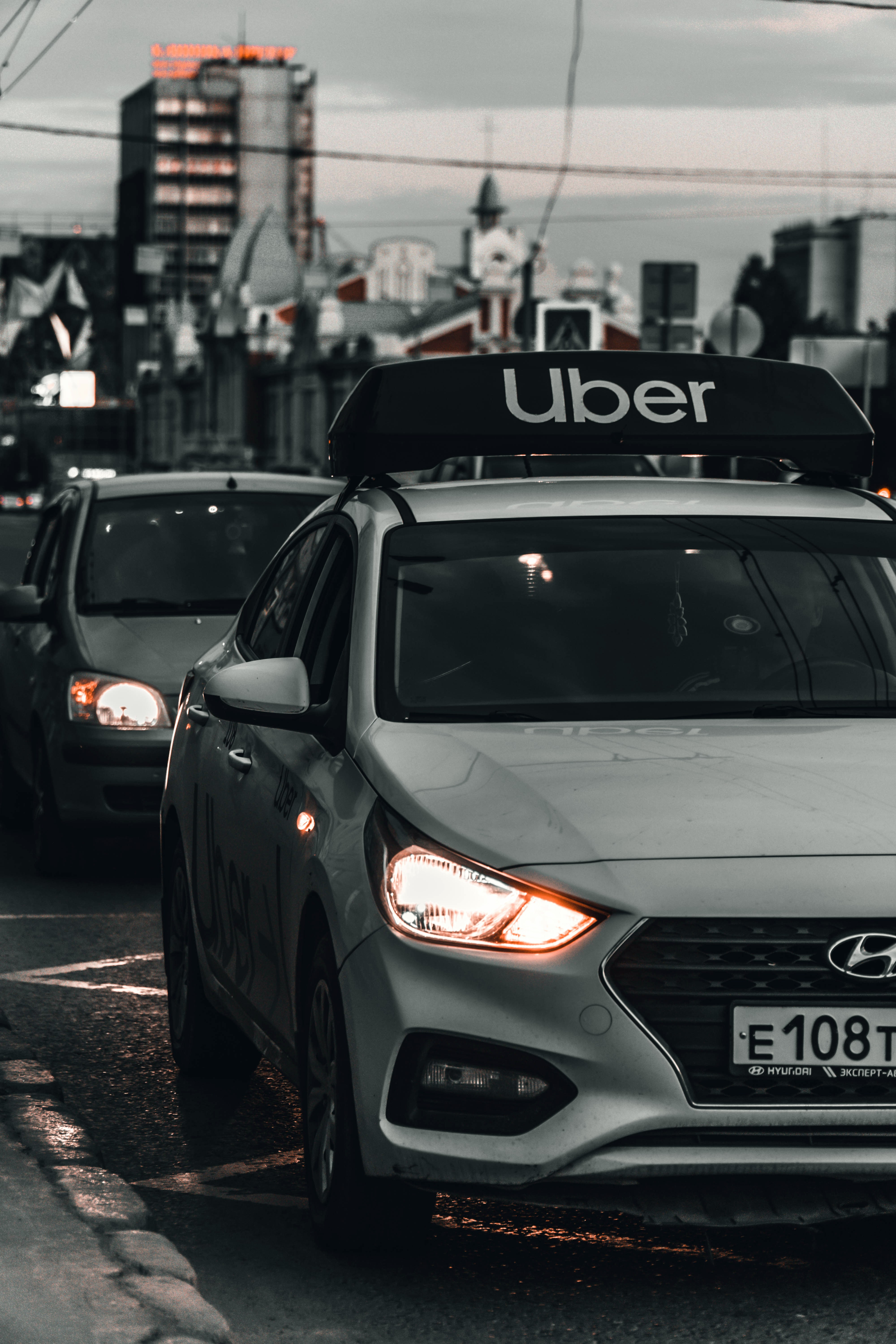
Uber's new feature, called "Women Preferences", allows female passengers to prioritise women drivers. Photo: Unsplash
But the rollout has not come without controversy. Two drivers in California have filed a lawsuit alleging the feature discriminates against men and violates the state's Unruh Civil Rights Act. Uber has contested the claim, arguing that the policy serves "a strong and recognised public policy interest in enhancing safety".
Meanwhile, rival ride-hailing platform Lyft is also facing a discrimination lawsuit over a similar feature introduced in 2024 that allows riders and drivers to prioritise matches with women and non-binary users.
The debate has brought an old question back into focus globally: do women-only ride options genuinely improve safety, or are they a workaround for deeper systemic problems?
For many women, especially in countries like India, the answer is complicated.
What Women Riders Say: 'Constant Vigilance In The Back Seat'
For Geetanjali, a 24-year-old working professional in Hyderabad, the idea of women-only cabs sounds reassuring in theory, but she says safety concerns run much deeper.
"Whenever I have to catch an early-morning flight, I feel really uncomfortable taking late-night cabs with male drivers. I have to constantly keep all my senses open," she says.
"But if they're introducing women-only cabs, it shouldn't come at the cost of the safety of women drivers. Sadly, India cannot achieve equality in terms of women-only cabs until women's safety is taken care of and strict rules are made for both the driver and the passenger," she adds.
Her concern also reflects frustration with safety mechanisms that exist on paper but often fail in reality.
"I saw a video where they were showing that the safety alarm in the cab doesn't even work, no matter how much you press it. This is the state of cabs. Can't yet trust cab apps like Uber in terms of safety if immediate and strict actions are not being taken against the offenders."
The video that Geetanjali was referring to was a February 2026 video, from Mumbai that shows a cab driver demonstrating that the vehicle's SOS safety button fails to trigger any immediate response, sparking widespread concern over passenger safety in India.
Shared by Dubai-based NRI Rohit Rathaur, the footage captures the driver explaining the red SOS button's purpose for emergencies, especially for women, before pressing it repeatedly to prove no police or company response occurs.
He recounts pressing it all night once, "for fun" with no call until 6 AM the next day. No audible alert or quick action is shown in the recording.
Kareena (name changed as per request), a working professional in Mumbai and mother to a three-year-old girl, says every late-night ride comes with its own mental checklist.
"Personally, I would feel a lot safer in cabs driven by women, especially when travelling late at night in Mumbai. Every time I step out late and sit in a cab driven by a man, my mind automatically starts keeping tabs on where he's looking at me in the mirror, whether he's following the route, where we are exactly, wondering if the child lock is on, and if I can get out of the car if I have to escape."
She recalls a recent ride that left her shaken.
"Last month, I was travelling at night and noticed the driver took a different route than the one on the map, which was via the main roads and the one I was familiar with. After asking him to stick to the route, he rudely raised his voice and said, 'aap mujhe mat sikhao kahaan jaana hai (don't teach me where I should go).' After that, I was terrified the rest of the ride."
Kareena says she immediately shared her location with her partner.
"Thankfully, my partner and I always share our live locations. I texted him in panic, and he called to check why we were not taking the usual route. I'm lucky nothing untoward happened."
The ride still ended badly.
"The driver ended up dropping me 1 km away from my drop location because the road was blocked due to construction work. I was unable to raise a complaint about him on the Ola app; all I got was 'we will look into it'. I've definitely become more cautious after this... now I call a driver and take my own car when I know I will be drinking," she says.
Why Ride-Hailing Matters So Much For Women In India
Despite safety concerns, ride-hailing has become a crucial mobility tool for women across Indian cities.
Data suggests the demand is significant:
- A 2023 Ola survey found that 75% of women use ride-hailing services for work travel because they perceive them to be safer than other transport options.
- About 82% also cite the flexibility of travelling anytime as a major reason.
- The economic impact is also substantial. Studies estimate that safer and more accessible ride-hailing could add between 0.32 million and 0.56 million women to the workforce in India's five largest cities by 2028, increasing female labour participation by up to 6.9%.
But the driver gap remains stark.
- Women account for only around 1-5% (some reports suggest below 1 per cent)of drivers on most ride-hailing platforms in India, highlighting how male-dominated the industry still is.
That is one reason women-only cab services have started appearing in small pockets across the country.
India Already Has A Few Women-Only Ride Services
Unlike the massive scale of platforms like Uber or Ola, India's women-only ride services tend to be niche, city-specific operations.
One such example is Fery Rides, launched in 2023 in Gurugram. The platform positions itself as India's first all-electric, women-led mobility service.
Fery offers scooty taxis, cab rides, rentals and scheduled trips driven entirely by verified female drivers called "Sister Partners". The service promises flat pricing with no surge charges, in-vehicle cameras, real-time tracking and strict driver verification.
Although still limited to Gurugram, the platform has already logged more than 40,000 rides and created over 200 employment opportunities for women drivers.
Another initiative is Saheli, a women-only ride platform that focuses on female drivers and passengers. It offers cab and scooter rides designed for daily commutes, errands and late-night travel.
The service, which has not been launched yet, aims to scale significantly, with plans to eventually serve more than one million women passengers using around 50,000 female drivers.
Then there is She Scooty, a two-wheeler taxi service based in Jalandhar in Punjab. The platform connects women passengers with trained female riders who provide point-to-point transport for work, classes or errands.
Like many such initiatives, She Scooty emphasises driver vetting, safety checks and real-time booking through an app.
India also has older initiatives such as Sakha Cabs, which operates women-driven taxi services in cities like Delhi, though bookings are often handled through phone or messaging rather than large-scale ride-hailing apps.
However, these apps are smaller-scale than Ola/Uber/Rapido, often limited to a few metro cities with strong safety protocols but varying availability as of now.
Could Uber's Model Work In India?
The biggest difference between the US rollout and the Indian context lies in scale.
Platforms like Uber operate hundreds of thousands of daily rides in India, far outpacing the capacity of smaller women-only services. Introducing a women-preference filter on such platforms could theoretically offer safer choices to millions of riders overnight.
But experts and riders point to a major challenge: the limited number of women drivers.
If women make up only a small fraction of the driving workforce, the supply may not be enough to support a fully functional women-only ecosystem.
At the same time, safety must extend beyond gender-based matching.
Strict verification systems, quick complaint resolution and functioning safety tools are just as important as the gender of the driver.
Women-only ride options may offer reassurance, but they are not a complete solution.
READ MORE: This Indian Cab App For Women Has Only Women Drivers. Viral Video Breaks Down How It Works
Track Latest News Live on NDTV.com and get news updates from India and around the world
