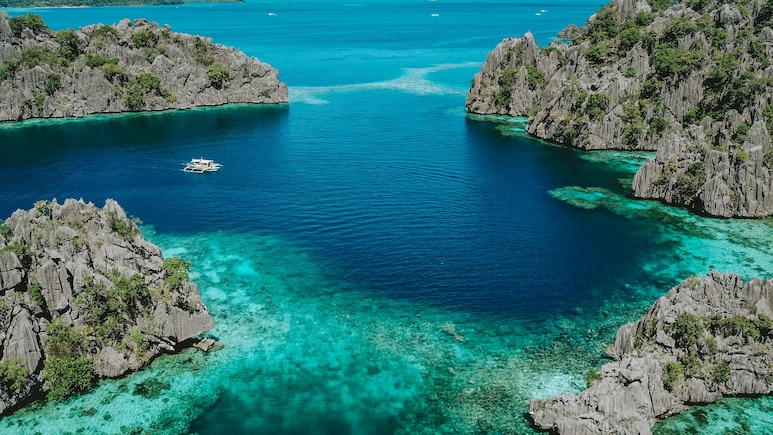
When Indians think of long-term stays abroad, the Philippines may not be the first country that comes to mind - but it should.
With its beaches, English-speaking environment, and proximity to India, it has slowly become an attractive choice not just for retirees but also for younger people who want to build a life there. What makes the Philippines stand out is that *its PR system is actually simple* compared to many countries.
-

-
 AI Could Be Humanity's 4th Great Humiliation, Says Swami Sarvapriyananda
-
 Swami Sarvapriyananda Explains Why AI Agents Should Be Treated Like Humans
-
 "You've Got A Long Day At Anthropic": Monk On "Spooky" Chat With Claude
-
 Bassist Mohini Dey At NDTV World Summit 2026: 'Fortunate To Be Born In India '
-
 From Indian Roots To Global Stages: Mohini Dey Shares Her Musical Philosophy
-
 'I Was Born And Brought Up In Mumbai': Mohini Dey At NDTV World Summit
-
 NDTV World Summit 2026 Begins: India At The Centre Of A World Between Orders
-
 'We Like To Spread That Magic': Mohini Dey Ahead Of NDTV World Summit Performance
-
 Live: Lilavati Trustee Rajiv Mehta Talks About Healthcare, Community Resilience
-
 Who Is Rajiv Mehta? Lilavati Hospital Trustee To Speak At NDTV World Summit 2026
There are two viable ways Indians can secure permanent residency. The *main PR pathway is through marriage to a Filipino citizen* (known as the 13a immigrant visa). This is open to anyone, regardless of age, and is the route most Indians who want to settle in the country take. The second, for an older group, is the *Special Resident Retiree's Visa (SRRV)* - but that's more of a lifestyle option than a standard PR.
The Main PR Route
This visa is issued to foreign nationals married to Filipino citizens, and it leads directly to permanent residency. Unlike tourist or work visas, this isn't a short-term arrangement. The 13a allows you to live indefinitely in the Philippines, and it also comes with the right to work, making it the true PR option for Indians.
What you need to qualify
- A marriage legally recognised under Philippine law
- Proof of Filipino spouse's citizenship (birth certificate, passport or national ID)
- Police clearance (NBI if living in PH for more than 6 months; otherwise from India)
- Financial capacity documents or affidavit of support from spouse
- Completed BI application forms, photos, and passport with latest entry
- Costs and processing
- Government fees are around PHP 10,000-12,000 (roughly Rs 15,000-18,000) for filing, processing, and the ACR I-Card
The visa is first issued on a one-year probationary basis
After that, you apply for conversion to permanent status. Once approved, you receive the ACR I-Card which acts as your permanent residency ID
Why This Matters
For younger Indians, this is the most practical PR route because it has no age requirement, no deposit requirement, and it directly gives the right to stay and work. It's also family-based, which makes settlement much smoother.
SRRV: An Alternative For Retirees
The other option is the Special Resident Retiree's Visa (SRRV). This isn't exactly a PR in the traditional sense, but it does allow indefinite stay and multiple entry. It's designed for foreigners over 50 who want to retire in the Philippines.
The financial requirement here is a deposit with the Philippine Retirement Authority -
- USD 10,000 (about Rs 8.3 lakh) if you also show pension income
- USD 20,000 (about Rs 16.6 lakh) without pension
Some Courtesy tracks allow even lower deposits (as little as USD 1,500 or Rs 1.25 lakh) for former Filipinos or diplomats
This option works well for those planning to retire, but it's not the path younger Indians would normally use for PR.
Track Latest News Live on NDTV.com and get news updates from India and around the world
