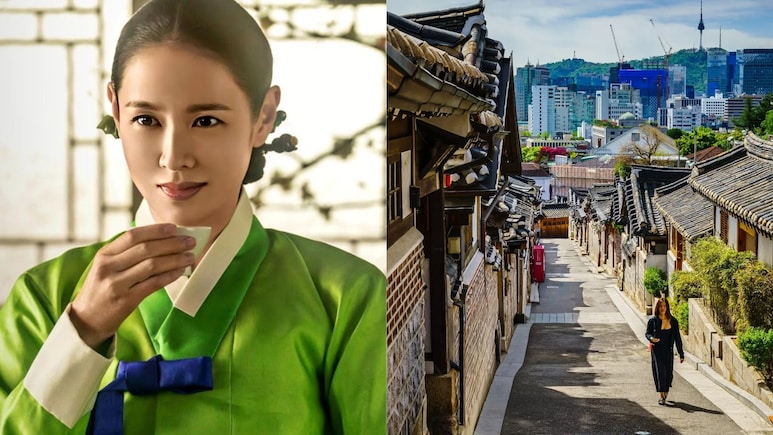
Walking through Bukchon Hanok Village on a slow, quiet evening, Seoul seems to slip into another time. Narrow, clean, calm, winding lanes climb between rows of hanok, with a rosary hanging from the entrance of a home, while their tiled roofs, wooden gates, and quiet courtyards give us glimpses of a Korea that has survived amid the glass towers and fast-moving streets of the modern capital.
Once home to the aristocracy of the Joseon era, the historic neighbourhood today often attracts travellers to its traditional houses, tea rooms, cultural spaces, and, of course, picture-perfect alleys. Yet Bukchon is more than a postcard from the past. Behind its old walls are stories of status, tradition, and a society shaped by strict rules. Netflix's Joseon-era drama The Scandal recently took us back to Bukchon.
The K-drama was released on September 18 and stars Son Ye-jin as Lady Cho, Ji Chang-wook as Cho Won and Nana as Hui-yeon. Netflix describes its story as a dangerous game that begins after a secret proposal brings together a gifted noblewoman, a famed lover, and an unsuspecting lady. The period drama has eight episodes.
The show is directed by Jung Ji-woo, and it reimagines Pierre Choderlos de Laclos's 1782 novel Les Liaisons dangereuses, better known as Dangerous Liaisons, in a Korean period setting. As reported by The Korea Times, Jung has said that he wanted the drama to capture the elegance and flavour of late Joseon society while exploring its characters and their relationships.
It is needless to say that lots of us who have watched the show are fascinated by the atmosphere of Joseon-era Seoul, and what could be a better way to step into the architecture of that past than a visit to Bukchon Hanok Village?
Reportedly nearly 600 years old, Bukchon Hanok Village catches the eye first with its narrow lanes and clusters of traditional Korean houses known as 'hanok'.
According to Visit Korea, Bukchon is surrounded by three major historic sites: Gyeongbokgung Palace, Changdeokgung Palace, and Jongmyo Shrine. The neighbourhood contains hundreds of traditional hanok houses associated with the Joseon dynasty.
Bukchon itself means "northern village." The name comes from the neighbourhood's location north of the Cheonggyecheon Stream and Jongno. The area has a particularly strong connection with Korea's former upper classes. Bukchon used to be a residential district for the Joseon aristocracy, and a good number of traditional dwellings remain in the neighbourhood today.
This history gives Bukchon a natural connection with the aristocratic world presented in The Scandal, where privilege and strict social expectations provide the backdrop to the main characters' game of desire and deception. To note, the series itself follows Lady Cho, a noblewoman restricted by the rules of her time, as she sets a dangerous wager in motion with Cho Won.
What About The Contrast?
It is very important to mention that what makes Bukchon particularly striking is the contrast between old and new.
A Visit Korea guide says that around 600 hanok houses remain in the area, creating historic-looking lanes in the middle of contemporary Seoul. Traditional tiled roofs and winding alleys give parts of the neighbourhood an appearance markedly different from the modern city surrounding it.
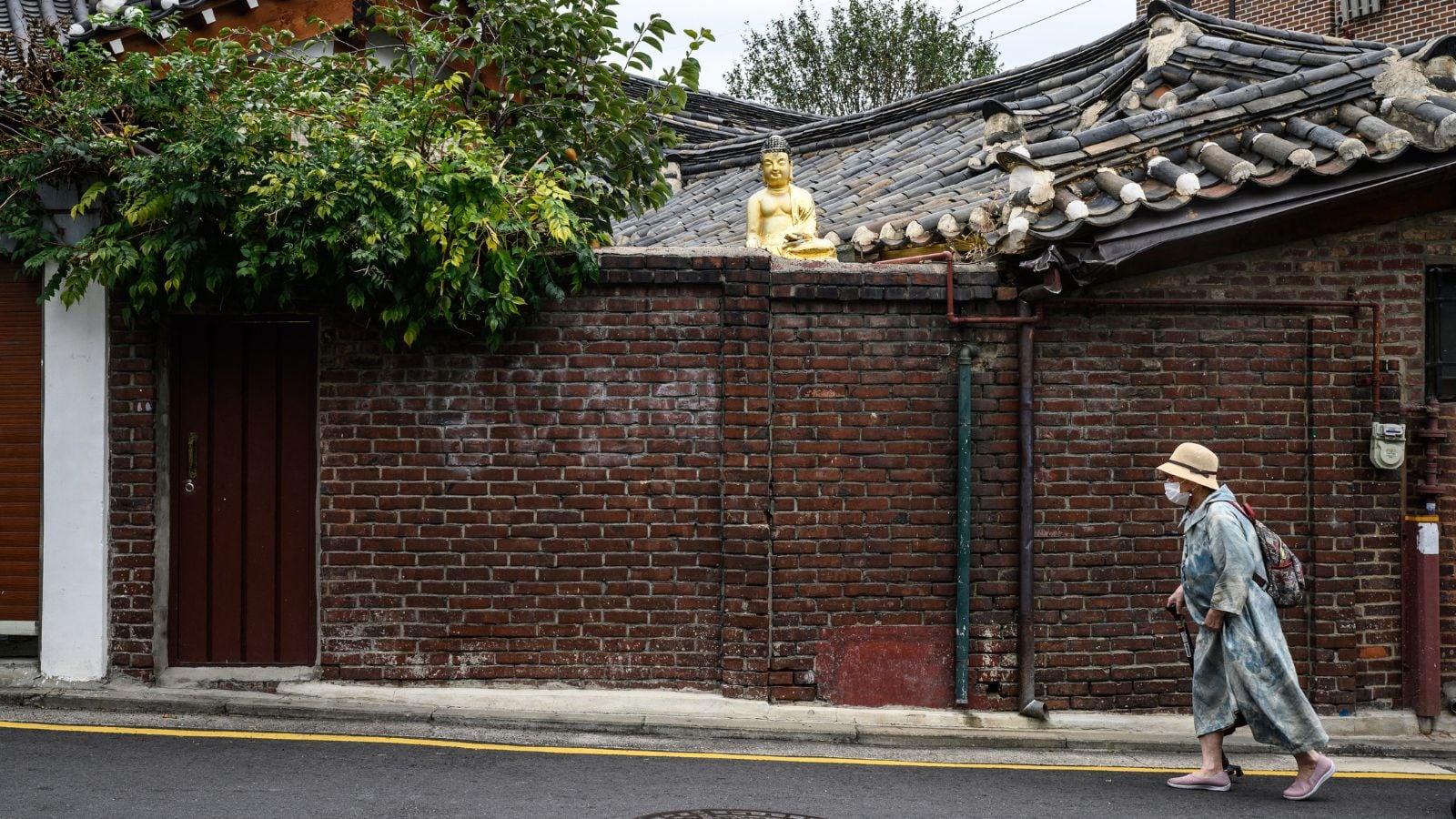
If we talk about hanok architecture, it is also closely linked with nature. Official tourism information describes a typical hanok as a wooden structure built around or alongside a yard. A rosary can be seen hanging from the entrance of one home, while visitors are often seen exploring the centuries-old area, where a gold-coloured Buddha statue adds to the cultural character of the village.
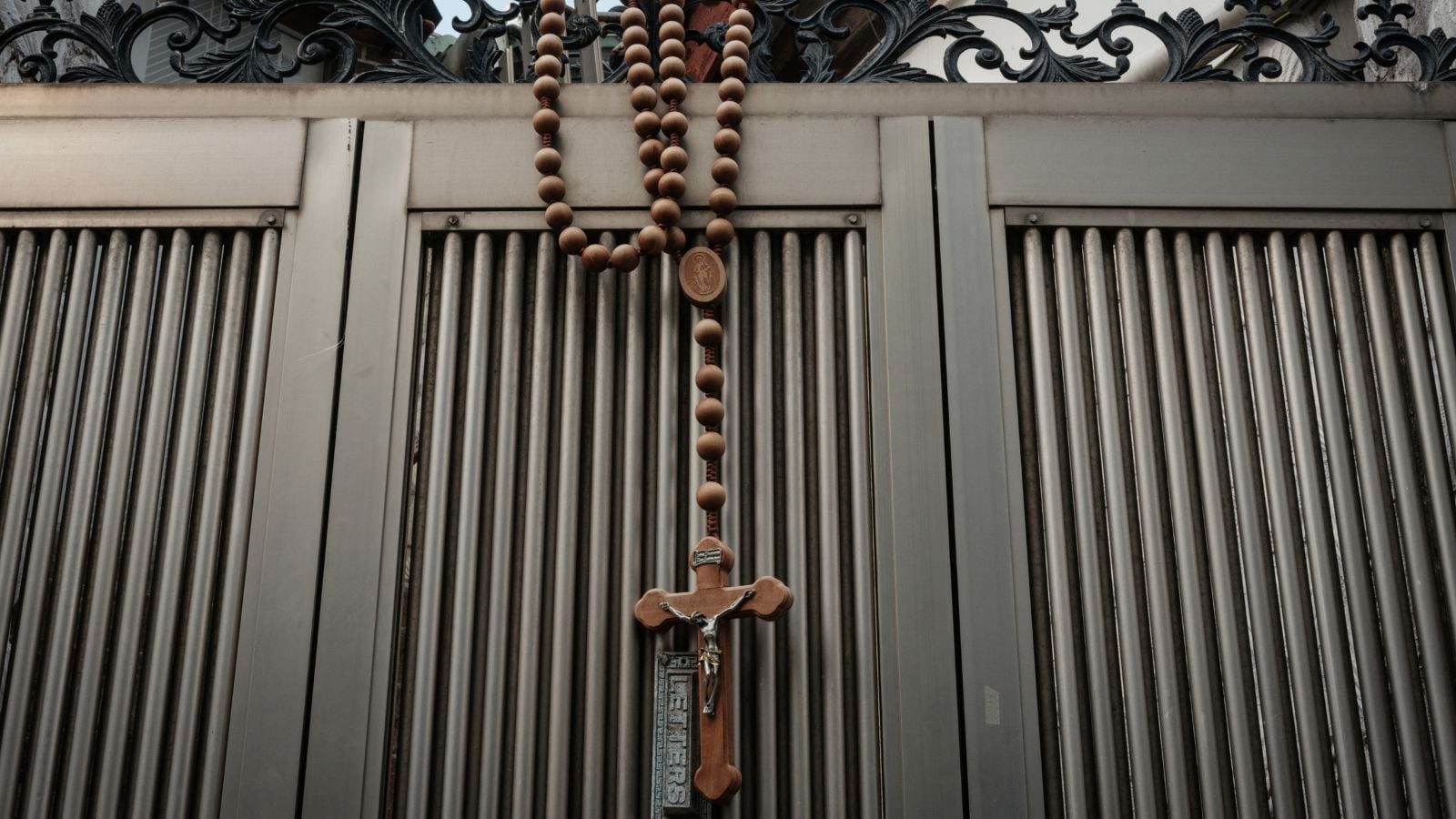
Photo Credit: AFP
However, we should keep in mind that Bukchon is not frozen in the past. According to Visit Korea, a number of its hanoks have been transformed into cultural centres, guesthouses, restaurants, and tea houses, giving travellers an opportunity to experience traditional Korean culture while exploring the neighbourhood.
Korea.net similarly notes that Bukchon's hanok buildings include homes as well as handicraft and souvenir shops, galleries, small inns, tea houses, restaurants, and cafes.
The Eight Scenic Views Of Bukchon
Travel enthusiasts can also explore the Eight Scenic Views of Bukchon.
According to Visit Korea, these viewpoints take visitors through different parts of the historic area between Gyeongbokgung Palace and Changdeokgung Palace. They include a view of Changdeokgung Palace, Wonseo-dong Handicraft Road, the Gahoe-dong area, and Bukchon Observatory.
The trail also includes uphill and downhill views of the road at Gahoe-dong, a view at Gahoe-dong 31, and the stone stairway at Samcheong-dong. Together, the eight spots offer different perspectives on Bukchon's hanok rooftops, lanes and surrounding cityscape.
For fans of period K-dramas, walking along these alleys can offer a closer look at the architectural world associated with historic Seoul, even as present-day life continues behind the old walls.
Tea Houses, Hanbok And Traditional Experiences
Bukchon is also a place to experience Korean traditions rather than simply admire the architecture.
Some hanok accommodation providers offer activities such as traditional tea ceremonies and cooking classes, according to Visit Korea. Traditional hanok culture is also associated with a floor-based way of living, although many modern hanok stays have been adapted with beds and other contemporary amenities.
Visitors can also explore tea houses, handicraft stores, galleries, and other cultural spaces as they walk through the neighbourhood. It is also very common to see Korean people wearing hanbok, Korea's traditional clothing.
AFP
Bukchon Is Still Someone's Home
Despite its popularity with tourists, Bukchon is not simply a tourist spot, and people actually live here.
Visit Korea specifically asks tourists to remain respectful while exploring because Bukchon Hanok Village is an active residential neighbourhood containing people's homes. It reminds tourists that the area remains residential and asks visitors to behave responsibly. Speaking loudly or making too much noise is discouraged.
So, it's needless to say that although the Korean Government stepped in to revive Bukchon in 2000, transforming it into a tourist destination, and several of its traditional homes have found new life as cafes and galleries, it remains very much a living residential community, and many of its houses are private properties that visitors should not enter.
The Scandal Connection
The Scandal presents a fictional world where aristocratic privilege exists alongside severe restrictions, particularly for women such as Lady Cho and Hui-yeon. Bukchon offers a very different, real-world connection with that cultural past. Once associated with Joseon's aristocracy, the neighbourhood today exists amid one of Asia's most modern cities, with centuries-old architectural traditions sharing space with cafés, galleries, shops and contemporary homes.
So, if watching The Scandal leaves you fascinated by its Joseon aesthetics, hanok architecture, and aristocratic setting, Bukchon Hanok Village surely offers a fascinating window into a part of the history that inspired that visual world.
Just remember to lower your voice, respect the residents, and take in those tiled rooftops slowly.
Also Read: How K-Dramas Are Driving The 'No Saviour Season' For Indian Women: New Survey
Track Latest News Live on NDTV.com and get news updates from India and around the world
