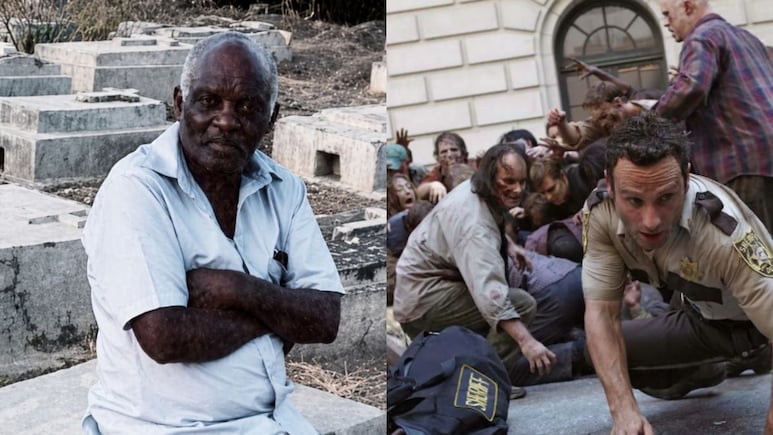
- The Haitian Creole word zonbi refers to a person robbed of free will, not a flesh-eating monster
- Clairvius Narcisse was declared dead in 1962 but reappeared in 1980 claiming zombification by poison
- Zombification in Haiti involves toxins and hallucinogens administered by a Vodou sorcerer called a bokor
The world's fascination with zombies has never been stronger. With Korean films and series such as Train to Busan and All of Us Are Dead redefining the genre and giving it global mainstream appeal, the undead are now embedded in popular culture. Korean zombie stories moved away from tired survival tropes and instead focused on emotional intensity and social collapse.
But while the word "zombie" is now closely associated with fast-moving monsters and viral apocalypses, its origins are far older, far darker, and rooted in real cultural practices from Haiti.
The concept of the zombie comes from the Haitian Creole word "zonbi," which refers not to a flesh-eating creature but to a human being robbed of free will. In Haitian Vodou (Voodoo) belief, zombification is linked to fear of control, enslavement, and loss of identity - an anxiety shaped by Haiti's history of colonial oppression and forced labour. This understanding of zombies is very different from the modern pop-culture version.
Where The Zombie Myth Began
The modern idea of zombies in popular fiction can be traced back to a non-fiction travelogue published in the early 20th century. The Magic Island, written by American journalist William Seabrook and published in 1929, documented his travels through Haiti and examined local beliefs around Vodou (Voodoo) zonbi practices. The book introduced Western readers to the idea of people being brought back from death through spiritual or chemical means and marked the first time the concept reached a wide international audience.
The fascination soon moved to cinema. In 1932, Hollywood released White Zombie, the first feature-length zombie film. Inspired by Seabrook's book and a stage play titled Zombie, the film starred Bela Lugosi as a sorcerer who helps a man turn a woman into a zombie so he can control her after she marries someone else. In the story, the woman is declared dead, buried, and later revived through witchcraft.
The film's success led to a series of similarly themed movies rooted in Vodou (Voodoo) mythology, including Revolt of the Zombies (1936), King of the Zombies (1941), and I Walked with a Zombie (1943). These early films established the zombie as a figure connected to enslavement and loss of free will - very different from today's flesh-eating undead.
The Case That Brought Haiti's Zombie Belief Global Attention
Recently, a social media post went viral for retelling one of the most disturbing incidents linked to the origin of the zombie myth. Before the rise of cinema and pop culture, the term "zombie" carried a much more literal and frightening meaning in Haiti.
The post began, "On May 2, 1962, a man was officially pronounced dead by two doctors at an American-operated hospital. His sister identified the body. A death certificate was signed. He was buried in the ground the next day. 18 years later in 1980, the same man walked up to his own sister in a public marketplace. He was alive. He told her exactly what had happened to him after they buried him. What he described was so disturbing that a Harvard scientist flew to the country to investigate, and what he found changed our understanding of the word 'zombie' forever."
The man was named Clairvius Narcisse.
"His name was Clairvius Narcisse. On April 30, 1962, he checked himself into the Albert Schweitzer Hospital in Deschapelles, Haiti. He had a fever, was coughing up blood, and described a sensation of bugs crawling under his skin. Within 2 days his condition collapsed. His lips turned blue. His heart rate dropped to near zero. On May 2, two doctors pronounced him dead."
His death was officially recorded.
"His oldest sister identified the body and pressed her thumbprint onto his official death certificate. He was buried in L'Estere the next morning."
Eighteen years later, in 1980, Narcisse reportedly reappeared and approached his sister in a marketplace.
"A man approached his sister Angelina in a village marketplace and called her by a childhood nickname that only the family knew. It was Clairvius. He told her what had happened."
Poison, Zombification And Forced Labour
According to Narcisse's account, his zombification followed a family dispute.
"According to his account, he had been poisoned on the orders of his own brother after a dispute over family land."
In Vodou (Voodoo) belief, zombification is not caused by magic alone but is believed to involve chemicals administered by a bokor, a Vodou sorcerer.
"A Bokor, a dark Vodou (voodoo) sorcerer, had administered a powder through his skin containing a mixture of pufferfish toxin and toad venom."
The poison allegedly induced a coma so deep that it resembled death.
"The poison induced a death-like coma so deep that it fooled the American-trained doctors into declaring him dead."
Unlike modern portrayals, Haitian zombies are believed to remain conscious.
"He said he was conscious during his own funeral. He could hear the mourners. He could hear the dirt hitting the coffin. He could not move."
He claimed his body was later exhumed.
"After burial, the Bokor dug up his body, revived him with a paste made from the hallucinogenic plant datura, and transported him to a remote sugar plantation."
Haitian zombie lore often describes zonbi as labourers deprived of will rather than violent beings.
"There, alongside other zombified victims, he was forced to work as a slave."
Narcisse said he remained in this state until the man controlling him died.
"When the Bokor died 2 years later, the regular doses of datura stopped and Clairvius slowly regained his mind."
He remained in hiding due to fear.
"But because his own brother had ordered the attack, he stayed in hiding for 16 more years until his brother also died."
Scientific Investigation
The case attracted the attention of researchers.
"In 1982, Canadian ethnobotanist Wade Davis from Harvard traveled to Haiti and investigated the case. He published his findings in a book called The Serpent and the Rainbow."
Haiti is one of the few countries where zombification is legally recognised as a crime.
"Zombification is so real in Haiti that it is specifically outlawed under Article 246 of the Haitian Penal Code."
The viral post ended with a reminder about the word's true meaning.
"The word 'zombie' does not come from horror movies. It comes from the Haitian Creole word 'zonbi.' It describes a real person who has been chemically enslaved."
Wade Davis, who later earned his undergraduate degree in 1975 and his PhD in 1986, travelled to Haiti while he was still a graduate student. He went at the suggestion of his mentor, biologist Richard Evans Schultes, a professor at Harvard, to explore whether there was a scientific basis behind claims of zombification.
In Haitian belief, zombies are not symbols of apocalypse or infection. They represent the deepest fear of losing control over one's body and life.
Also Read: The Deepest Point On Earth You Can Drive To Is In Ethiopia, And It Has An Acid Lake
Track Latest News Live on NDTV.com and get news updates from India and around the world
