- Bombay received Rs 52 crore worth of bullion imports between 1861-62 and 1864-65 during the cotton boom
- The cotton boom triggered a rapid rise and bull run in Bombay's stock market in the early 1860s
- The American Civil War ended in April 1865, restoring US cotton supply and collapsing Bombay's exports
Since the US-Israel-Iran conflict erupted on February 28, 2026, the Indian stock market has been volatile. The weeks-long bear run has wiped billions of rupees off the market, triggering panic among investors, even those who have invested for the long term. In fact, on March 27, the Indian rupee stood at Rs 94.29 against the US dollar.
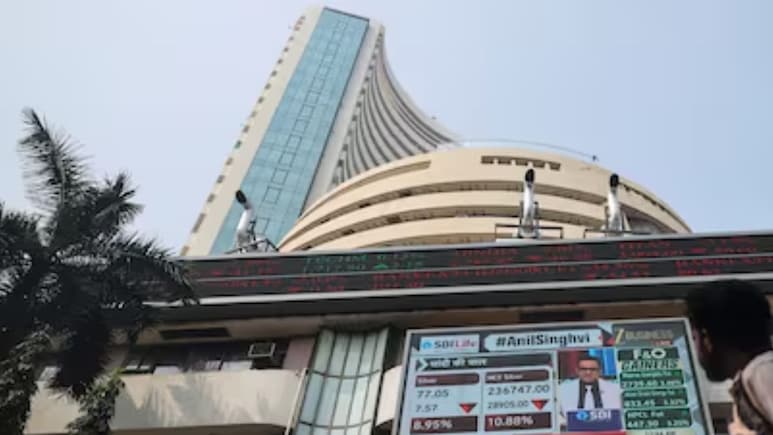
While India has seen many stock market crashes over the years, the first one ever recorded was in 1865, and it was driven by the cotton textile trade in Bombay (called Mumbai after March 4, 1995). Interestingly, it was triggered by the American Civil War, which lasted from April 12, 1861, to April 9, 1865.
The Boom of the Cotton Trade In Bombay
In the early 1860s, the American Civil War did not have repercussions only for the US; its ripple effects disrupted the cotton trade from the US to Europe. As a result, this crucial raw material became scarce in Europe.

During the American Civil War, England heavily relied on India for cotton. Photo: Unsplash
England heavily relied on imported cotton to run its textile mills. This is where India, particularly Bombay, rose to the occasion and met the surging demand for cotton exports, albeit under immense pressure.
According to Dharohar, an initiative by SEBI (Securities and Exchange Board of India), cotton exports doubled during the American Civil War, from 566,000 bales to 1,118,000 bales. The growth in exports from Bombay resulted in significant profits, so much so that the textile was referred to as 'white gold' for the Bombay presidency.
The revenue generated from textile exports was reportedly paid largely in the form of silver and gold, settling trade balances. "Of the Rs. 85 crore worth of bullion imports into India between 1861-62 and 1864-65, Bombay accounted for bullion imports worth Rs 52 crore," reads an excerpt of Cotton Boom and Bust: The Legacy of India's First Stock Market Crash (Share Mania of 1861-1865).
In this context, bullion imports refer to the legal inward shipment of gold or silver of high purity in the form of ingots, bars, and coins. During the American Civil War, cotton, which was once a modest commodity, turned into a luxury good, putting Bombay on the global map.
The city not only saw an exponential growth in its economy through the cotton trade, but this boom also triggered the first-ever stock market crash experienced by India.
Cotton Boom Triggered An Influx Of Money In The BSE
Where there is abundant cash, there are opportunities. As Bombay became the hub for the cotton trade, investors started looking for legitimate options that could absorb all the money they had. You must have heard the saying that money makes money.
As a result, the cotton boom led to a rapid rise in the stock market in Bombay. Wherever there is an investment opportunity, investors flock to it without thinking twice. The BSE (Bombay Stock Exchange), which was officially established in 1875, saw an active bull run as early as the 1860s.
During this time, many financial associations, banks, and reclamation companies were reportedly floated, and their share prices were quoted at high premiums. And why not? People had enough money to spare. The market was expected to rise indefinitely, which led many investors to seek loans at high interest rates just to invest in a market projected to grow exponentially.
India's First Stock Market Crash
As the American Civil War concluded in April 1865, the disrupted cotton supply chain from the US to Europe was restored. Europeans soon favoured American cotton over Indian produce, leading to a sharp decline in exports from Bombay.

Indian cotton could not compete with America's cleaner, higher-quality textiles. Photo: Freepik
As a result, Indian cotton could not compete with America's cleaner, higher-quality textiles at competitive prices and lower transport costs. As exports collapsed in Bombay, companies went bankrupt. People and organisations could not meet their debt obligations as the bubble burst.
What followed was predictable. Panic gripped investors as they rushed to sell their stocks to buyers who were no longer purchasing. July 1, 1865, is remembered as a black day in the history of the Indian stock market. Investors reportedly saw Rs 45.80 crore wiped off the market's value. Banks and older companies bore the brunt of the losses, and many even filed for bankruptcy.
This also sparked anti-trust sentiments among investors. Brokers lost their sources of income as banks severed ties with them. After relocating multiple times, they finally found a base in Dalal Street, which is now the official headquarters of BSE Ltd.
The sudden influx of money over a brief period, followed by a sharp market collapse, carved the path for the establishment of a formal stock market in Bombay. It became the stepping stone of India's capital market and a valuable learning experience for generations of investors.
Track Latest News Live on NDTV.com and get news updates from India and around the world
