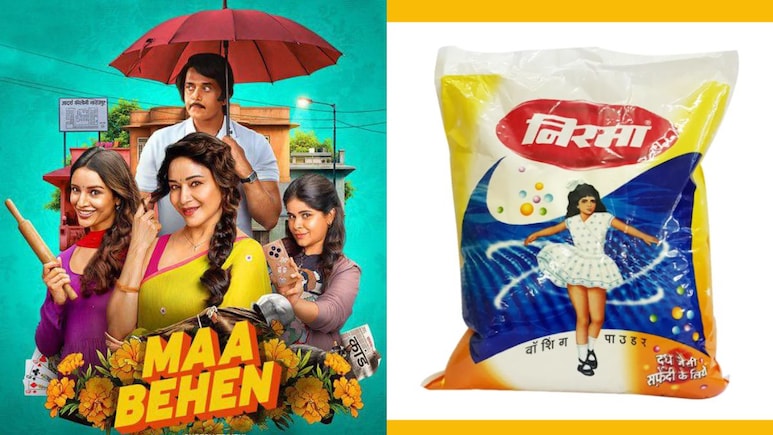
- Three central female characters in Maa Behen are named Rekha, Jaya, and Sushma
- These names match those in the iconic Nirma washing powder jingle from 1970s-90s India
- The Nirma jingle became one of the most successful brand recall campaigns in Indian advertising
As the upcoming film Maa Behen prepares to arrive on Netflix on June 4, a detail about its cast has caught the attention of many Indians who grew up in the era of Doordarshan advertisements.
Three of the film's central female characters, played by Madhuri Dixit, Triptii Dimri, and Dharna Durga, are named Rekha, Jaya and Sushma, the same names immortalised in one of India's most famous advertising jingles: "Hema, Rekha, Jaya aur Sushma, sabki pasand Nirma."
For many, the line was instantly recognisable, making the connection difficult to miss.
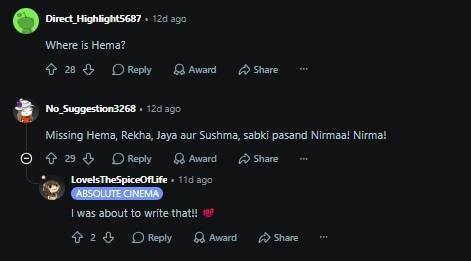
A Nod To Popular Culture
Director Suresh Triveni has acknowledged the connection, saying the names found their way into the script through India's shared popular culture.
Speaking to IANS, Triveni revealed that the characters originally had different names.
"I think it's a part of popular culture. But the way we went about it was..."
He added, "They had initially different names, honestly speaking. When I started jamming with my writer, whatever was there in the popular culture, in a certain manner, it just rhymed so beautifully. So we decided that we would retain it."
The filmmaker also admitted that the familiarity of the names could spark audience curiosity.
"Anything that can gather a little attention, why shouldn't we go towards it?" he said.
In the film, Madhuri Dixit plays Rekha, Triptii Dimri plays Jaya, while Dharna Durga plays Sushma. The black comedy thriller also stars Ravi Kishan.
The Jingle Almost Every Indian Knew
Few advertising campaigns have enjoyed the staying power of Nirma's washing powder commercials. The catchy tune, built around the refrain "Washing Powder Nirma", became a fixture on Indian radio and television from the late 1970s through the 1980s and early 1990s.
The most remembered version featured the line:
"Hema, Rekha, Jaya aur Sushma, sabki pasand Nirma."
Alongside lyrics such as "Doodh si safedi, Nirma se aaye" and "Rangeen kapda bhi khil khil jaaye", the jingle became deeply embedded in popular culture.
The campaign began on All India Radio in 1975 before making the jump to television in 1982. Once it reached TV screens, it became nearly impossible to escape.
The catchy lyrics helped turn a detergent advertisement into a piece of Indian pop culture.
The jingle was created by Gujarat-based Purnima Advertising Agency, run by the Surendranath brothers, Kailash Surendranath and Manish Surendranath. The music was composed by Vedpal Varma, while the lyrics were written by Vinod Sharma.
How A Small Agency Created A Giant Advertising Success
Part of the campaign's success came from how different it felt from detergent advertisements of the time.
Rather than treating laundry as a dull household chore, the commercials presented it as energetic, colourful and almost celebratory. Women danced, sang and appeared in settings across different parts of India.
The four women in the jingle, Hema, Rekha, Jaya and Sushma, were designed as relatable characters representing 'different kinds of Indian women'. The names themselves echoed the era's popular film stars, making them easy to remember.
The advertisements also featured landmarks and imagery from different regions, helping position Nirma as a national brand rather than a local product from Gujarat.
Unlike larger metropolitan agencies, Purnima Advertising had a deep understanding of middle-class consumers and budget-conscious households. That understanding helped shape a campaign that connected with millions.
The Rise Of A Detergent Empire
Nirma itself was founded in 1969 by Dr Karsanbhai Patel, a chemist at the Gujarat Government's Department of Mining and Geology. Dr Patel manufactured phosphate-free synthetic detergent powder, and started selling it locally in Gujarat.
The new yellow powder retailing at Rs 3.50 per kg competed with HUL's Surf, which cost Rs 13. Nirma became popular in Patel's hometown of Ruppur (Gujarat). He began preparing and packing the mix in a 10 by 10 ft room in his house, and would sell roughly 15–20 packets daily while cycling about 15 km to his office.
The brand was named after his daughter Nirupama, while the iconic "Nirma Girl" mascot in the white frock was also inspired by her. The twirling girl became one of the most recognisable mascots in Indian advertising history.
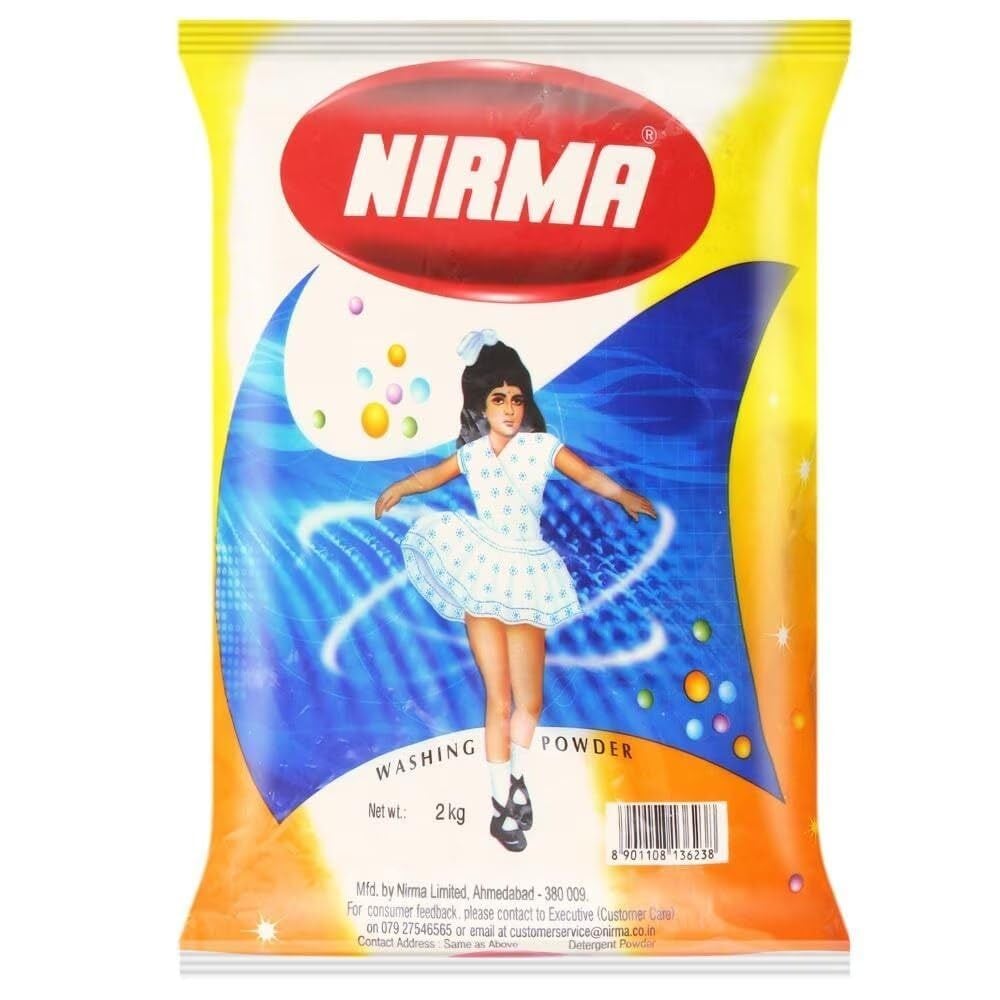
Nirma itself was founded in 1969 by Dr Karsanbhai Patel.
The advertising campaign worked because it combined a memorable tune with a clear message: affordable detergent that delivered bright, clean clothes.
Marketing experts have long pointed to the campaign as one of the most successful examples of brand recall in India. The word "Nirma" was repeated throughout the song, helping cement the name in consumers' minds.
The strategy paid off. By the mid-1980s, Nirma had reportedly captured around 60 per cent of the detergent market and overtaken rivals such as Surf, transforming itself from a regional challenger into a household name across the country.
Reinventing A Classic
Although the original campaign largely disappeared from television by the 1990s, the jingle never really left public memory.
In 2011, Nirma revived the iconic tune with a modernised campaign developed by Taproot India. The updated version retained the familiar music but changed the messaging for a new generation.
Instead of focusing solely on laundry and whiteness, the new advertisement positioned the Nirma girl as a symbol of initiative and empowerment.
One memorable sequence showed women helping push an ambulance out of the mud, broadening the campaign's focus from household chores to social responsibility and collective action.
Even decades after its debut, the jingle continued to resonate because audiences already knew every word.
Today, "Hema, Rekha, Jaya aur Sushma" survives far beyond the world of advertising. The phrase regularly resurfaces in memes, nostalgic discussions, television references and social media posts.
Track Latest News Live on NDTV.com and get news updates from India and around the world
