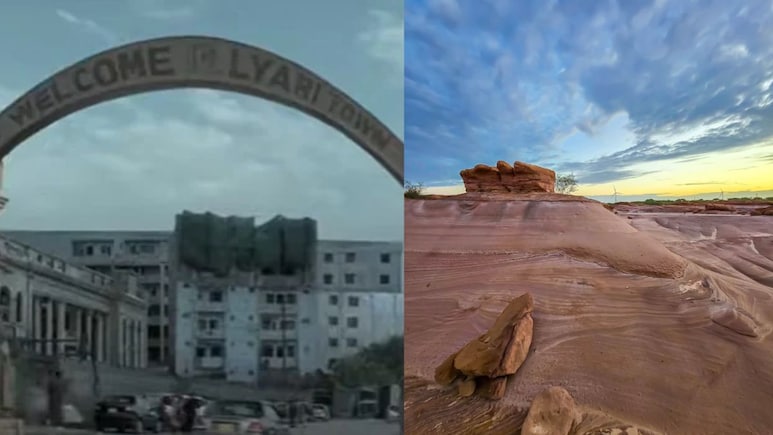
The Rann of Kutch, as arid as it might be, is the world's largest salt marsh and is located in the Thar Desert in Gujarat, India, extending into Pakistan. Most people know the Kutch region for its rugged landscape and harsh ecosystem, but through it flows the seasonal Layri River, and prehistoric rock formations have shaped its riverbed. Interesting, isn't it?
Before you make any assumptions, this is not the same Lyari River that flows in Pakistan, and it is not remotely associated with Lyari, a city located in the neighbouring country and featured in Aditya Dhar's Dhurandhar films.
The Layri riverbed is an enigma in itself. Its pristine beauty and Grand Canyon-like formations are situated approximately 70 km from Bhuj, right behind the Dhinodhar Hills. These sites highlight the rich geological heritage of India and must be preserved and studied extensively.
Why Is Lyari Riverbed Important
According to Roundglass Sustain, the prehistoric rock formations along the Layri riverbed depict the chronicles of the region's history and landscape, with each layer hiding hundreds of secrets waiting to unfold - secrets that might either help scientists understand history better or reveal discoveries that challenge current knowledge.
It is believed that studying these ancient rock formations, shaped by water, wind, and time, can not only tell us about climate changes through the ages but also help identify traces of animals and creatures that existed millions of years ago.
What makes this riverbed especially fascinating is its Grand Canyon-like appearance, similar to famous sites in Nevada, USA. Millions of years of weathering have led to a stunning landscape that spellbinds every visitor.
According to geological papers, Dhinodhar Hill is a volcanic plug (lava or volcanic neck), formed when molten lava hardens within the vents of an active volcano. The drainage lines from the hill create distinct radial patterns.
Why Lyari River, Flowing In Kutch, Is Important
The Lyari River in India is a seasonal waterbody that comes alive only during the rainy season. Once the rains begin to fade, what remains are scattered water puddles, reflecting the vibrant landscape of the region.
The region around Dhinodhar Hill has many such ancient rivers, rich in fossils and stories of the distant past. First-person accounts by bloggers reveal that the Layri riverbed looks breathtaking, especially during sunrise and sunset, when hues of orange and yellow create a kaleidoscope of colours.
The riverbed is often visited by tourists, yet it remains a lesser-explored location in the region. For those who love immersing themselves in nature or are constantly in search of awe-inspiring destinations, the Layri riverbed is a must-visit. Not only can you venture into the riverbed to explore the rock formations, but you can also climb atop the small hill-like structures and capture wallpaper- or Instagram-worthy shots.
However, you must plan to explore this region before development encroaches further. Reports suggest that the Banni Grassland is already undergoing extensive transformation through mining, solar parks, and windmill installations.
Also Read | What The Other Bank Of Strait Of Hormuz, Not Controlled By Iran, Looks Like
Track Latest News Live on NDTV.com and get news updates from India and around the world
