





After the Chinese People's Liberation Army or PLA launched an attack against India in October 1962, India's brave soldiers fought against all adversities to protect the country. Some went much beyond the call of duty to protect India's territorial integrity.
Subedar Joginder Singh fought valiantly when the PLA launched an attack through the Bum La Pass, sparking a battle named after the location; the Chinese soldiers, as they advanced, met with a few more valiant Indian soldiers. These heroes went on to etch their names in the annals of history as they fought against all odds.
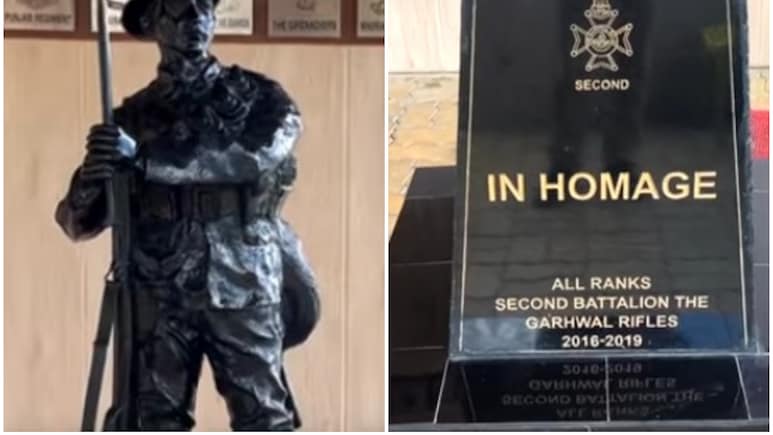
NDTV visited the Jaswantgarh War Memorial, located in Tawang district of Arunachal Pradesh, which welcomes visitors year-round with a compelling tale of valour.
The structure is built in the memory of Jaswant Singh Rawat -- a rifleman of 4 Garhwal Rifles. This was the spot where the 21-year-old took a heroic stand against the Chinese, creating the impression of a full contingent of Indian soldiers while fighting single-handedly.
The plaque at the memorial says for 72 gruelling hours, he inflicted heavy casualties on the enemy entirely on his own before making the ultimate sacrifice. He was posthumously awarded the Maha Vir Chakra.
According to the Ministry of Defence, in November 1962, Jaswant Singh Rawat and his two aides -- Lance Naik Trilok Singh Negi and Rifleman Gopal Singh Gusain - had volunteered to destroy a Medium Machine Gun that was brought in by the Chinese.
Under the cover of boulders, scraggy bushes and trees, they crawled forward amid heavy enemy fire and reached within 10 to 15 yards of target. While Lance Naik Negi provided covering fire with his Sten gun, Rawat and Gusain hurled grenades on the enemy's Medium Machine Gun and managed to capture it.
In the battle that followed, Rawat refused to give up his post.
He displayed remarkable agility, shifting between bunkers to maintain the illusion of a full-scale Indian battalion. His only helpers were two local Monpa women, Sela and Nura. They provided him with food, supplied ammunition and loaded the guns at different posts to help Rawat create the illusion of a full contingent.
By the time he was done, around 300 Chinese soldiers were dead and he managed to delay the Chinese advance by around 72 hours.
Today, the Rifleman is remembered as Baba Jaswant Singh Rawat. His personal belongings have been kept at Jaswantgarh.
The Sela Pass is named after Sela and the Nurarang falls (Jang Falls) has been named after Nura to honour their sacrifice.
Both locations are located close to Jaswantgarh, which is adorned with a camouflaged temple-like structure to mark the bravery of Rifleman Jaswant Singh Rawat.
Track Latest News Live on NDTV.com and get news updates from India and around the world

