





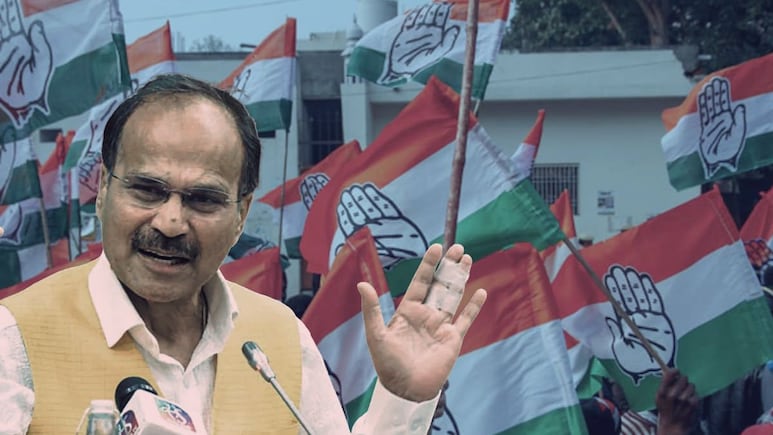
The Congress party is preparing to regain some lost ground in West Bengal in the upcoming 2026 assembly elections. It is not an easy task given that the party was reduced to "zero" in the 2021 polls, for the first time since India's electoral debut in 1951-52.
With that as the starting point, the party is hoping to resurface in Bengal, first by going it solo after 20 years. The campaign strategy is to work at two levels -- one part is about getting back some seats while the other part is to rebuild the image of the Congress as a viable alternative in the long run, according to the state's only Lok Sabha member Isha Khan Chowdhury from Maldah Dakshin. "We are looking at seats for recovery and to re-establish the identity of Congress," which seems to have gotten diluted over years for the party having been in alliance with Left, Trinamool, etc in the state for some years," he explained.
In 2021, Congress tied up with the CPM-led Left Front, and both parties failed to win a single seat. In 2006, the party won 21 seats on its own, while the rest of the anti-incumbency votes against the ruling Left Front went to Trinamool Congress, formed in 1998 by Mamata Banerjee, after she split with Congress. In 2011, Congress allied with Trinamool and the duo ousted a 34-year-old Left Front regime, led by Mamata Banerjee.

A Bipolar Space
With both Congress and the Left having failed to score, the 2021 Bengal assembly turned into a bipolar House, with Mamata Banerjee's Trinamool Congress winning 213 of the 294 seats and the BJP, raising its bar from three to 77 seats for the first time in the state's history. That makes it the first challenge for Congress, which will not only have to fight the well-entrenched incumbent Trinamool in the state, but also a Centre-backed BJP, the main opposition party, to regain at least some seats in its traditional strongholds like Maldah and Murshidabad districts and pull up the vote share in some of the other seats in north Bengal and other pockets across the state. "We are ideologically opposed to BJP, but keeping equal distance from both parties in our campaign," said Isha Khan Chowdhury, when asked about the focus of their campaign, adding that Congress is looking at increasing its vote share to be able to become a factor in government.
Opinion | Why Both Trinamool And BJP Want To Woo The Rajbanshis In Bengal
These two districts have highest Muslim population (about 50%) in the state. Murshidabad district houses 20 assembly seats and Maldah has 12 assembly seats. In 2021, BJP won four seats from Maldah and two from Murshidabad, with Trinamool bagging the rest. That being the case, Congress has to get back a share of Muslim voters, who in most of the state have moved with Trinamool in recent years. However, since Maldah, Murshidabad were not traditional Trinamool bastions, it could work for Congress in some seats. "Issues like CAA-NRC in 2021 and SIR this time creates religious polarisation by generating the fear factor. That benefitted BJP in taking up the main opposition space last time replacing Congress. This time that fear factor may be reduced and development and employment issues could work," hopes Chowdhury.
Humayun Kabir's Bet
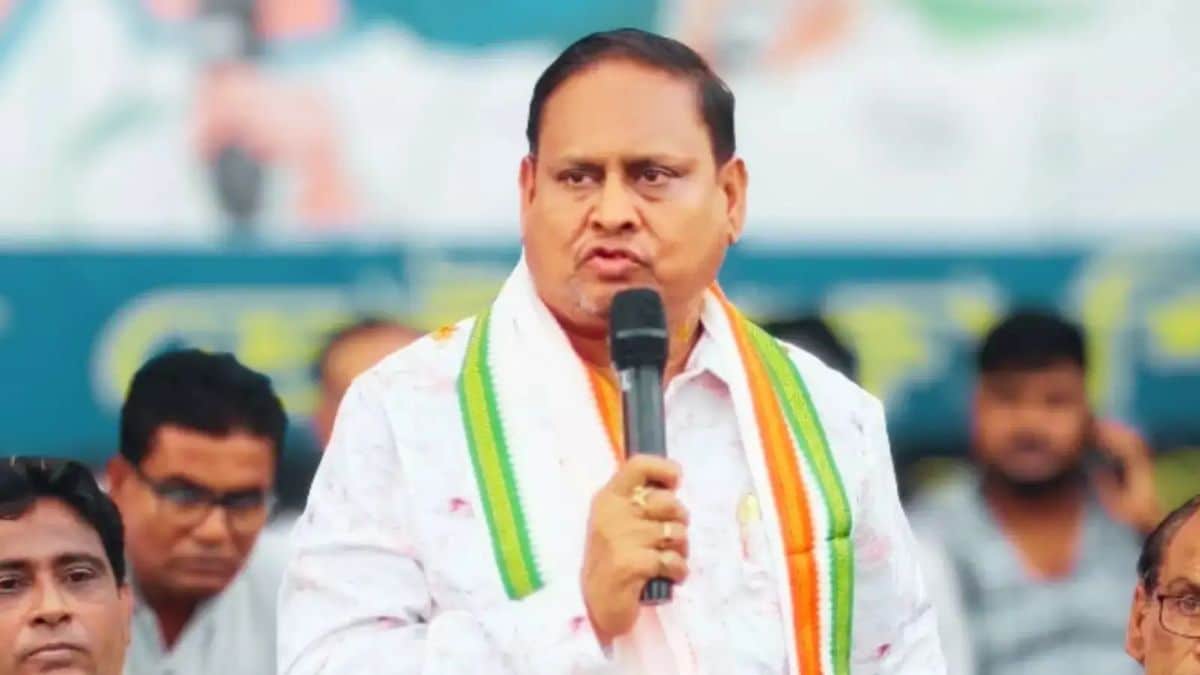
That's exactly where suspended Trinamool MLA Humayun Kabir has played his Babri-like mosque card, trying to cut into Muslim votes in the region, by floating his own Janata Unnayan Party (JUP) that could split the minority votes three way turning it into an advantage for BJP. That's where Congress has to play its part and it is watching out for how much of minority votes JUP can chip away to play spoiler for it. "It's a one-issue party, come up just before the polls... I think people understand that," said the Maldah Dakshin MP, when asked about the impact of JUP in the coming elections.
Read: From "Jai Shree Ram" To "Jai Maa Kali": BJP's Cultural Rebranding In Bengal
With a sitting Trinamool MP from Baharampur, Humayun Kabir's play, and Adhir Ranjan Chowdhury losing the Lok Sabha, Murshidabad is not looking great for Congress at the moment. But, "with Isha Khan Chowdhury (son of former MP Abu Hasem Khan Chowdhury and nephew of ABA Ghani Khan Chowdhury) as the MP and (his cousin) Mausam Noor back in the party, Maldah is looking good," said Ranajit Mukherjee, young Congress leader from the state.
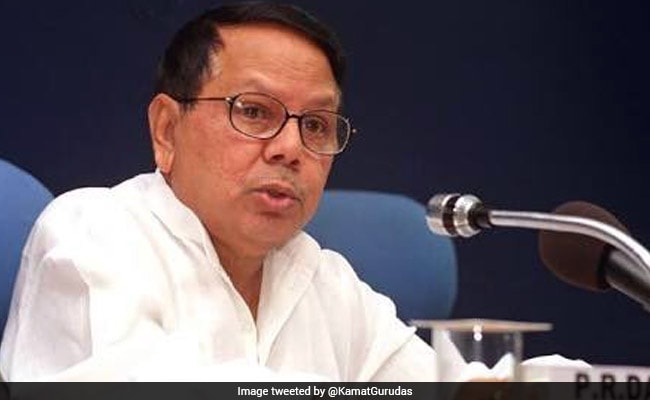
If Congress' organisational strength in the state is in shambles today, it is because many of its erstwhile leaders and cadres have shifted to Trinamool over years, mostly post 2011. Even as an opposition party in the Left Front regime, Congress had a generation of strong leaders in the state and at the national level from Priya Ranjan Dasmunsi to Pranab Mukherjee, but with Trinamool forming, many moved to the breakaway Mamata camp. With Trinamool poaching from Congress, relations between the two parties soured and left Congress weakened in the state.
However, the recent return of Trinamool Rajya Sabha member Mausam Noor, (niece of late legendary Congress leader ABA Ghani Khan Chowdhury from Maldah) to her former party Congress, without any unpleasant exchanges from either side, was the first indicator of relations improving between the two sides, even as they remain adversaries in the state but are opposition bloc (INDIA) partners in Parliament.
The Adhir Chowdhury Factor
A section of the state Congress unit is wary of its former PCC chief and party's strongman from Murshidabad, Adhir Ranjan Chowdhury, who got sidelined after losing his Baharampur parliamentary seat to Trinamool's Yusuf Pathan in 2024. Adhir Ranjan, who was replaced by Subhankar Sarkar in 2024 as PCC chief, held considerable sway in Murshidabad and surrounding areas. Hence, ignoring him could ignite some friction that may come in the way of Congress' efforts to get its Bengal house in order for the 2026 outing. However, Isha Khan Chowdhury says, "He (Adhir) is concentrating on Murshidabad which is right next to Maldah to ensure we can come out of the zero score... he is a mass leader and the PCC chief (Sarkar) is an organizational man... both are party veterans... I don't foresee any problem," when asked about the issue.

Chowdhury, who rose through the ranks to be both state party chief (since 2020) and leader of Congress in the 17th Lok Sabha, suddenly found himself on the wrong side of the political scape, essentially for being perceived as a diehard anti-Mamata factor, even at a juncture when Trinamool and Congress shared the table at the national level as partners in the INDIA coalition of parties. That is seen as the central reason for the Congress leadership replacing him as PCC chief in the state, creating better atmospherics on the ground between the two parties.
The main challenge for the Congress, in a four-sided contest in Bengal this round, is the bipolar space that has been created by Trinamool and BJP. The polarization works for BJP and Trinamool, explains Isha Khan Chowdhury. "BJP's polarisation has Trinamool get into the narrative and the others get washed out. Also, people's issues like erosion of the Ganges and unemployment pushing migration are two main problems of this region. From 2014, the BJP government has cut down the budget to stop erosion... it was for 120 km and now it is for just 19-20 km... houses, schools, etc, are getting washed away, but nobody is talking of these. We are trying to raise these issues, improve the region... like my uncle (ABA Ghani Khan Chowdhury did in a big way," said Isha Khan Chowdhury.
Track Latest News Live on NDTV.com and get news updates from India and around the world

