





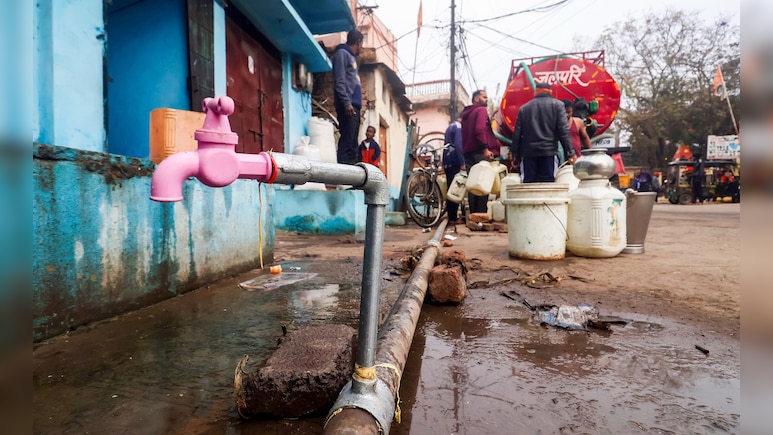
The contamination of drinking water supply in Madhya Pradesh is a systemic environmental and public health emergency, the National Green Tribunal in Bhopal has declared, holding that sewage intrusion into water pipelines has put millions of citizens at risk of disease and death.
The order follows a petition filed by Rashid Noor Khan, which documented widespread illness, mass hospitalisation and deaths linked to contaminated water in Indore and other urban centres of the state.
The Tribunal recorded that the petition raised "serious and substantial questions relating to environment and public health" and noted that laboratory findings confirming the presence of faecal coliform, E. coli, Vibrio species and other pathogens in drinking water clearly established that sewage and contaminated wastewater were entering the potable water distribution system.
The Tribunal observed that this situation was not accidental but the result of infrastructure failure, poor maintenance and regulatory neglect by civic authorities.
The Tribunal specifically referred to the Bhagirathpura area of Indore, where in the last week of December, a severe outbreak of waterborne diseases followed the supply of heavily contaminated water.
Large numbers of residents were hospitalised, several required intensive care, and multiple deaths including among infants and the elderly were reported. Laboratory tests confirmed the presence of Vibrio cholerae, faecal coliform and E. coli, conclusively proving sewage contamination of drinking water.
Based on media reports and official records, the Tribunal found that old and damaged pipelines, unsafe parallel or intersecting sewer and water lines, and prolonged administrative inaction despite repeated public complaints were the root causes of the disaster.
It noted that tenders for pipeline replacement had been floated years earlier but never executed. Importantly, the Bench held that this was not an Indore-specific problem and that similar risks exist in Bhopal, Gwalior, Ujjain, Rewa, Satna, Khargone and other cities, making the issue statewide in nature.
Citing national data, the Tribunal recorded that nearly 200,000 people die every year in India due to contaminated drinking water and more than 200 million cases of waterborne diseases were reported between 2005 and 2022.
It ruled that the supply of contaminated drinking water violates the Water (Prevention and Control of Pollution) Act, 1974, the Environment Protection Act, 1986, and the fundamental right to life under Article 21 of the Constitution, which includes the right to safe and clean drinking water.
Accepting the petitioner's demand for preventive, systemic action, the Tribunal ordered the issuance of uniform, binding, statewide guidelines and Standard Operating Procedures (SOPs) for all urban and municipal bodies in Madhya Pradesh. It held that earlier directions issued by the Madhya Pradesh High Court, Gwalior Bench, which were limited to the Gwalior district, were insufficient and that the crisis required a state-level regulatory response.
Accordingly, the Tribunal directed the State Government and all municipal corporations to implement a comprehensive set of mandatory measures. These include:
- Creation of a 24×7 water monitoring and grievance app
- Elimination of leakages and transmission losses
- Removal of encroachments near water sources
- Regulation of construction during summer
- Groundwater recharge near wells and tube-wells
- implementation of rainwater harvesting across cities
- Tanker-based emergency supply during crises
- Compulsory chlorination of domestic water
- Public Do's and Don'ts on water use
- Universal metering
- Ban on idol immersion in water bodies
- Relocation of dairies outside city limits
- Regular cleaning and disinfection of overhead tanks and pumps
- Strict adherence to pre-chlorination, post-chlorination and aeration protocols.
The Tribunal also took cognizance of Khan's interim application seeking environmental compensation for victims under the Polluter Pays Principle and the doctrine of strict and absolute liability. It observed that there was prima facie violation of Sections 24, 31 and 43 of the Water Act by concerned authorities.
The Tribunal constituted a joint committee comprising multiple departments and expert institutions to inspect affected sites and submit a factual and action-taken report within six weeks.
The Madhya Pradesh Pollution Control Board was designated as the nodal agency for this exercise. Notices were issued to all respondents, directing them to file replies within a fixed timeline, and the matter has been listed for further hearing on March 30. Copies of the order will be sent to all District Collectors and Municipal Commissioners in the state for immediate compliance.
Track Latest News Live on NDTV.com and get news updates from India and around the world

