






- US nuclear companies are exploring partnerships under India's ambitious Nuclear Energy Mission
- The potential market is estimated at between $280 billion and $300 billion
- Eased rules under the SHANTI Act have opened the sector to private and foreign participation
India's atomic rainbow is attracting many global investors. Nearly two decades after the landmark Indo-US civil nuclear agreement promised to transform India's atomic energy landscape, the American nuclear industry says the business case for India may finally be real.
A high-level delegation of around 20 US nuclear companies is in New Delhi this week, exploring partnerships under India's ambitious Nuclear Energy Mission, which aims to install 100 gigawatts of nuclear power capacity by 2047. The potential market is estimated at between $280 billion and $300 billion.
At the centre of this renewed momentum is India's new nuclear legislation, the Sustainable Harnessing and Advancement of Nuclear Energy for Transforming India, or SHANTI Act, which has significantly changed the rules governing foreign participation in the sector.
By consolidating older laws and, crucially, overhauling the long-contentious liability provisions, the Act is being seen as a potential game changer for foreign companies that had long stayed away. It also opens the prospect of Indian private sector companies owning and operating atomic plants.
For years, India's Civil Liability for Nuclear Damage Act, 2010, was seen as the biggest obstacle for Western suppliers because of concerns over supplier liability and legal exposure. The SHANTI Act dilutes the liability regime by aligning India's liability framework more closely with international norms, while opening the sector to private and foreign participation.
Maria Korsnick, President and CEO of the Washington-based Nuclear Energy Institute, told NDTV that the new framework has fundamentally changed investor sentiment.
"Huge improvements. Here again, I think the rules matter. But if the American nuclear suppliers weren't happy with the Shanti Act, the companies wouldn't be here today in New Delhi. And so the fact that the trade mission has come today to India is a strong indication that they're very interested to do business and to partner with India," she said.
She added that the SHANTI Act had "opened the door for a new day in Indo-US relations".
While the American industry has welcomed the legislative changes, Korsnick made clear that the real test lies ahead, in the rules that will operationalise the law.
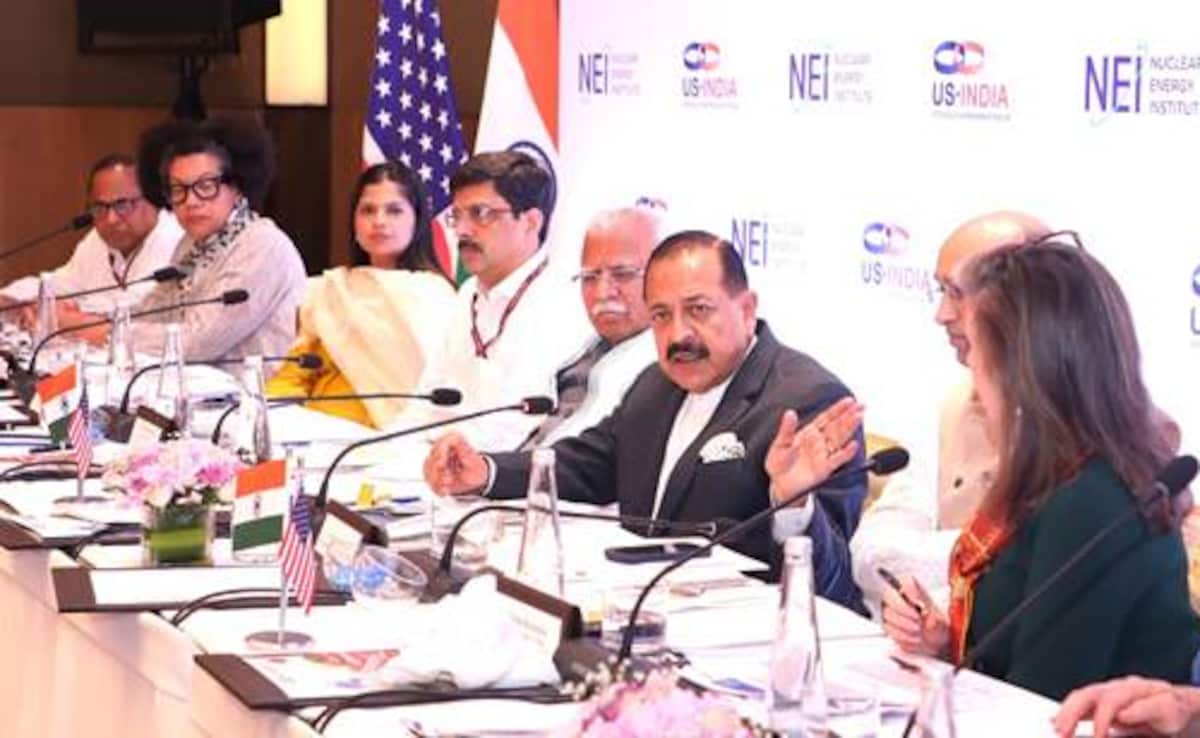
"And yet, the rules about the SHANTI Act implementation are not clear. They're in development. And one of the strong messages today from the US nuclear industry is, we would like an opportunity to comment and to have some influence so that the rules come out and they're favourable to the nuclear industry," she said.
This demand for a say in rule-making reflects a deeper concern. While the legislative framework may now be aligned, investors remain wary of regulatory uncertainty, especially in a sector as capital-intensive and risk-sensitive as nuclear power.
Dan Lipman, President of Global Business Initiatives at Westinghouse Electric Company, also struck a cautiously positive note.
India's amended liability framework is "good enough" to do business, he told NDTV, adding that "some of the remaining holes could be plugged in the contract".
Westinghouse has long sought to supply its AP1000 reactors for the proposed Kovvada nuclear project in Andhra Pradesh, though commercial negotiations with the Nuclear Power Corporation of India Ltd have remained stalled for years.
India's 100 GW Ambition
India currently has around 8 gigawatts of installed nuclear power capacity. Its target of reaching 100 gigawatts by 2047 represents one of the world's most ambitious nuclear expansion plans, as New Delhi seeks reliable low-carbon power to meet rising energy demand.
Science Minister Dr Jitendra Singh said the India-US partnership in clean energy and advanced technology is entering a new phase.
"India and the United States today share a strong and future-oriented partnership in science, technology, clean energy and emerging sectors, with civil nuclear cooperation steadily gaining strategic and economic significance."
He said the TRUST initiative launched during Prime Minister Narendra Modi's meeting with President Donald Trump in February 2025 had created a stronger framework for collaboration in critical technologies and resilient supply chains.
Tarapur Trust Deficit
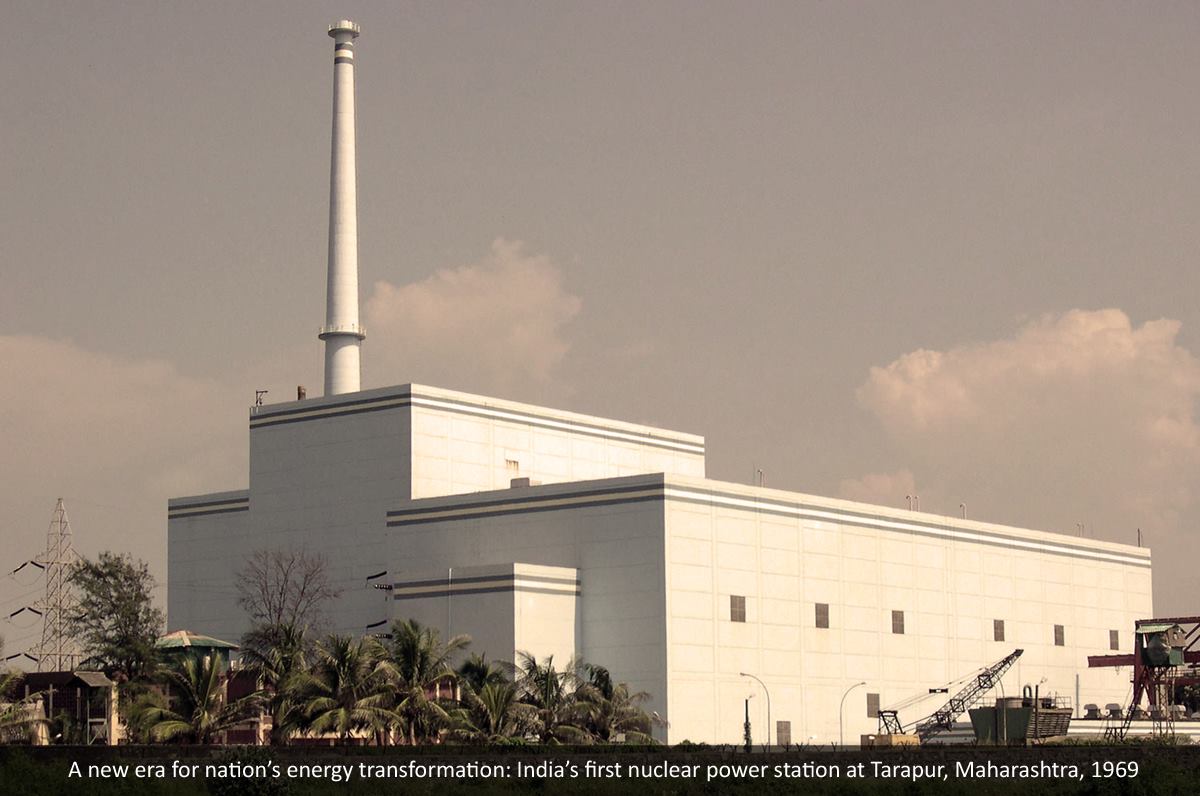
But history casts a long shadow. India's first nuclear power station, Tarapur in Maharashtra, was built with American technology in 1969. After India's 1974 nuclear test, fuel supply disruptions created a lasting trust deficit in strategic circles. That question remains relevant today, especially as India continues to seek long-term uranium security.
Asked whether the US could guarantee lifetime fuel supply commitments, Korsnick offered a measured response. "We're going to be in the business from a commercial perspective of having long-term contracts for fuel. That's what the commercial sector can promise," she said.
In other words, while long-term supply agreements are on the table, sovereign-level, lifetime guarantees, the kind India may seek after its Tarapur experience, remain outside the scope of private sector commitments.
Can US Reactors Compete On Cost?
Another major challenge is economics. India has spent decades building a domestic nuclear ecosystem centred around Pressurised Heavy Water Reactors, with its latest 700 MW PHWR units manufactured entirely within the country. This gives India substantial control over costs and supply chains. Today, supply chain resilience and trusted sources are critical for long gestation projects.
Industry estimates place construction costs at roughly Rs 20 crore per megawatt, setting a difficult benchmark for foreign suppliers.
Korsnick acknowledged that cost, timelines, and reliability will ultimately determine outcomes. "Well, we'll see. That's the beauty right now. The innovation is absolutely amazing. How much are they going to cost? How long are they going to take? How reliable are they? All of these questions, we will learn together as these projects are built," she said.
Her answer, while candid, also reflects the challenge for American companies, many of whose advanced newer smaller reactor designs are still in early stages of deployment, to prove themselves against India's established, lower-cost indigenous technology.
Local Manufacturing May Be The Key
American firms are now pitching a partnership rather than simple equipment sales.
"If the US does business with India, we want to work together. We want to localise. We don't want to just build reactors in India. We want to partner with India to be part of the supply chain for global nuclear construction," Korsnick said.
This aligns closely with India's broader "Make in India, Make for the World" vision, leveraging domestic manufacturing capabilities not just for local deployment, but also as a base for global exports.
India's nuclear supply chain, built over decades around PHWRs, is already highly mature. The prospect of integrating this ecosystem with American light water reactor technology while challenging could significantly reduce costs, a key requirement for scaling up to 100 GW.
The nuclear industry is also evolving beyond traditional large reactors. Traditionally, nuclear power has been dominated by large, gigawatt-scale reactors. But the emerging focus globally is on small modular reactors, or SMRs, smaller, factory-built units that promise faster construction, lower upfront costs, and greater flexibility. But as of now no SMR's exists on land in any western country just yet. Floating reactors on submarines made for strategic purposes are very different from land based civilian atomic plants.
Korsnick said India would likely need a mix of technologies.
"Yesterday's nuclear came in one size, large. Tomorrow's nuclear, all different shapes and sizes. You'll be able to tailor your solution." She made it clear that large reactors will still be necessary for the kind of capacity expansion India is aiming for, while SMRs and even micro-reactors could cater to specific applications, from industrial heat to powering data centres.
But she also warned against delay. "Don't wait too long. There's a lot of interest around the world... Otherwise, it's going to be a challenge to meet the schedules," she said.
This reflects a global race for nuclear deployment, with countries already lining up for emerging technologies even before they are fully operational. Yet, despite the technological promise, the economic argument remains central.
India has been clear that nuclear power must be competitive with thermal power at the point of generation. Given the high capital costs associated with Western reactor designs, achieving that benchmark will not be easy.
Korsnick, however, made a broader case, one that looks beyond upfront costs. "Nuclear reactors last for 100 years or more. So you need to compare that... apples to apples, and I think nuclear will fare very well."
In fact, Korsnick was unequivocal about nuclear energy's role in the global climate transition. "I don't think you can do it without it."
For a fast-growing economy like India's, with rising energy demand and ambitious net-zero goals, nuclear offers a reliable, low-carbon alternative to fossil fuels.
For the US nuclear industry, the signal is clear: India is once again an attractive market. But the success of this renewed partnership will depend not on political announcements, but on implementation, pricing, supply assurance and trust. Experts say Washington still needs to do a lot more to win the trust and to make the Indo-US civilian nuclear partnership a win-win for both countries. India's desire for long term energy independence will never be forfeited.
Track Latest News Live on NDTV.com and get news updates from India and around the world

