





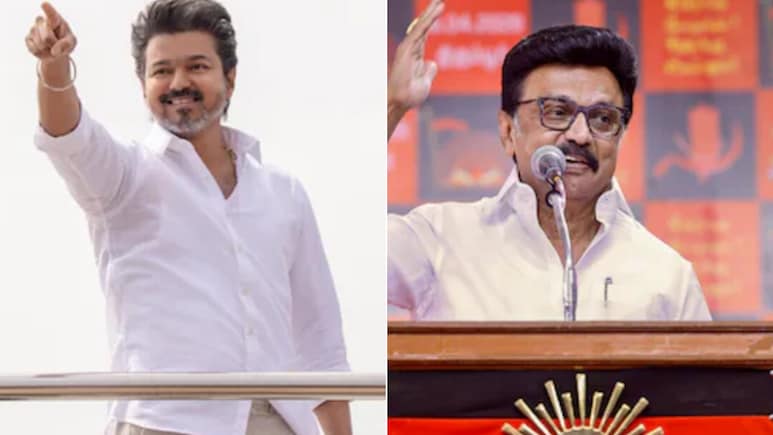
The Tamilaga Vettri Kazhagam (TVK) victory in Tamil Nadu, unseating the Dravida Munnetra Kazhagam (DMK) from power, has not only altered the state's political leadership but also triggered a rapid erosion of the DMK's once-formidable alliance structure that had won three successive elections that elevated Stalin as an astute leader.
The party, which had won 133 seats in 2021, was reduced to just 59 seats in the assembly election, while actor-turned-politician Vijay led TVK to emerge as the single largest party with 108 seats. Outgoing Chief Minister M K Stalin himself lost in his Kolathur constituency. Though short of a majority by ten seats, TVK succeeded in forming a minority government with outside support from allies.
-

-
 "India Greatly Supported Us": Sri Lankan Minister On "Difficult Years"
-
 How Chef Himanshu Saini Handles Pressure Of Running 3-Michelin-Star Restaurant
-
 "Indian Food Is Not Just Butter Chicken": Samyukta Nair At NDTV World Summit
-
 "AI Chatbots Horrible For Learning": Andrew Ng At NDTV World Summit
-
 Has Indian Cuisine Finally Arrived On The Global Stage?
-
 "India No Longer Spectator": Italy On New Delhi's Growing Peacemaker Role
-
 Chatbots Could Be Damaging Adult Learning Too: Andrew Ng
-
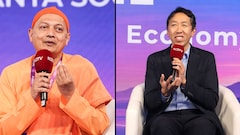 Swami Sarvapriyananda Asks On AI Alignment; Andrew Ng Flags Risks Of Overhyping AI Fears
-
 "Keep Learning New Skills, Jobs Will be There": Andrew Ng On 'AI Jobapocalypse' Fear At NDTV World Summit
-
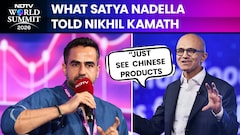 Nikhil Kamath Recalls Satya Nadella's Remark: 'I Don't Touch An Indian Product' In The US
The first major setback for the DMK came soon after the results when its long-time ally, the Indian National Congress, snapped ties and aligned with TVK, along with its five MLAs. Congress leaders justified the move as respecting what they called the "people's mandate for secularism".
Further signs of strain emerged when the Viduthalai Chiruthaigal Katchi (VCK), the Communist Party of India (CPI), Communist Party of India (Marxist) and the Indian Union Muslim League (IUML) extended outside support to the Vijay government. Together, the parties hold two seats each. They argued that supporting TVK was necessary to avert Governor's Rule, which they claimed could pave the way for BJP intervention in the state's politics.
The political realignment deepened further 11 days after the government formation when the VCK and IUML decided to formally join the coalition government and become part of the ministry.
Though the VCK and IUML had not officially announced a break with the DMK on their own, senior DMK leader A Raja escalated tensions by publicly attacking the VCK leadership. The controversy centred around one of Raja's social media posts that critics described as vulgar and demeaning towards women. Raja later deleted one of the posts amid backlash.
The VCK responded sharply, framing the issue as one linked to the empowerment and dignity of oppressed communities, exposing growing bitterness between former allies.
The developments have also weakened the DMK's long-standing claim of being the principal champion of secular and minority politics in Tamil Nadu. For decades, the party positioned itself as the natural political home for minorities. But sections of minority voters are believed to have backed Vijay in the election, and the IUML's decision to join the TVK-led government has further dented that perception.
Newly inducted IUML minister Shahjahan maintained caution on future political equations, saying alliance decisions would be taken closer to elections.
Demands for power-sharing within the DMK alliance had simmered for years. While the DMK led broad coalitions during elections, it consistently resisted sharing power in the state government, even when the Congress enjoyed ministerial positions at the Centre during UPA rule. Both the DMK and its arch-rival, the All India Anna Dravida Munnetra Kazhagam (AIADMK), traditionally argued that coalition governments would not work in Tamil Nadu.
That political doctrine now appears to be under challenge.
Sensing the impending realignment, a few days ago, DMK's Kanimozhi urged the party to work towards strengthening itself so that there would not be any over-reliance on allies. Today, A Raja too hinted at changing circumstances and developments for a new victory.
With Congress returning to power-sharing in a state it ruled until 1967, and the VCK achieving one of its long-standing demands for participation in government, Tamil Nadu politics appears to be undergoing a paradigm shift, leaving the DMK increasingly isolated both politically and within its alliance space.
Track Latest News Live on NDTV.com and get news updates from India and around the world

