Opinion: TVK Dismantles Dravidian Stereotypes Without Disturbing Tamil Political Positions
A young Brahmin man, with or without any political background, winning a seat in Tamil Nadu and subsequently becoming a minister, does not fit the established template of Dravidian politics.
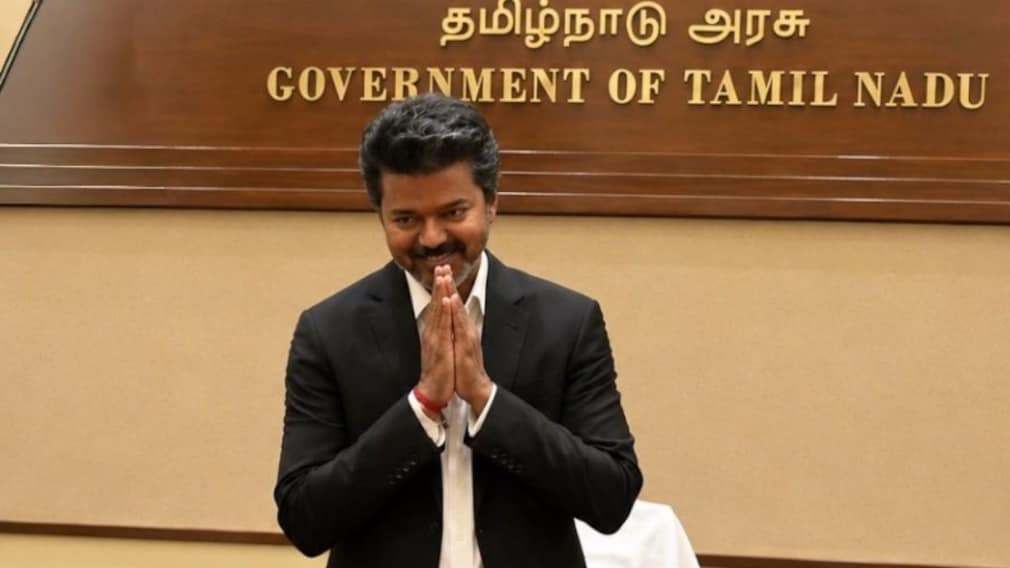
During the last election campaign, I met 31-year-old S Ramesh in the Srirangam assembly constituency. He was contesting the election and featured as the TVK voice in our show on the Delta districts.
To be honest, I was unimpressed. He lacked the conventional traits of an "election-winning" candidate - there was no charismatic oratory, no imposing aura, no formidable caste backing, and very little political acumen or experience to speak of. To my mind, Ramesh and his friends were just a bunch of enthusiastic youngsters campaigning for a party simply because they were die-hard fans of the movie star who founded it. It didn't even cross my mind that he stood a chance of winning, even though I was certain the TVK would perform better than expected, and its top leadership would secure their seats. Simply put, despite anticipating that the TVK would become a political force, I completely wrote off Ramesh.
I even gave him some unsolicited advice, suggesting he include his own professional credentials in campaign pamphlets that, at the time, featured only Vijay. In a very candid on-camera conversation, he confidently claimed that he was going to win, and so would "all other TVK candidates." I smiled, dismissing it as the standard, optimistic rhetoric of a political novice during election season.
Today, he is the state's Minister for Hindu Religious and Charitable Endowments.
I am baffled. It feels surreal. The initial disbelief I felt when he won his seat has turned into total astonishment today. This is nothing short of a movie script. In fact, had this been a film plot, it would have seemed entirely unbelievable until the results were declared.
A young Brahmin man, with or without any political background, winning a seat in Tamil Nadu and subsequently becoming a minister, does not fit the established template of Dravidian politics. Historically, the Dravidian movement has maintained a strong anti-Brahmin streak as part of its core focus on social justice. Furthermore, the Brahmin population is minuscule in the state and far from decisive anywhere, including in Srirangam. In fact, most Brahmin families force their youngsters to stay away from politics. Those who voted for Ramesh did not vote based on his caste; it simply didn't matter to them. All they saw was Vijay's candidate.
That this political shift has materialized within just three years of the party's formation to dismantle decades-old stereotypes is remarkable. Ramesh has proven that an outsider from any background can win, ensuring that journalists like me will never again casually write off an electoral contender.
By forming the government, the TVK has achieved a caste and stereotype-agnostic electoral reality - a major departure from Tamil Nadu's political past. Despite decades of the Dravidian social justice movement, both the DMK and AIADMK have long treated caste as a cornerstone of their electoral arithmetic. Vijay's TVK has dismantled that convention.
Inducting two Brahmin ministers - S Ramesh and P Venkatraman - into the cabinet of a state where the social justice movement began as a rationalist, anti-Brahmin agitation under EVR Periyar makes a statement. For the DMK, this was a core ideological position C N Annadurai or M Karunanidhi did not entertain any Brahmins in their cabinet. For the AIADMK, it was a matter of careful political optics. While MGR included H V Hande, a Brahmin face in his cabinet, Jayalalithaa - who was herself a Brahmin - never did.
Vijay's cabinet also includes seven Scheduled Caste ministers from the TVK and one from the VCK. This is much more representation for Dalits than the 3 or 4 that they have been allotted in the past cabinet. There is also a wide array of other castes and religious groups from within the TVK's own ranks, alongside its allies in this cabinet. This matrix is a marked departure from the representation for different groups in the past cabinet and has primarily been possible because the TVK is a fresh party unburdened by entrenched power lobbies. How the leadership prevents these ministerial factions from evolving into powerful caste-based interest groups over the next few years will be fascinating to watch.
This shift marks a genuine departure from the political past. The deliberate omission of the word 'Dravida' from the party's name, choosing 'Tamizh' instead - signals that while Vijay wants to break away from certain rigid stances of the Dravidian political positions, he remains firmly committed to the core tenets of Tamil political positions.
The party's alignment on issues like the two-language policy, Tamil Eelam, and secularism underscores a continuity with historic Tamil political commitments. This creates an interesting dynamic: the DMK, positioning itself as the ultimate custodian of Dravidian ideals, has historically conflated 'Dravidian' with 'Tamil' and the state itself. Vijay's TVK is introducing a wedge here, separating the DMK's Dravidian claim from the broader politics of Tamil identity.
While the DMK, in the past few weeks, has been testing the TVK on sensitive issues - such as whether the state Tamil anthem should be played after the national anthem, or its stance on Sanatana Dharma - Vijay's party has consistently responded by reinforcing its commitment to Tamil sentiment.
Furthermore, the TVK has successfully co-opted the core secular forces traditionally allied with the DMK, including the Congress, the Left, the VCK, and the IUML. Through these alliances, the TVK is clearly reiterating its ideological commitment to secularism and social justice. Over time, it will need to demonstrate this commitment through concrete policy actions - a crucial test, given that Center-State friction in India is frequently framed around these very ideological battle lines.
How the TVK carves out an ideological and political space that remains distinct from the DMK, while simultaneously positioning itself as a principled challenger to the BJP, remains to be seen. For the moment, it has established itself as a party firmly of the Tamils - one that has successfully dared to depart from core Dravidian stereotypes without entirely dismantling them.
-
Hit Songs, Empty Pockets: The Hidden Math Behind India's Viral Music Boom

Over 80,000 brands and five lakh creators in India make branded content. The opportunity is worth around Rs 1,500 crore.
-
Opinion | Great 'Exceptions': How The Oil India Was Attacked For Is The Oil Trump Now Seeks
A law written to punish the buyers of Russian oil was suspended by the US to protect a purchase of Russian oil. India spent fourteen months being lectured for less.
-
Opinion | Louis Vuitton Loot, Torched Cars: France Protests Have An Unlikely Beneficiary
It's an unbelievable moment. Crowds looting the most exclusive stores in Paris, including the famed Luis Vuitton. But what's behind this meltdown?
-
Blog: Kolkata Didn't Learn From 2015. Eleven Years Later, It Proved To Be Fatal
The City of Joy isn't a stranger to crowd control. Be it during Pujo or Christmas at Park Street, Eden Gardens cricket matches, or Derbies between Mohun Bagan and East Bengal. But during Pujo, the entire city is on alert.
-
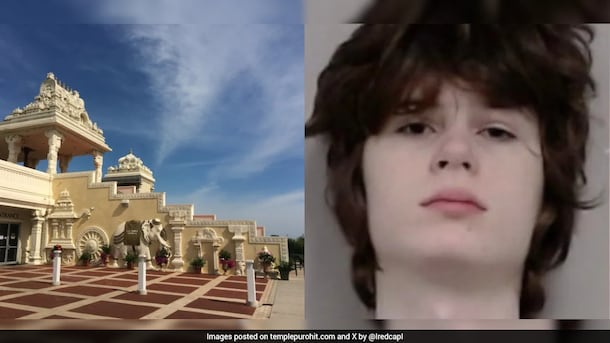
Opinion | Slurs, Threats, Now A Temple Attack Plot: When Did America Become So Hostile To Indians?
The rising tide of anti-India, anti-Hindu, and racist attacks serves as a stark reminder that economic prosperity does not automatically guarantee social immunity from bigotry.
-
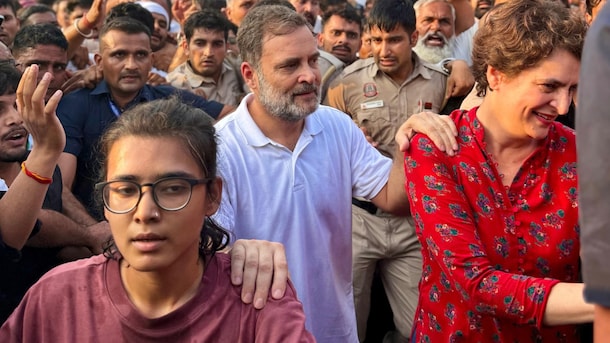
A Step Behind Neha Bora: What Rahul Gandhi's Gesture Says About Congress' Gen-Z Pitch
At INDIA bloc's march to Supreme Court, Rahul Gandhi placed himself a step behind two women, hands resting on their shoulders. One was his sister Priyanka. The one on his right was Neha Bora. Here's what the image means for the protest wave now, and for Rahul's politics in general.
-
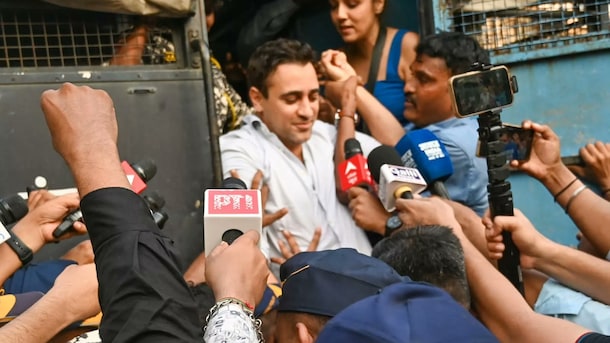
Opinion | Imran Khan, And The Perils Of Having An 'Opinion' In Bollywood
The reality of the industry is quite grimy. More often than not, its inhabitants have been fairweather friends, happy to sing the praises of whoever is in a position of authority.
-
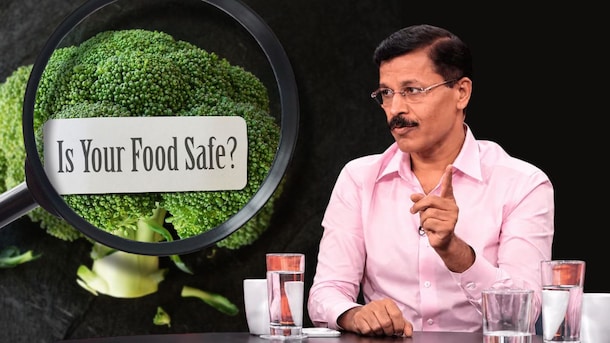
Exclusive: India's Food Safety Problem Goes Beyond Just Dirty Kitchens - By Tukaram Mundhe
On World Food Day, Maharashtra's Commissioner of Food Safety explains why instead of taking stopgap measures, the entire supply chain in India needs to be held accountable and made transparent.
-
Opinion | India Has Enough Coal. So Why Are Power Plants Running Short? A 76 Million 'Crunch'
As of October 5, as many as 82 of the 191 thermal plants monitored by the Central Electricity Authority were in the 'critical' category
-
Opinion | Starlink, India, And Why Elon Musk Must Know His Billionaire Tantrums Won't Work
India should neither be intimidated by Musk's global influence nor distracted by his theatrics.