





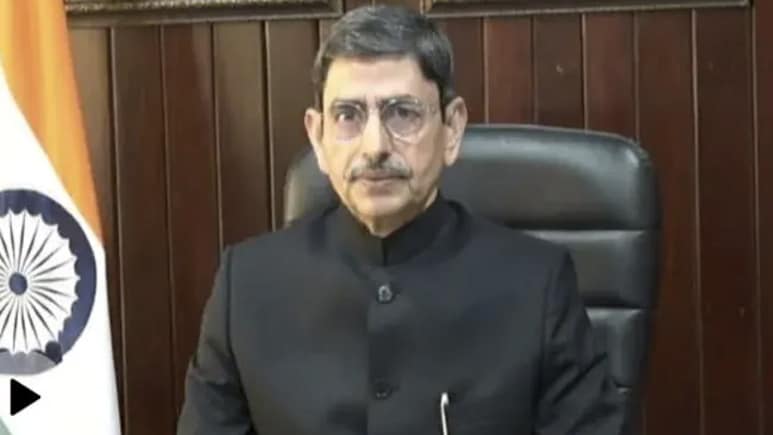
Tamil Nadu Governor RN Ravi has been appointed as the new Governor of West Bengal after CV Ananda Bose resigned. The change in the poll-bound state is part of an overall reshuffle under which nine states and Union Territories have got new Governors and Lieutenant Governors. Tamil Nadu, where assembly elections are due as well, also got a new Governor. The state will be an additional charge for RV Arlekar, the Governor of Kerala.
Ravi's appointment was announced first by Bengal Chief Minister Mamata Banerjee, who accused the Central government of violating federal principles by making the appointment without any consultation with the state government.
"Union Home Minister just informed me that Shri R.N. Ravi is being appointed as Governor of West Bengal. He never consulted with me as per the established convention in this regard. Such actions undermine the spirit of the Constitution of India and strike at the very foundation of our federal structure. The Centre must respect the principles of cooperative federalism and refrain from taking unilateral decisions that erode democratic conventions and the dignity of States," Banerjee said in a post on X.
Read: Bengal Governor Quits, Mamata Banerjee Says Successor From Tamil Nadu
Like Bose in Bengal, Ravi has also made headlines over his differences with the state government led by DMK chief MK Stalin. The bitterness had reached such proportions that Chief Minister Stalin and his ministers had skipped the "At Home" reception hosted by the Governor to mark the Republic Day and attended a party event.
The confrontations with the DMK since his appointment in 2021, have often been public and have been on multiple fronts - constitutional, legal and political.
The most public of these occasions took place in the state assembly when, in a recurrent pattern, he had walked out, refusing to read the customary opening address prepared by the state government or deviated from it.
The last such occasion was in January, at the beginning of the winter session of the state assembly. Ravi had refused to read the speech saying it was full of "misleading claims" and included an insult to the National Anthem. Stalin had called his move "childish".
The Governor had also clashed with the government over appointment of Vice-Chancellors in state-run universities. As the chancellor, he had issued notifications in September 2023, constituting search committees to identify suitable candidates. He withdrew it after a suggestion of the Supreme Court to resolve their differences.
There have been tussles over other issues - including policy matters, premature release of prisoners and medical entrance exam NEET.
The biggest clash, though, was over his move to withhold assent to multiple bills passed by the Tamil Nadu Assembly, which had pushed the state to go to the Supreme Court. The top court, in a landmark judgment last year, ruled the Governor's actions "illegal" and "arbitrary" and said the bills shall be "deemed to be cleared from the date it was re-presented to the Governor".
Read: Supreme Court's Landmark Verdict On Governor's Powers In Tamil Nadu Case
Ravi had also differed with the DMK on ideological issues - saying that a false narrative on racial divide of Dravidians and Aryans was created in the British period. "It was the British design to divide the country and they picked up collaborators during the freedom movement," he said, asserting that 19th Century British missionary and linguist Robert Caldwell was the father of the Dravidian theory.
Read: "British Design To...": Tamil Nadu Governor On Dravidian, Aryan Divide
Chief Minister Stalin had written to President Droupadi Murmu, saying the Governor should be advised against engaging in "political-ideological conflict" with the state government.
He was opposed to the culture, literature and equitable politics of Tamil people and could not accept concepts like Dravidian policies, equality, social justice and rational thinking being followed in Tamil Nadu, Stalin had said.
Track Latest News Live on NDTV.com and get news updates from India and around the world

