





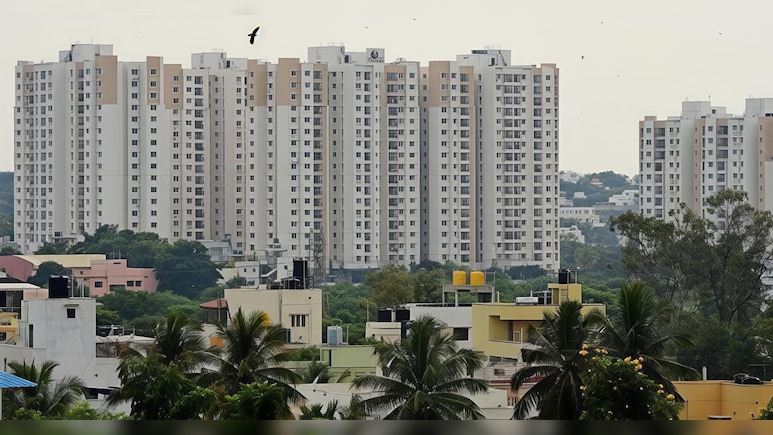
- Housing sales fell 6% in India's seven major markets during April-June quarter year-on-year
- Developers launched 1.06 lakh homes, showing confidence despite slower sales
- Rising costs have made housing less affordable for India's middle class buyers
For years, India's housing market looked unstoppable.
Prices kept rising. Luxury projects sold out. Developers rushed to launch premium towers. Every quarter seemed to bring another record.
Now, the numbers are telling a different story.
Housing sales across India's seven biggest residential markets -- Delhi-NCR, Mumbai Metropolitan Region, Pune, Bengaluru, Hyderabad, Chennai and Kolkata -- fell 6 per cent year-on-year during the April-June quarter.
At first glance, that may not appear alarming. After all, the market is coming off an exceptionally strong post-pandemic run. Developers, too, remain confident, launching nearly 1.06 lakh new homes during the quarter, about 7 per cent more than a year ago.
But beneath those headline numbers lies a larger question. Has buying a home become too expensive for India's middle class?
The Market Isn't Crashing. It's Changing
Industry leaders are quick to point out that a moderation after years of record-breaking sales was inevitable.
According to G Ram Reddy, President-Elect of CREDAI, the current slowdown should be seen as a market returning to normal rather than entering a downturn.
He says several short-term factors -- including global geopolitical uncertainty, affordability concerns and changing employment trends -- have made buyers more cautious. Yet developers continue to invest because the long-term drivers remain intact.
Urbanisation is accelerating. Infrastructure projects continue to reshape cities. Genuine end-user demand has not disappeared.
The fact that developers launched over one lakh homes during the quarter, Reddy says, reflects their confidence in India's long-term housing story rather than quarterly sales fluctuations.
However, he also believes one issue deserves immediate attention: housing affordability.
Reddy argues that rising development costs have significantly changed the economics of home buying, making it necessary to revisit India's current definition of affordable housing so it better reflects today's market realities.
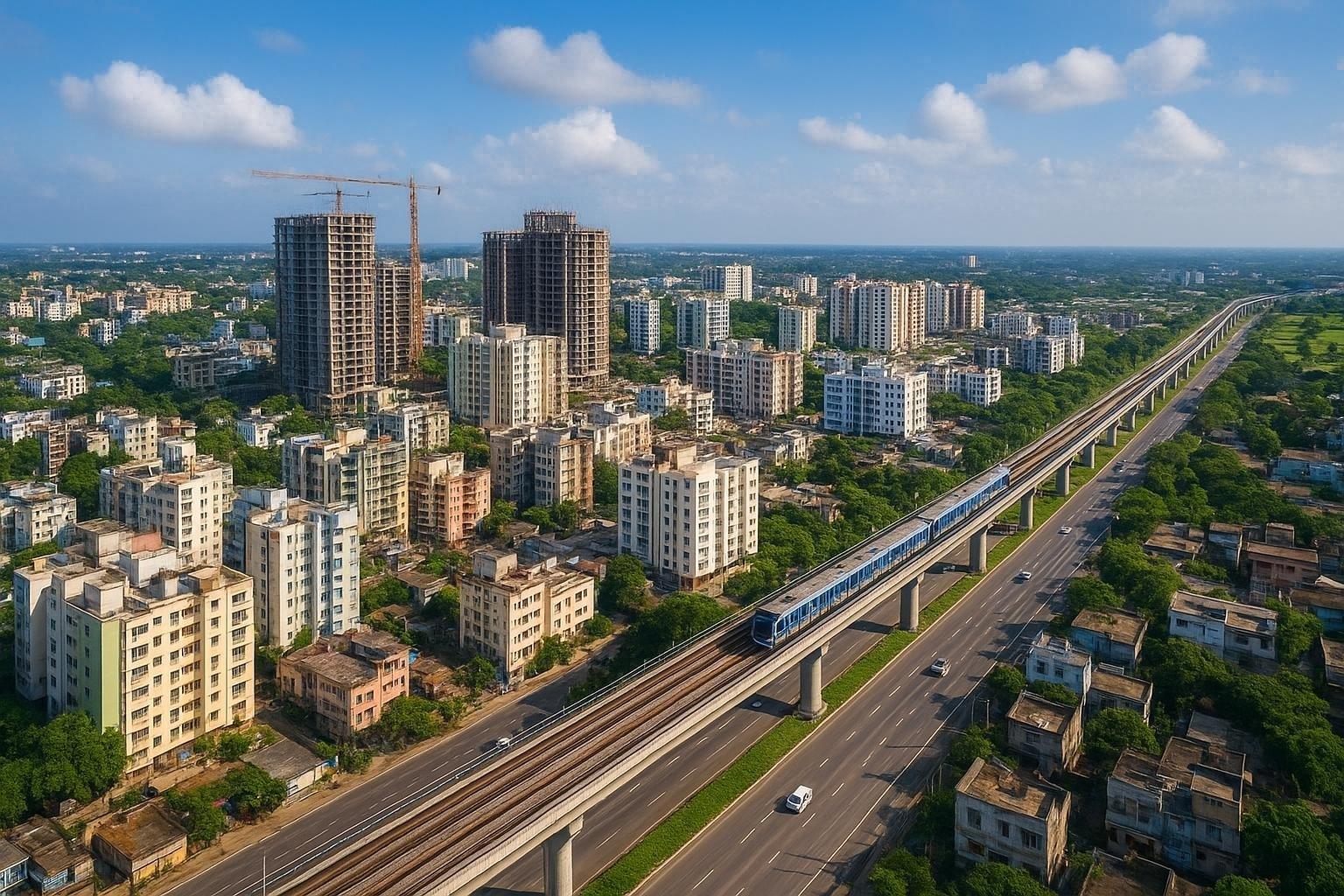
Biggest Buyers Are Getting Fewest Homes
One of the biggest shifts in India's property market has happened quietly. Developers have increasingly focused on luxury and ultra-luxury housing.
Affordable and mid-income housing, once the backbone of residential demand, has gradually taken a back seat. Shailendra Shukla, Property Consultant and Director of Lucknow-based S Squire Realtors, says this imbalance is beginning to show up in sales numbers.
According to him, luxury housing may appear to be outperforming because percentage growth often creates a misleading picture. A relatively small increase in premium home sales can generate impressive growth rates. Meanwhile, the affordable segment may seem to be slowing despite accounting for far larger transaction volumes.
He believes cities like Lucknow demonstrate why a balanced housing supply matters. While premium projects work well in markets with a high concentration of wealthy buyers, many cities continue to depend on affordable and mid-income demand.
Construction costs have undoubtedly increased, he says, but pricing must remain aligned with actual purchasing power if growth is to remain sustainable.
Middle Class Is Being Squeezed
Perhaps the biggest concern is not that people no longer want homes. It is that many simply cannot afford them.
According to Pawan Agarwal, Managing Director of NK Realtors, the financial equation has changed dramatically over the last few years.
Property prices across major cities have risen much faster than household incomes. At the same time, buyers are dealing with higher borrowing costs, rising construction expenses, and elevated stamp duty and registration charges.
The Result?
Even households earning around Rs 1 lakh a month are increasingly finding it difficult to buy homes in urban India without stretching their finances. Many are postponing purchases altogether.
Others are compromising by buying smaller apartments or shifting farther away from city centres in search of affordable options. Agarwal says solving this problem requires far more than simply building additional homes.
Greater focus on affordable and mid-income housing, better financing options, supportive government policies and infrastructure-led development will all be necessary to restore affordability and keep homeownership within reach for India's growing middle class.
Developers Still See A Long Runway
Despite weaker sales, developers remain optimistic. Sahil Agarwal, CEO of Nimbus Group, believes the broader growth story remains intact.
The rise in fresh launches during the quarter signals that developers continue to see strong long-term demand. He notes that premium housing continues to witness healthy absorption, although affordability remains a significant challenge for middle-income buyers.
In the National Capital Region, particularly Noida, Greater Noida and the Yamuna Expressway corridor, he expects demand to remain strong. Upcoming operations at Noida International Airport, expanding infrastructure, and increasing investments by global capability centres and manufacturing companies are creating jobs alongside housing demand.
According to Agarwal, these structural changes could make the region one of India's strongest real estate markets over the next decade.
Demand Hasn't Disappeared. Affordability Has
The distinction is important. Mohit Ramsinghani, President at VTP Realty, says the recent moderation should not be mistaken for weakening demand.
Owning a home continues to be a priority for Indian families, particularly genuine end-users. He believes improving affordability through supportive government policies, quicker project approvals and continued infrastructure development will help revive momentum.
As economic confidence improves and connectivity expands, Ramsinghani expects middle-class demand to remain resilient.
India does not appear to have a housing demand problem. It has an affordability problem.
Millions of aspiring buyers still dream of owning a home. The challenge is that homes are increasingly being built for those who can already afford them, while the country's largest pool of buyers is finding itself priced out.
Luxury housing may continue to dominate headlines and deliver healthy margins for developers. But the future of India's housing market may ultimately depend on whether the middle class can once again afford to participate.
Track Latest News Live on NDTV.com and get news updates from India and around the world

