A Rs 7,000-Crore Push: Not Just Devotees, Investors Are Heading To Vrindavan Too
Taken together, initiatives place Vrindavan region close to the Rs 7,000 crore mark in planned and executing infrastructure signals.
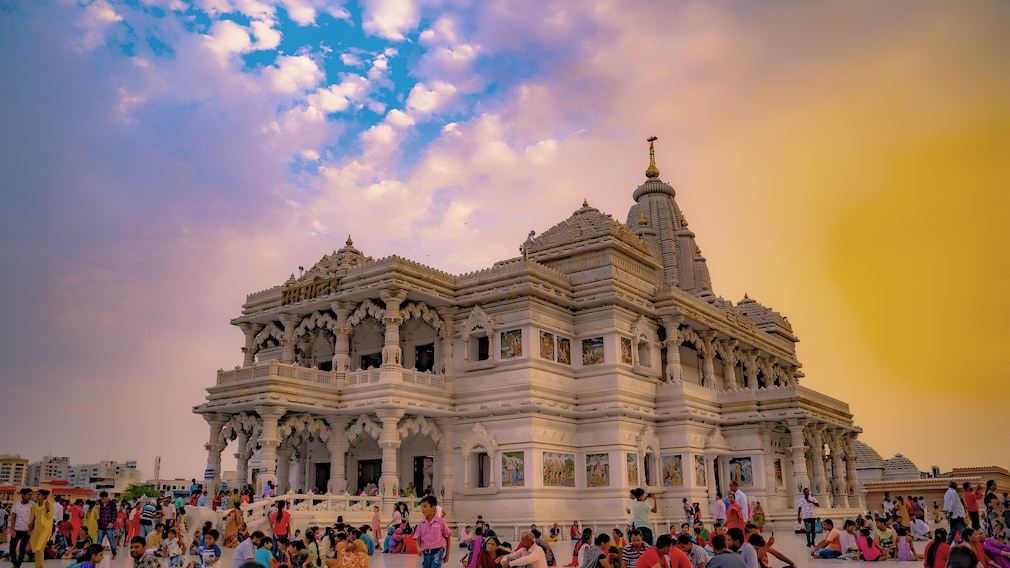
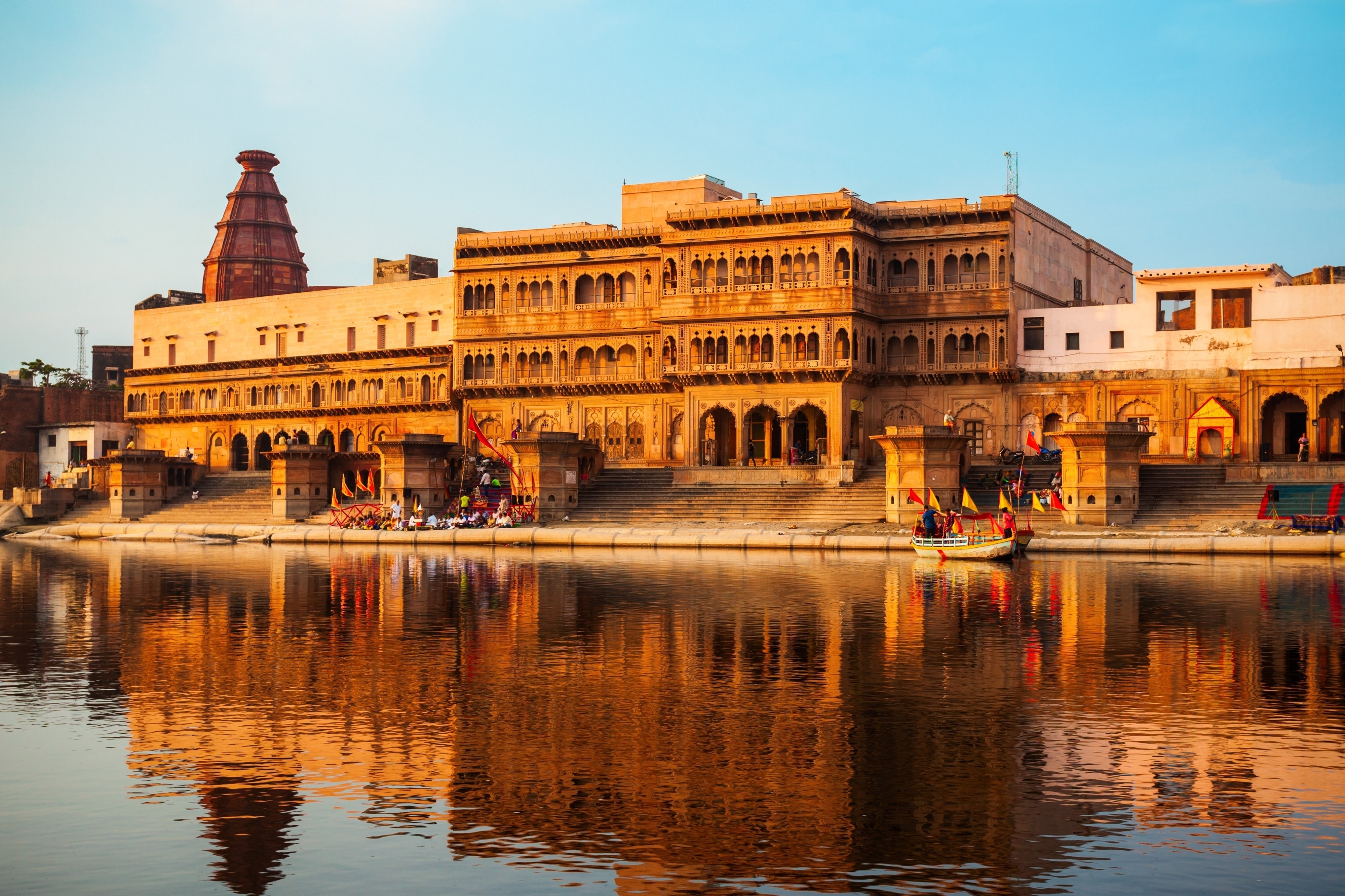
For centuries, Vrindavan has been among India's most visited pilgrimage destinations, drawing sustained and recurring footfall. In 2024 alone, the city welcomed approximately 2.45 crore visitors. Volume, however, has never been the limiting factor. The more decisive variable and the one that increasingly shapes real estate outcomes, is how long visitors stay.
India's modern real estate cycle has been largely shaped by metro-centric expansion, corporate workforce migration, and long-term urbanisation. However, a quieter but more structural shift is now underway. Pilgrimage centres and cultural towns are beginning to emerge not only as tourism hubs, but as credible real estate markets.
Real estate markets do not reprice on footfall alone; they reprice when duration deepens. Longer stays translate into sustained demand across hospitality, rentals, retail, and local services. Over time, this consistency allows investors to view a destination not as a seasonal surge market, but as a functioning, year-round economy.
"Markets don't reprice on emotion; they reprice when repeat behaviour becomes visible and when cities are equipped to support that demand," says Samujjwal Ghosh, CEO, The House of Abhinandan Lodha (HoABL). "In Vrindavan, the shift underway is toward longer stays and more predictable visitation, rather than dependence on peak-day footfall alone."
Infrastructure Execution Is Reinforcing The Transition
Infrastructure delivery is beginning to reinforce this behavioural change. The six-lane, access-controlled Vrindavan Bypass, reported as approved at Rs 1,645.72 crore, is intended to ease congestion and improve regional connectivity. The Banke Bihari Corridor, discussed at around Rs 500 crore, aims to improve pilgrim movement and safety and has remained under active judicial and administrative scrutiny, underscoring its importance to the city's long-term urban planning.
At a broader level, the Ministry of Road Transport and Highways has outlined plans to develop the 84 Kosi Parikrama Marg of Braj as a National Highway under Bharatmala Phase II, with earlier reporting indicating an investment scale of approximately Rs 5,000 crore.
Taken together, these initiatives place the region close to the Rs 7,000 crore mark in planned and executing infrastructure signals. At this stage, timelines and delivery matter more than intent. Markets tend to price execution very differently from announcements. Once capital deployment becomes visible, investment horizons lengthen and behaviour begins to shift.
Policy Visibility And The Emergence Of Spiritual Economic Zone
Policy visibility is further adding comfort. In August 2025, the Uttar Pradesh government announced a Rs 30,000 crore master plan for the holistic development of the Braj region, alongside 118 development projects worth Rs 646 crore for Mathura-Vrindavan. Collectively, these initiatives are increasingly positioning the region as a Spiritual Economic Zone, where religious tourism, local enterprise, hospitality, and services are planned in a more integrated manner.
Connectivity is further supported by the upcoming Noida International Airport at Jewar, with state-level updates in late 2025 reiterating targets for phased commencement in early 2026. For Vrindavan, the significance lies in reduced travel friction, particularly for NCR-based visitors and short-break travellers, who are more likely to convert day trips into overnight stays.
Early Signals In Pricing
Residential prices across India's top seven cities rose over 21 per cent in 2024, while select plotted micro-markets have outperformed even that. Radhakund, in the Vrindavan region, has recorded nearly 29 per cent CAGR (compound annual growth rate) over the past five years, illustrating how land begins to reprice once access, planning visibility, and holding behaviour align.
Ankit Aggarwal, Managing Director, Devika Group, said, "Enhanced connectivity, planned residential projects and improving civic infrastructure have further strengthened Vrindavan's appeal among professionals, NRIs, retirees and families. We believe this trend will continue as more people seek destinations that seamlessly combine cultural heritage, wellness-oriented living and promising real estate growth."
This reinforces a consistent pattern -- well-located land, when aligned with visible infrastructure and long-term planning, tends to reprice decisively over time. These are not sentiment-led spikes, but duration-led repricing cycles.
Why Developers Are Paying Attention
These shifts help explain why organised developers are increasingly evaluating opportunities in and around Vrindavan. Historically, land in such markets remained fragmented and difficult to underwrite. As access improves and policy visibility increases, land begins to behave less like a speculative trade and more like a long-duration asset.
The House of Abhinandan Lodha has identified 48 high-potential locations across India including Vrindavan and operates as the country's largest branded plotted land developer, with a presence across five states and 16 locations. A key differentiator has been HoABL's digital-first land buying model, which digitises the entire journey from discovery and documentation to payments and registration backed by clear titles, regulatory approvals, and transparent processes.
By reducing ambiguity around title, approvals, zoning, and possession, the model lowers risk, shortens transaction timelines, and protects long-term value. "We are seeing strong interest for our Vrindavan project not just from across India, but from overseas buyers as well," says Ghosh. "Once utilisation becomes predictable, capital stops chasing excitement and starts underwriting endurance. That is when land begins to compound quietly."
-
Why Doesn't Congress Boycott If Polls Are "Fixed"? Answer Lies Beyond Rahul Gandhi's "Distraction" Quip

The starkest demand for a boycott has come from outside the political Opposition, from the Cockroach Janta Party. But does a boycott help? Here's what research, examples, and expert analysis tell us.
-
'Sully' To Gimli, Sioux To Patna: When Pilots Got It Unbelievably Right
Captain Smit Machchhar fought off his co-pilot after being stabbed and opened the cockpit door, saving 174 people.
-
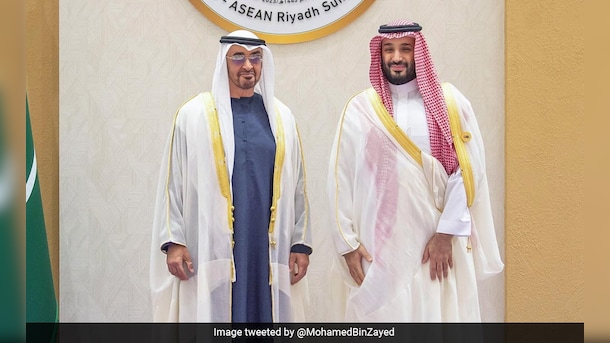
Opinion | Are Saudi Arabia And UAE Reuniting Again After 10 Years?
On Tuesday, the UAE's Vice President, Deputy Prime Minister and Chairman of the Presidential Court, Mansour bin Zayed, met Saudi Crown Prince Mohammed bin Salman.
-
Opinion | 'Lies, Damned Lies, Statistics': On The Controversy Around India's GDP Growth Figures
The debate is less about a single figure than about a decade-long erosion of trust in official statistics.
-
Opinion | Why India Cannot Keep 'Overestimating' Its Value To Washington
Some of India's value to Washington came from the tension between the US and China. That is changing now.
-
Opinion | India Has A 'Lobbying' Problem In Washington, And It Has Come Back To Haunt It
While the EU, Japan, the UK and South Korea secured quick deals, India's efforts were getting drained in prolonged negotiations and the wrong kind of lobbying.
-
India Is Getting Old Before Getting Rich, Will Turn 'Aged' In 16 Years: Moody's
Countries with the steepest fertility declines today will age the fastest in the coming decades. India's drop has been steep.
-
Opinion | Why Does Trump Want To Sell Arms To A US 'Adversary'? Inside His Strange Bargain
Trump's aides maintain that no such offer had been made. But the story points to a larger strategy
-
Opinion | The AI Boom Has Run Into A Big 'Debt' Trap Problem. Inside The 5% Danger Line
For most of the AI buildout's first two years, hyperscalers funded it the easy way: out of operating cash flow. That era is over.