






Provident Funds have been one of the most reliable retirement plans for Indians. Given its low-risk and tax-free returns, the instrument is widely famous across the working class. However, the new labour codes introduced recently have brought PF into the spotlight as basic pay increased, so did the PF contribution and that eventually decreased the take home salary.
However, the new EPFO scheme 2026 has explicitly mentioned that the PF contribution above Rs 1,800 per month is voluntary, irrespective of the salary. The question is, one can increase the base salary by reducing the PF but should it be done?
The answer is simple. Yes, one can, if there is a requirement of more cash-in-hand but if the money has to be invested somewhere or if a retirement plan is in mind, the EPF is still one of the most lucrative schemes.
"Even if an employee earns a basic salary of Rs 70,000 a month, the mandatory EPF contribution remains Rs 1,800, which is 12 per cent of Rs 15,000. Any extra contribution beyond this amount will be treated as voluntary," Sonal Verma, Partner & Global Leader of Market & Strategy at the employment and labour law expert firm Dhir & Dhir Associates, told NDTV.
The Rs 15,000 ceiling and "voluntary above that" structure existed under the old EPF Act too. It is now codified more explicitly in the 2026 Scheme, partly to remove ambiguity created by the wage-definition changes by the new labour codes, he added.
Take home pay vs EPF contribution
So, there is the option to reduce contribution to the PF account and increase the take home salary but how logical is it to do so?
"While this aligns with the broader objective of increasing disposable income, particularly in light of proposed labour law reforms and changing compensation structures, it also shifts greater responsibility onto employees to plan for retirement independently," Sonam Chandwani, Managing Partner, KS Legal & Associates, told NDTV.
The policy debate, therefore, is one of balancing immediate liquidity against long-term social security, she added.
Comparing EPF returns among peers
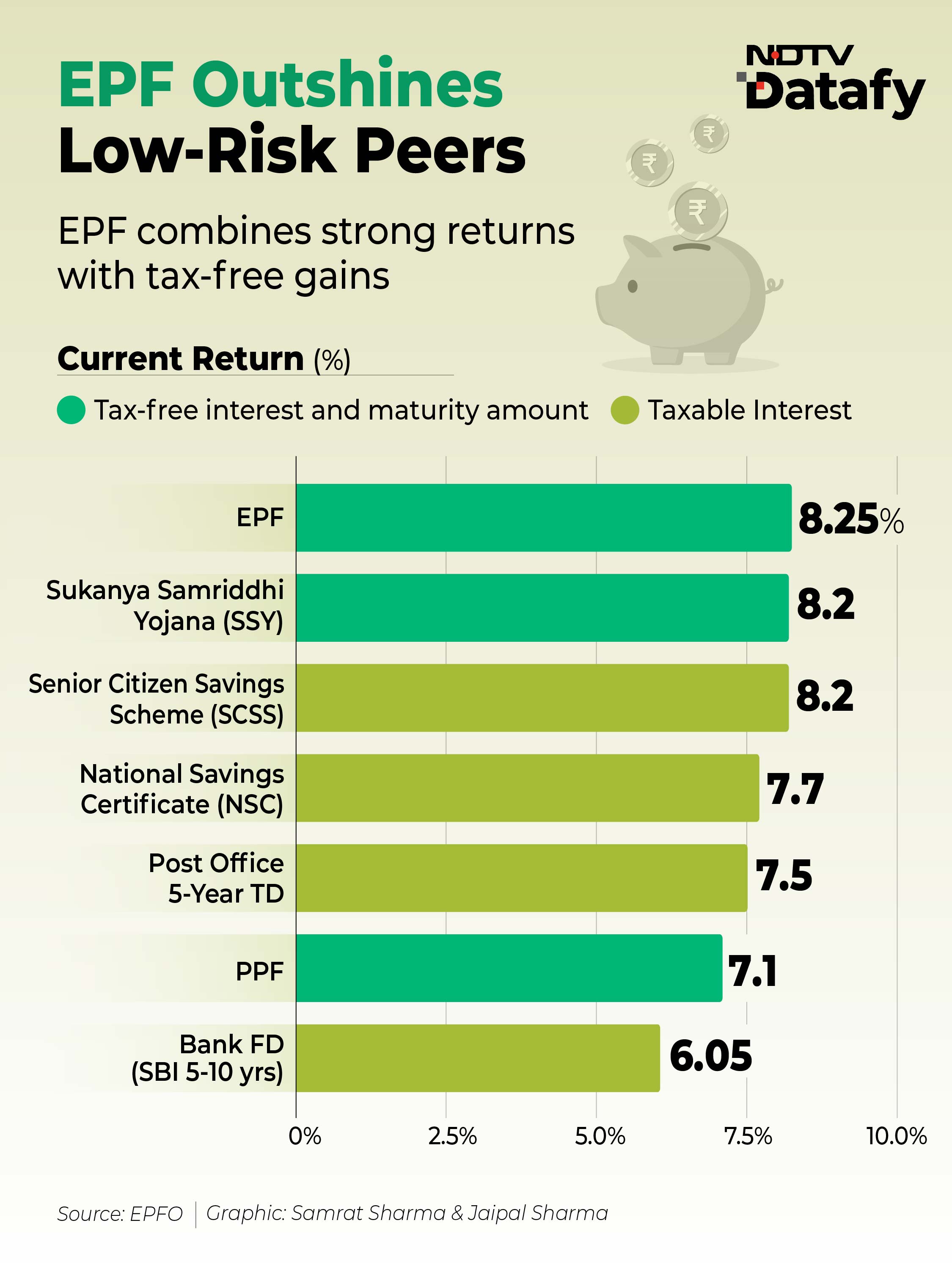
When the need is a low-risk and tax-free returns, EPFO tops the chart among peers. Sukanya Samriddhi Yojana (SSY) and Public Provident Fund (PPF) also offer tax-free interest and maturity amount. However, EPF does not only pay a higher interest rate but offers a tax-free contribution too from the employer's side.
Other low risk investments include Senior Citizen Savings Scheme (SCSS), National Savings Certificate (NSC), Post Office 5-Year Time Deposit Schemes and bank Fixed Deposits but their interests paid are taxable. EPFO offers the highest interest rate of 8.25 per cent among them.
How EPF interest rates changed over time?
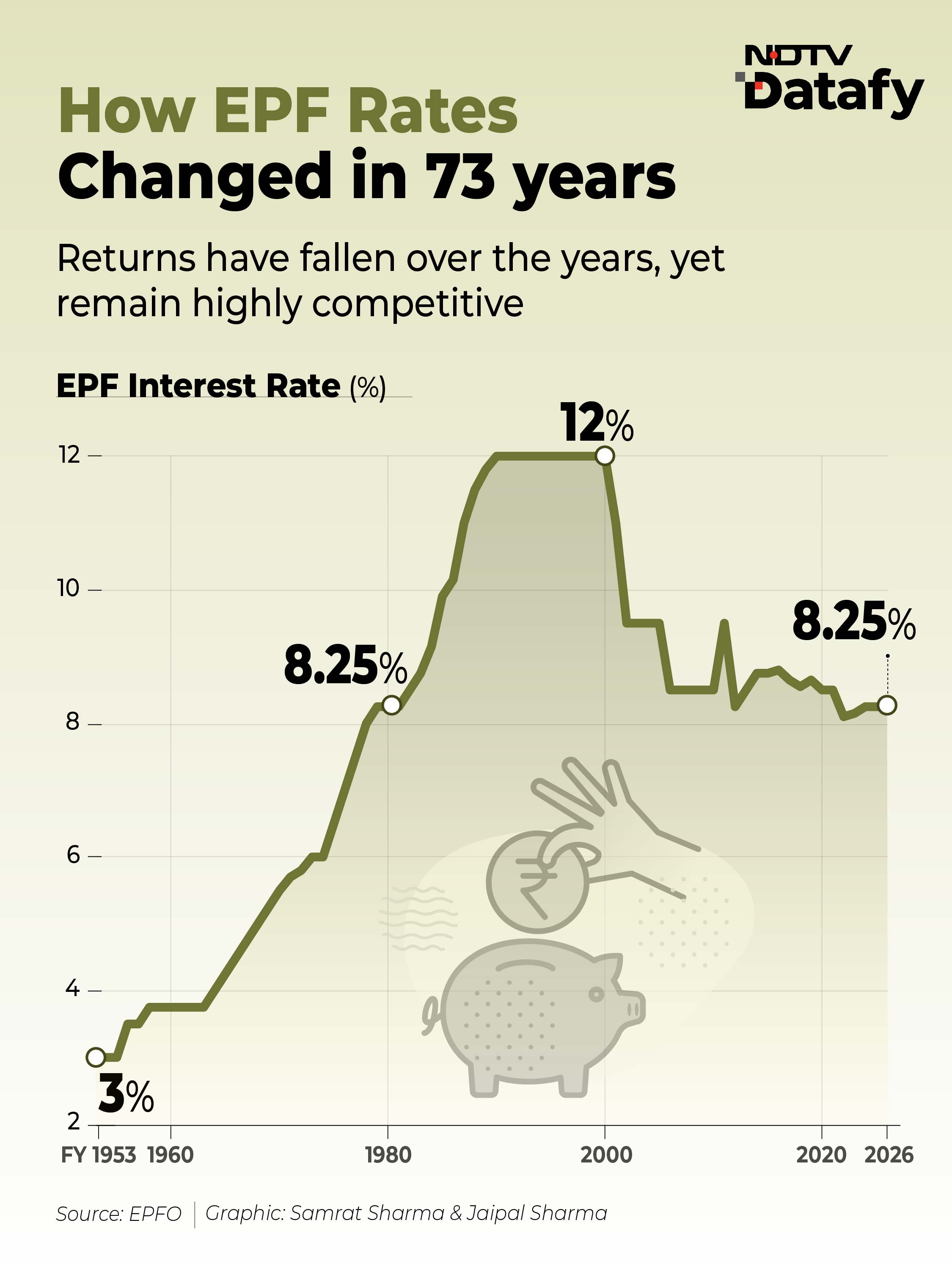
The EPF was introduced in 1952 and it offered an interest rate of three per cent, according to EPFO. The interest rate gradually increased to 8.25 per cent in 1979 and 12 per cent in 1990. It stayed at 12 per cent for the next 10 years and decreased back to 8.25 per cent now.
EPS - The Pension Component
The pension component of the provident fund does not accumulate interest even as a large portion of employer's contribution goes into it. The purpose is to provide assured lifelong pension benefits rather than maximising investment returns. The new scheme also allows employees to contribute more to the pension scheme, in addition to the 8.33 per cent of basic pay being contributed by the employer.
"For individuals seeking certainty and inflation-insulated retirement planning, higher pension contributions may be justified. However, for younger professionals with a longer investment horizon, diversified market-linked investments may potentially generate superior long-term returns, subject to market risks," Sonam Chandwani said.
Since EPS payout is based on a formula and not a straightforward interest rate, Sonal Verma added that NPS & Mutual Funds are other alternatives offering market-linked returns with greater transparency into fund performance.
Track Latest News Live on NDTV.com and get news updates from India and around the world

