





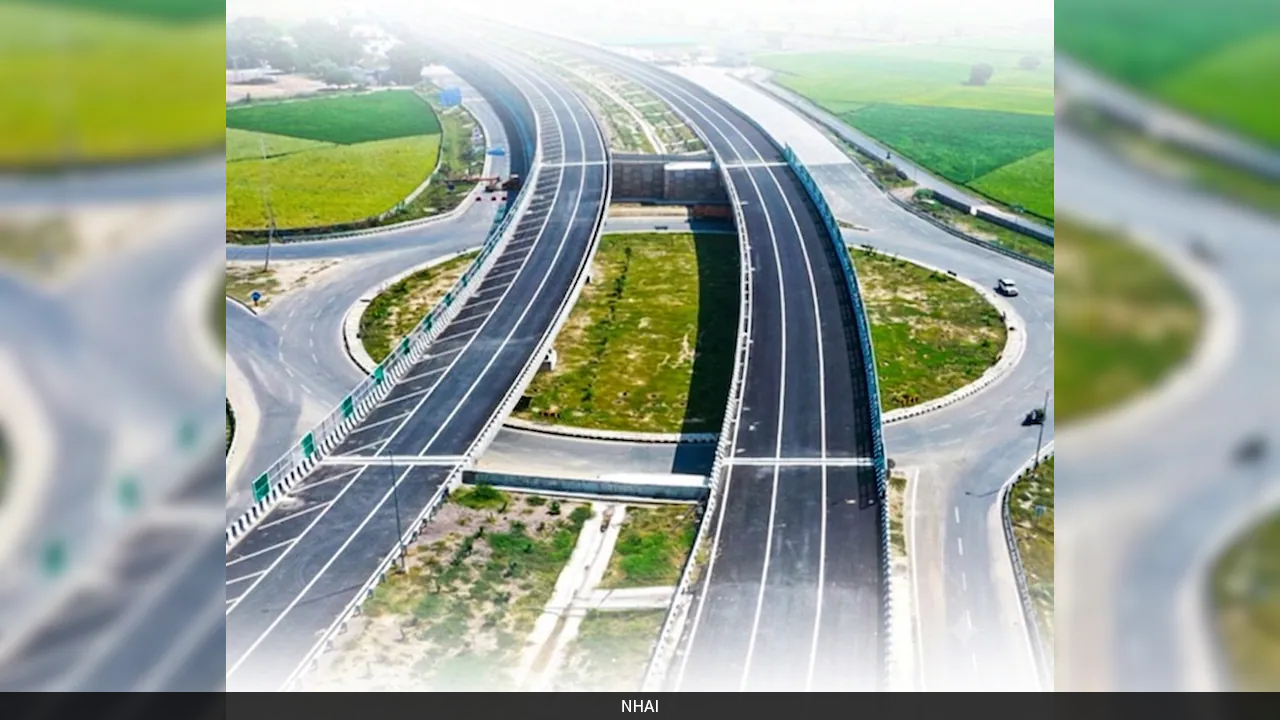
- Delhi-Amritsar-Katra Expressway's first 157.92-km stretch inaugurated by PM Modi in Haryana
- New highway cut Delhi to Vaishno Devi travel time from 14 hours to around six hours
- Ambala-Kala Amb and Jind-Gohana highways also opened, reducing local travel times sharply
A road trip from Delhi to Vaishno Devi that once took nearly 14 hours is now set to take around six.
Prime Minister Narendra Modi on Friday dedicated the first 157.92-km stretch (Packages 1 to 5) of the Delhi-Amritsar-Katra Greenfield Expressway during his visit to Jind, Haryana. Built at a cost of around Rs 9,680 crore, the newly opened section marks a major milestone in one of India's most ambitious highway projects.
PM Modi also inaugurated the 33.81-km Ambala-Kala Amb Highway and the 40.60-km Jind-Gohana Greenfield Highway, which will cut travel time between Jind and Gohana from nearly two hours to just 40 minutes. He also laid the foundation stone for a six-lane Greenfield Highway connecting IT City with Kurali in Punjab's Mohali district. Earlier in the day, the PM also flagged off India's first hydrogen train in Jind.
Together, these projects are expected to improve connectivity, reduce congestion and strengthen economic activity across North India.
Delhi-Amritsar-Katra Expressway: Delhi To Katra In Six Hours
The newly inaugurated stretch is part of the 667-km Delhi-Amritsar-Katra Expressway, being developed at an estimated cost of around Rs 38,905 crore.
Once the entire corridor is operational, the drive from Delhi to Katra is expected to come down from about 14 hours to nearly six hours. The Delhi-Amritsar journey will also be reduced from around eight hours to about four hours.
The expressway has been designed to provide seamless, high-speed connectivity between Delhi, Haryana, Punjab and Jammu & Kashmir. It will also decongest the busy NH-44 (GT Road), improve access to the Shri Mata Vaishno Devi shrine and provide faster movement of freight across northern India.
With nearly 35 major interchanges planned along the route, the corridor will connect industrial hubs, agricultural markets, logistics centres and important religious destinations, creating an integrated transport network across the region.
More Than Just A Highway
The Delhi-Amritsar-Katra Expressway is being seen as much more than a faster route for travellers.
Infrastructure experts believe it could reshape economic activity across northern India by encouraging new investments, improving supply chains and creating fresh opportunities in logistics, manufacturing, tourism and real estate.
Rajat Bokolia, CEO of Newstone, described the project as a "stellar game changer" for North India's real estate market. "For cities like Sonipat, it is a major connectivity boost. By reducing commute time to Punjab and Jammu & Kashmir, this expressway leads to the growth of Sonipat as a market, supporting logistics, industries and residential project launches," Bokolia said.
Similarly, Abhishek Raj, Founder and CEO of Jenika Ventures, said the 667-km project connects major economic, industrial, agricultural and religious destinations across four states while significantly improving travel efficiency.
According to Raj, previous expressway projects such as the Dwarka Expressway, Yamuna Expressway and Delhi-Mumbai Expressway have shown how improved connectivity can accelerate urbanisation and create new investment destinations. He expects similar growth in emerging markets such as Sonipat, Panipat, Karnal, Ambala, Ludhiana, Jalandhar, Patiala and the outskirts of Amritsar.
Logistics, Industry To Benefit
The impact is expected to extend well beyond residential real estate.
The corridor will provide faster access to manufacturing clusters in Haryana and Punjab, logistics parks, warehousing hubs and commercial centres. Lower transportation costs and reduced travel time are expected to improve supply chain efficiency across North India.
Raj said the presence of around 35 major interchanges will improve market access for businesses while encouraging investments in Grade-A warehouses, logistics parks, industrial estates, hotels, retail centres and commercial real estate. "Enhanced connectivity will allow people to live farther from existing city centres while remaining well connected to employment hubs," Raj said.
Tourism Set For A Major Push
The expressway is also expected to boost religious tourism. Millions of devotees travel every year to the Shri Mata Vaishno Devi shrine in Katra and the Golden Temple in Amritsar. Shorter and smoother journeys could increase visitor numbers, benefiting hotels, restaurants, transport operators and local businesses across the corridor.
Better roads are also expected to encourage weekend travel, interstate tourism and business trips, giving a broader boost to the region's service economy.
PM Modi's Push For Punjab
During his Punjab visit, PM Modi inaugurated and laid the foundation stone for rail and road infrastructure projects worth over Rs 5,470 crore. This included the inauguration of the six-lane Greenfield Highway connecting IT City and Kurali in Mohali district, along with the foundation stone laying of the Zirakpur Greenfield Bypass and the PR-7 Spur of the Ambala-Chandigarh Greenfield Highway.
"Complemented by recent upgrades such as the new terminal at Ludhiana Airport, these developments will improve mobility, reduce travel time and enhance the appeal of Punjab's key urban centres, particularly Mohali and Ludhiana, for homebuyers, businesses and long-term investment," said Rohit Kishore, CEO, Hero Realty.
A Long-Term Investment In North India
While Friday's inauguration covered only the first 157.92-km section of the Delhi-Amritsar-Katra Expressway, it marks an important step towards completing a corridor that could redefine mobility across North India.
Once fully operational, the expressway is expected to cut travel time dramatically, ease congestion on existing highways, strengthen freight movement, and unlock new opportunities in real estate, logistics, manufacturing and tourism.
Track Latest News Live on NDTV.com and get news updates from India and around the world

