





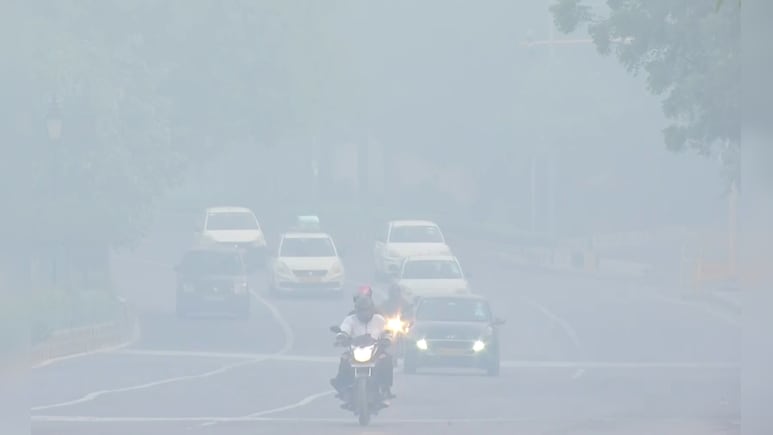
A monitoring mechanism has been put in place to oversee the implementation of 95 directions of the Centre-appointed Commission for Air Quality Management, Union minister Bhupender Yadav told the Lok Sabha today. The Environment minister, who was answering questions on the massive pollution blanket over Delhi and neighbouring areas, however, remained silent on whether the Delhi government has under-utilised the Rs 1,200-crore funds meant for clean air.
In a written reply tabled in the Lok Sabha on Monday, Yadav stopped short of accusing the Delhi government of under-utilising Central funds despite pointed questions from Congress MP Dr Kirsan Namdeo Rao. The Congress leader had asked about the government's response to the alarming air pollution levels in Delhi and its impact on public health.
Instead, the minister placed the onus on the Commission for Air Quality Management in Delhi-NCR - a Central body - stating that 95 statutory directions have already been issued and a monitoring mechanism is in place to ensure compliance by "various agencies" in the National Capital Region.
On the crucial question of whether the Delhi government has adequately utilised funds provided by the Centre under the National Clean Air Programme (NCAP), Bhupender Yadav only said that the GNCTD "has reported that they have started implementation of various activities", including procurement of 14 mechanical road sweepers, end-to-end paving of roads, and greening of 2.6 hectares - all of which "are at various stages".
Further, the New Delhi Municipal Council has informed that it has initiated procurement of four anti-smog guns on BS-VI CNG and seven modified anti-smog water guns for high-rise buildings, besides road improvement works.
No figure on actual expenditure versus the sanctioned amount was disclosed.
Asked about accountability for any under-utilisation and whether the lack of effective policies by the Delhi government has contributed to the worsening air quality, the Minister's reply remained silent on both counts. The minister, instead, highlighted Central initiatives -- tougher emission norms than national standards, a revised and more stringent Graded Response Action Plan (GRAP) notified on 21 November 2025, multiple high-level review meetings chaired by the Union Minister, and critical gap funding provided to NCT-Delhi under NCAP.
The reply claims a marked improvement in Delhi's air quality this year - 200 "good to moderate" days (AQI less than 200) in 2025 compared to 110 days in 2016, and the lowest annual average AQI in eight years (barring the 2020 COVID lockdown year).
The revised GRAP, whose details were included with the reply, has shifted several restrictive measures to earlier stages:
* Uninterrupted power supply, traffic synchronisation, and augmented CNG/electric bus services will now kick in at Stage I itself (Poor AQI 201-300) instead of Stage II.
* Staggered office timings move from Stage III to Stage II.
* 50 per cent work-from-home for offices shifts from Stage IV to Stage III.
With Delhi's AQI already hovering in the "Very Poor" category for much of November and forecasts predicting "Severe" levels in the coming week, implementation of the tougher GRAP and actual ground-level spending of Central funds by the Delhi government are likely to remain under intense political and public scrutiny this winter.
Track Latest News Live on NDTV.com and get news updates from India and around the world

