





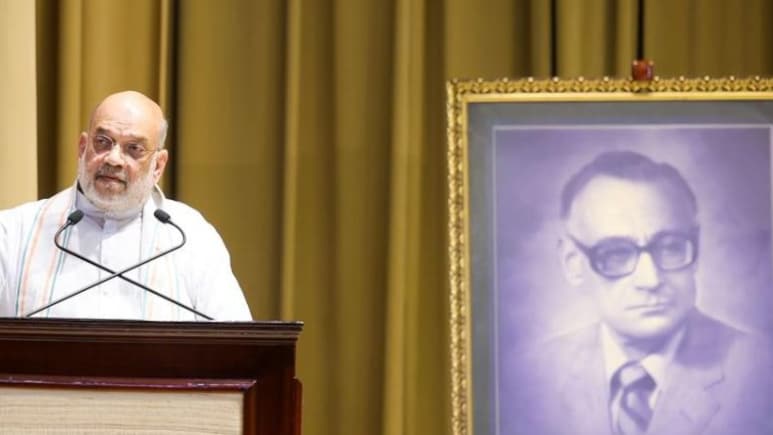
Union Home Minister Amit Shah on Friday issued a stark warning to the international community: the world has roughly a decade to mount a coordinated response to the global narcotics crisis before the damage becomes irreversible. Speaking at the RN Kao Memorial Lecture 2026, organised by the Research and Analysis Wing (R&AW), Shah called for a binding global legal framework, standardised penalties for drug trafficking, and real-time intelligence sharing among nations, framing the war on drugs as inseparable from the broader fight against terrorism and national security.
"If joint efforts are not initiated now, after 10 years the world will realise that it was too late to reverse the harm," Shah told an audience that included ambassadors and high commissioners from more than 40 countries, former R&AW chiefs, and senior officials from India's security establishment.
The lecture, delivered on the theme Narcotics: A Borderless Threat, A Collective Responsibility, is the latest edition of an annual series instituted in 2007 to honour Rameshwar Nath Kao, the founding chief of R&AW. Members of Kao's family were also present at the event.
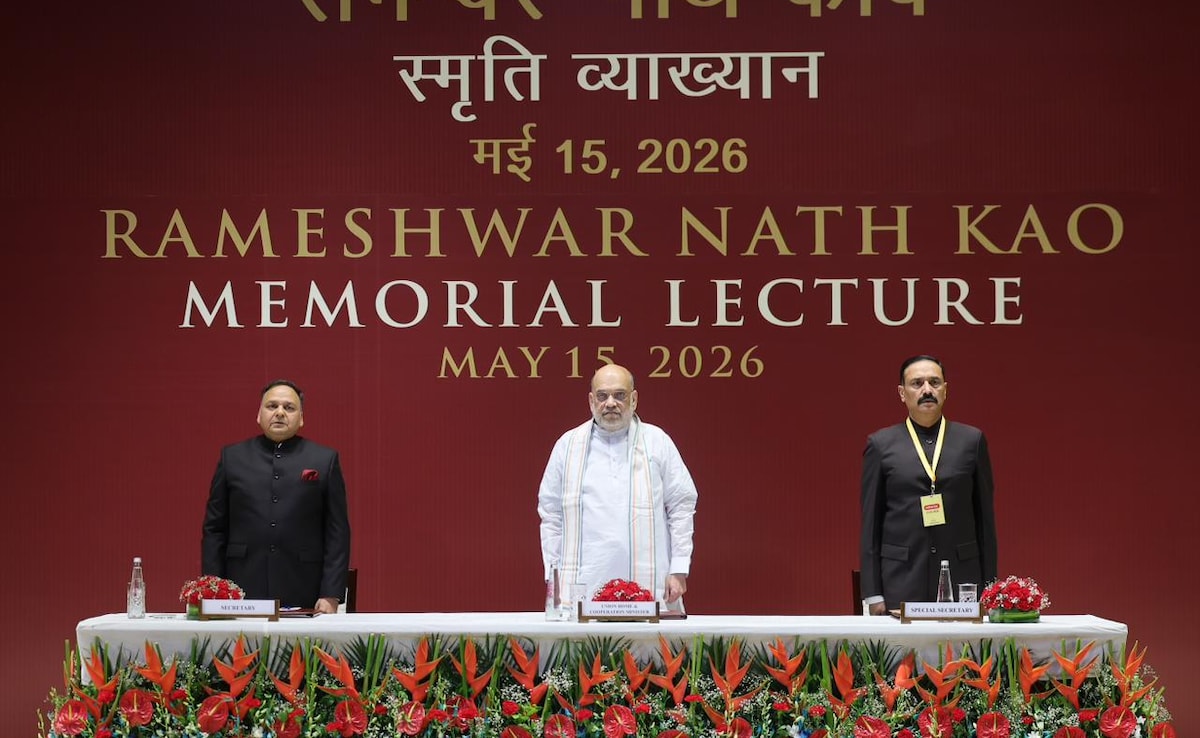
Union Home Minister Amit Shah At The RN Kao Memorial Lecture in New Delhi on Friday.
Shah anchored his address in Prime Minister Narendra Modi's stated national ambition: a Drug-Free India by 2047. He said Indian security agencies had already drawn up a roadmap to dismantle drug syndicates, and declared under India's "Zero Tolerance" policy that not one gram of narcotics would be permitted to enter the country or use India as a transit route.
But the Home Minister's most pointed arguments were directed outward, at inconsistencies in international drug law that he said cartels were actively exploiting. "Unless there is a high degree of global alignment on what is designated as controlled substances, as well as common standard penalties for drug trafficking, drug cartels will continue to take advantage of the inconsistencies in policy," he said, calling such loopholes a structural weakness in the global counter-narcotics architecture.
Shah laid out a four-point agenda for international cooperation: a uniform definition of prohibited substances across jurisdictions, standardised punishments for trafficking offences, streamlined extradition of drug kingpins, and systematic intelligence sharing. He pointed to India's own recent record as evidence of what coordinated action could achieve, noting that in the past two years India had successfully repatriated more than 40 transnational criminals with assistance from partner nations while conceding that "much more is required to be done."
The Home Minister drew a direct line between narcotics and geopolitical instability, warning against what he described as "narco-states" becoming alternate power centres. Drug money, he said, was well-known to fund terrorist networks and fuel parallel economies, but the less-discussed consequence, permanent physiological damage to individuals and communities demanded equal attention from policymakers.
Shah also challenged the diplomatic community to carry the message home. Addressing the assembled envoys directly, he urged them to join India's efforts and treat the drug crisis not as a law-enforcement matter to be delegated to police and anti-narcotics agencies, but as a civilisational challenge requiring whole-of-government, whole-of-world engagement.
"A world of 8 billion people, 195 nations, and 250,000 kilometres of international borders cannot tackle the problem of drugs through fragmented approaches," he said. "Collective resolve among nations, along with intelligence sharing, coordinated action, and cross-border operations, will prove crucial."
The battle against drugs, he concluded, must rise above geopolitical differences and the world must fight narco networks and narco-terror states simultaneously.

