





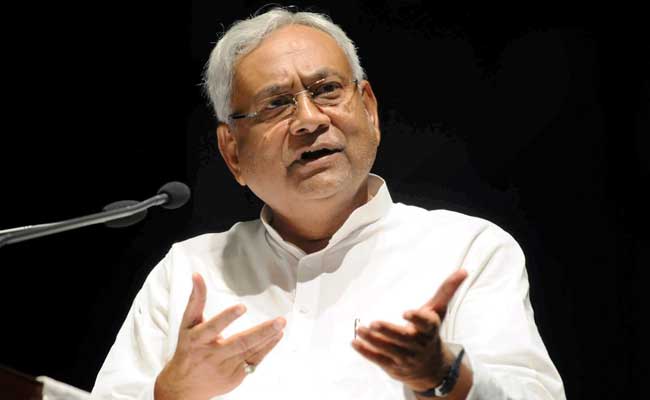
As Bihar Chief Minister Nitish Kumar prepares to step into the role of a Rajya Sabha MP, his successor will inherit a state in deep financial distress with thousands of crores of payment pending acrosss several districts and departments.
Reports from various parts of the state indicate that a large number of employees are not receiving their salaries on time, and payments due to contractors also remain stalled. Even though nearly two weeks of April have elapsed, more than 5,00,000 government employees and pensioners have yet to receive their salaries or payments for the month of March. It is estimated that the government needs to arrange approximately Rs 9,000-10,000 crore every month solely to cover salaries and pensions.
The problem is not confined to a single district or department. In districts such as Saharsa, Madhubani, Banka, Gopalganj, Sitamarhi and East Champaran, a large number of employees are left waiting for their salaries. Employees associated with the education, health and local administration sectors appear to be the most severely affected.
In Bihar, the Education Department alone employs approximately 4,00,000 teachers and staff members, while the total number of government personnel - including those in the Health and other departments - is estimated to range between 5,00,000 and 5,50,000. The non-receipt of salaries is disrupting the employees' daily lives, impacting everything from their loan installments to children's education, fuelling growing discontent.
It is not just the employees' salaries, payments to contractors have also been pending for a considerable period. The pace of several projects, including roads, buildings, irrigation, and rural development, has slowed down because contractors associated with these sectors have not received their payments. It is estimated that pending payments to contractors across various departments amount to approximately Rs 12,000-15,000 crore. In numerous schemes under the Rural Works and Road Construction departments, contractors have scaled back their work activity because they have not received payments for their outstanding bills. In some districts, the situation has reached a point where construction work has had to be temporarily halted, thereby having a direct adverse impact on development initiatives.
The primary reason behind the state's financial conuncrum is the state's limited revenue. Bihar's total annual budget for the financial year 2024-25 stands at approximately Rs 2.78 lakh crore. However, the state's own revenue, derived from taxes and other internal sources, accounts for only about Rs 60,000-65,000 crore of this total. The remainder of the funds depends on the state's share of central government taxes and grants. This implies that approximately 70 per cent of the state's total income relies on external sources. Consequently, whenever funds from the Centre are delayed or fall short of expectations, the pressure on the state exchequer escalates immediately.
The second major factor is the recent surge in government expenditure. Government spending on social welfare schemes has been rising steadily. For instance, thousands of crores of rupees are spent annually on initiatives, such as financial assistance for women, scholarships, pensions and free ration schemes. The state government's annual expenditure on social security and welfare schemes alone has now reached the range of Rs 35,000-40,000 crore. If a large sum of money needs to be disbursed simultaneously, it disrupts the fiscal balance. Unless revenue sources are robust, such schemes can further exacerbate financial strain.
Furthermore, the burden of debt on the state is also continuously increasing. The Bihar government's total public debt has now reached a range of Rs 3.5-4 lakh crore. Every year, the government is compelled to spend approximately Rs 30,000-35,000 crore solely on servicing interest payments and repaying loan installments. This implies that a significant portion of the budget is consumed by the repayment of past debts, leaving fewer funds available for developmental projects and employee salaries. Frequently, the government is forced to borrow fresh loans to repay existing debts, thereby further complicating the situation.
If the government fails to take concrete measures in a timely manner - specifically to boost its revenue, rationalise expenditure and strengthen fiscal management - this financial pressure is likely to intensify further in the coming months. The next chief minister will have to take decisions such as boosting revenue, attracting investment and clarifying expenditure priorities, so that the pressure on the exchequer is alleviated and the pace of the state's development remains unaffected.
Track Latest News Live on NDTV.com and get news updates from India and around the world

