





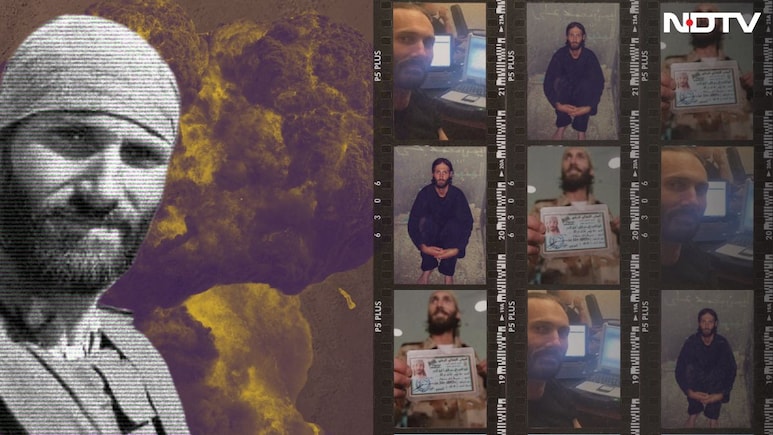
- Delhi court allowed American Matthew VanDyke to get special food in Tihar Jail on health grounds
- VanDyke claimed prison diet worsened his health, causing weight loss and vision problems
- Court permitted specified vegetarian items and cooking facilities, excluding non-vegetarian food
A Delhi court has allowed a plea filed by American national Matthew Aaron VanDyke, who is facing terrorism-related charges investigated by the National Investigation Agency (NIA), permitting him to receive food items of his choice and use specified cooking utensils inside Tihar Jail on humanitarian and medical grounds.
The order came after the court heard an application filed by VanDyke through his lawyers, Advocates Rohit Dandriyal and Rohit Gour, seeking permission for a special diet plan, arguing that his health had deteriorated because he was unable to consume the food ordinarily served in prison.
During the hearing, the NIA and the Tihar Jail Superintendent filed their responses to the application.
Counsel for VanDyke argued at length before the court that his client had been unable to eat the prison diet because it was "spicy, oily, deep-fried and greasy", and that his medical condition required a different diet. The defence submitted that Article 21 of the Constitution, which guarantees the right to life and personal liberty, also protects an individual's dignity, including while in judicial custody.
The lawyers argued that preserving that dignity required allowing VanDyke access to food he was accustomed to eating and permitting him to prepare meals suitable for his health.
After considering the submissions and taking into account the accused's medical condition, the court allowed the list of food items sought in the application, with the exception of non-vegetarian items.
The court further directed the jail authorities to provide a cook who would prepare meals according to VanDyke's preferences.
VanDyke's application had argued that he had been forced onto a prolonged hunger strike because he was unable to consume the food available in Tihar Jail.
The plea, filed before Additional Sessions Judge Prashant Sharma at Delhi's Patiala House Court, stated that VanDyke had remained on a hunger strike since 6 May 2026. According to the application, the prison diet had caused severe physical discomfort and significantly affected his health.
The petition claimed he had lost nearly 14 kg, suffered vision problems because of inadequate nutrition, and experienced a substantial decline in his strength, stamina and immunity.
The application also stated that VanDyke's family was willing to bear the full cost of food supplies, cooking equipment and any related expenses.
Among the items sought by VanDyke were lentils, pasta, uncooked noodles, rice, potatoes, onions, beans, bread, butter, olive oil, toned milk, soy milk, bottled water and spices. His application had also requested permission to keep red meat, chicken, fish and shrimp, although the court excluded non-vegetarian items while allowing the request.
The Jail Superintendent and the Medical Officer have also been directed to ensure VanDyke's health and well-being while he remains in custody.
In addition, the court ordered prison authorities to provide him with mosquito protection and an electric kettle.
Arrest and NIA investigation
VanDyke was arrested by the National Investigation Agency at Kolkata airport on March 13 along with six Ukrainian nationals.
According to the agency, the group was part of a conspiracy linked to terrorist activities directed against India.
Investigators have alleged that the accused maintained links with organisations banned in India, supplied weapons and other terrorist hardware, and provided military training.
The NIA has further claimed that, during questioning, the accused admitted to being in direct contact with armed militants carrying AK-47 rifles.
According to investigators, a larger group comprising 14 Ukrainian nationals entered India separately on tourist visas before travelling to Guwahati and then to Mizoram.
The agency alleges that they crossed illegally into Myanmar without the required permits, where they conducted drone warfare training for ethnic armed organisations.
Investigators further allege that consignments of drones imported from Europe were routed through India into Myanmar for use by those armed groups.
According to NIA sources, several ethnic armed organisations operating in Myanmar have established links with groups banned in India and are suspected of providing weapons, training and logistical support to Indian insurgent organisations.
Investigators are examining whether the alleged network had links inside India and how drone consignments were transported through Indian territory.
Mobile phones seized from the accused are being analysed, and investigators are continuing to take the accused to different locations as part of the ongoing inquiry.
VanDyke and the other accused have been booked under various provisions of the stringent Unlawful Activities (Prevention) Act, including criminal conspiracy.
Who is Matthew Aaron VanDyke?
Matthew Aaron VanDyke describes himself as a security analyst, war correspondent and documentary filmmaker.
He first attracted international attention during Libya's civil war in 2011, when he joined rebel forces and was later imprisoned.
Following the conflict, he founded Sons of Liberty International (SOLI), an organisation that says it provides military training and strategic advice to local armed groups in conflict zones.
Track Latest News Live on NDTV.com and get news updates from India and around the world

