





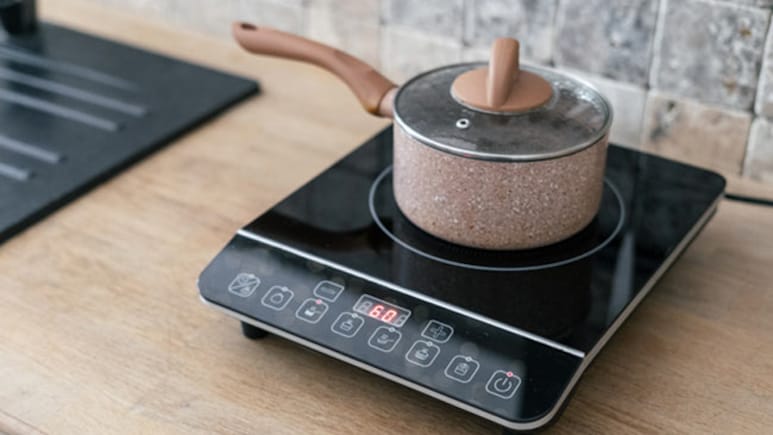
As war clouds gather over the Gulf, anxiety is seeping far beyond geopolitics and directly into Indian kitchens. With the escalating US, Israel, and Iran conflict threatening fuel supplies, memories of past disruptions are driving a massive surge in induction cooker sales. In many homes, induction cooking is no longer a backup; it is being seen as the future.
At its core, the shift is driven by efficiency. Induction cooking is dramatically more energy efficient than both gas and conventional electric stoves. In an era of rising fuel insecurity, that efficiency is hard to ignore. However, this transition also raises questions about cost, cooking habits, and whether India's rich culinary heritage, shaped over centuries around fire and flame, can adapt to this new way of cooking.
The Physics Of Heat
To understand why induction is considered revolutionary, one must first understand how it works. Gas stoves rely on combustion. LPG or natural gas is burned to produce a flame, which then heats the pot. Much of that energy escapes into the surrounding air. Estimates suggest only about a third of the energy released by burning gas actually goes into cooking the food.
Traditional electric stoves are more efficient than gas but are still indirect. Electricity flows through a metal coil that resists the movement of electrons, causing it to heat up. That heat is then transferred to the pan, leading to the familiar delay in heating and cooling.
Induction cooking turns this logic inside out. The cooktop itself does not get hot. Instead, electricity flowing through a specially designed coil generates a rapidly changing magnetic field. When a pot made of magnetic material, such as cast iron or magnetic stainless steel, is placed on the surface, the field induces electric currents inside the metal of the pan. The pan resists these currents, releasing energy directly as heat. In effect, the vessel becomes the stove.
The Efficiency Gap
This is physics at work: electromagnetic induction and resistance heating combined. Because the heat is generated directly inside the cookware, energy losses are minimal. According to "Energy Star," roughly 85 per cent of the electricity consumed by induction stovetops goes toward heating your food. By contrast, traditional electric stoves have an efficiency of 75 to 80 per cent, while gas stoves sit at a lowly 32 per cent.
The response is also instantaneous. Much like adjusting a gas flame, the heat drops the moment you turn the power down.
The Culinary Cost
However, this efficiency comes with strings attached. Induction requires specific cookware. Aluminium, copper, clay, and traditional brass vessels, staples in many Indian kitchens, do not work unless they have a magnetic base. For millions of households, shifting to induction means investing in a fresh set of pots and pans. This cost is a significant barrier, especially when traditional utensils are deeply tied to regional cuisines.
Professional chefs have already embraced induction for its control, speed, and safety. It keeps commercial kitchens cooler and reduces fire hazards. Yet for home cooks, the transition is more complex. Recipes passed down through generations-how long to simmer a dal or when to add spices- are based on the gentle inefficiencies of a flame.
On induction, food heats faster and can overcook in seconds. Chefs also note that chapatis and phulkas made on an induction cooker lack the traditional charred finish, and the same applies to tandoori cooking, which requires flame and smoke for the right flavour.
The Future Of The Indian Kitchen
There is also the question of electricity bills. While induction is efficient, it is a power-hungry appliance. A single cooktop can draw significant wattage, and in regions with high tariffs or unreliable power, the savings from reduced LPG use might be offset by higher monthly electricity costs.
Despite these challenges, momentum is building. As fears of fuel disruptions grow and India moves toward cleaner energy, induction cooking is gaining traction. It aligns with a future powered by renewable electricity rather than imported fossil fuels. For this transition to succeed, it will require more than new appliances; it will require updated culinary training and a conscious effort to adapt traditional wisdom to modern efficiency.
Induction may well be the stove of the future. But as Indian kitchens are discovering, the future does not just change how we cook; it challenges our very understanding of heat, time, and tradition.
Track Latest News Live on NDTV.com and get news updates from India and around the world

