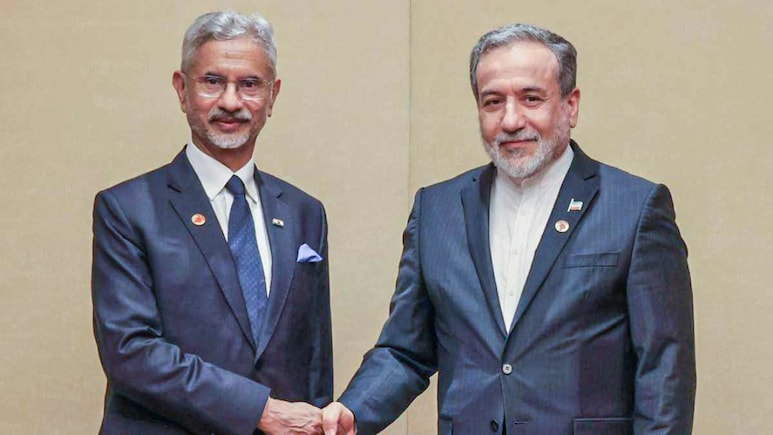
External Affairs Minister S Jaishankar has spoken to his Iranian counterpart three times in the past few days, his office said in a press briefing Thursday afternoon. The most recent conversation was on maritime shipping and security – a critical topic given global energy supply volatility as a result of US-Israel attacks on Iran and pressure on the Strait of Hormuz.
Further comments will be "premature" at this stage, reporters were told.
The ministry's remarks came shortly after a Liberia-flagged tanker carrying crude oil from Saudi Arabia docked at Mumbai to become the first vessel to navigate the Hormuz and reach India.
The ministry also confirmed that Indian nationals in Iran had returned safely, while dozens more had been shifted from within Tehran to safer locations within the war-torn country.
"We have some 9,000 Indians in Iran… these comprise students, seafarers, business people, and pilgrims. We issued an advisory some time back and, following the advisories, several – a lot of them students – left the country and reached home."
"We also shifted several Tehran-based Indian nationals to other safer locations… and are assisting others with land-border crossings through Azerbaijan and Armenia. From there they can take commercial flights to return to India," the ministry explained.
On Monday Jaishankar told Parliament dialogue and diplomacy are the only means of resolving the conflict in the Middle East, and said the Indian government is "closely monitoring developments" in a region home to millions of Indians. "We are concerned about them," he said.
The Middle East, he also noted, is critical to India's energy security and is also an important trade partner – with trade worth an estimated US$200 million taking place annually.
So far two Indians have died in the fighting in Iran and the wider Middle East region.
Both were seamen; Captain Ashish Kumar from Bihar and Dalip Singh, from Rajasthan, died last week when Palau-flagged oil tanker Skylight came under attack off Oman's northern coast.
A third, Dixit Solanki from Mumbai, was reported missing.
The war broke on February 28 with joint US-Israel strikes on Iran, which responded with missile and drone attacks and by targeting oil and economic infrastructure in neighbouring Gulf nations.
Over 1,300 people have been killed in Iran alone due to the fighting, which has also impacted the world's oil supply. The Strait of Hormuz, over which Iran has geographical control and has imposed a military blockade, ships a fifth of that supply, resulting in Brent crude price spikes.
The Indian government has played down concerns of an energy supply crisis in the country, insisting it has sufficient petroleum and gas stocks to ride out this crisis.
Track Latest News Live on NDTV.com and get news updates from India and around the world


