Opinion | Is Trump Starting To Regret Backing Netanyahu's Iran Gameplan?
Netanyahu may not mind the Iran war, as a prolonged conflict suits him politically. But for the US, it is fast shaping up to be a disaster.
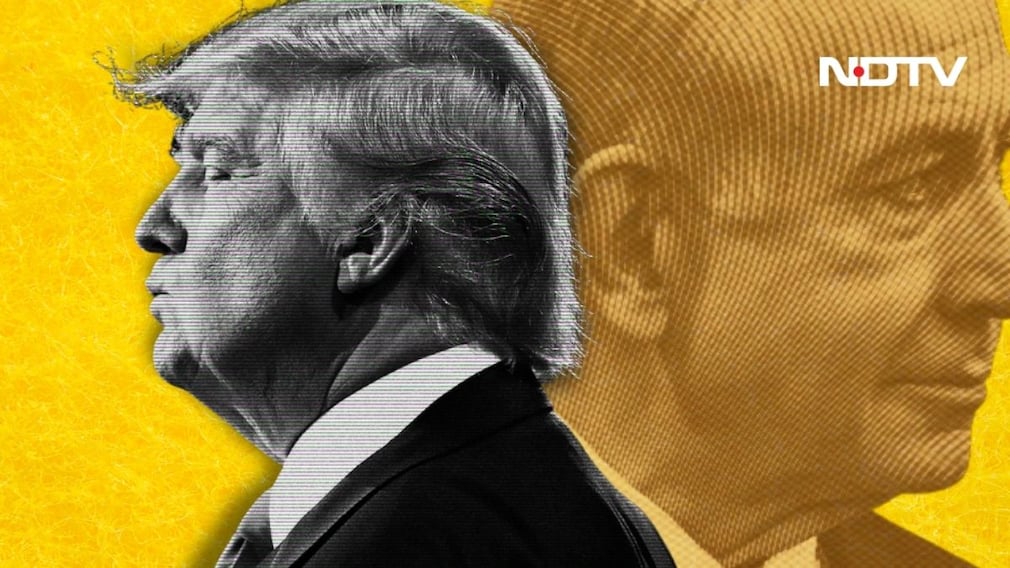
January's anti-government protests in Iran were probably seen by Israel's wily leader, Benjamin Netanyahu, as a golden opportunity to finally convince Donald Trump to mount a joint military operation against the country. Basking in the glory of his stunning success in Venezuela, Trump must have been swayed by Netanyahu's argument that the clerical regime was at its weakest since the 1979 Islamic revolution and could easily collapse, giving him another quick victory.
Trump was likely convinced by Netanyahu that during the 12-day war last summer, Israel had destroyed Iran's air defences, killed its top military commanders, and finished off its air force as well as its large stock of ballistic missiles and drones. He also believed that his decision to drop massive 13,000 kg GBU-57 MOP bombs using giant B2 bombers had destroyed Iran's nuclear facilities in Fordow, Natanz, and Isfahan. If Iran had concealed any ballistic missiles within these facilities, those would have been inaccessible after the attack.
Were Israel And The US In Sync?
While Israel was convinced of the need to launch a joint attack to completely destroy Iran's military capability, American military commanders were not sure whether there was any immediate need to do so; they were also not prepared. Only a quarter of the US public supported attacking Iran. But Trump only needed to convince himself. He was emboldened by his swift capture of Nicolás Maduro, replacing him with a compliant Delcy Rodríguez. He wanted to repeat that change in Iran.
Persuading American presidents to attack Iran and change its regime has been a major political and strategic goal of Netanyahu for over three decades. But Israel never had an occupant in White House who would actually share that objective and be so open towards it. It was Trump who, in his first term, recognised Jerusalem as Israel's capital and shifted the US embassy there from Tel Aviv.
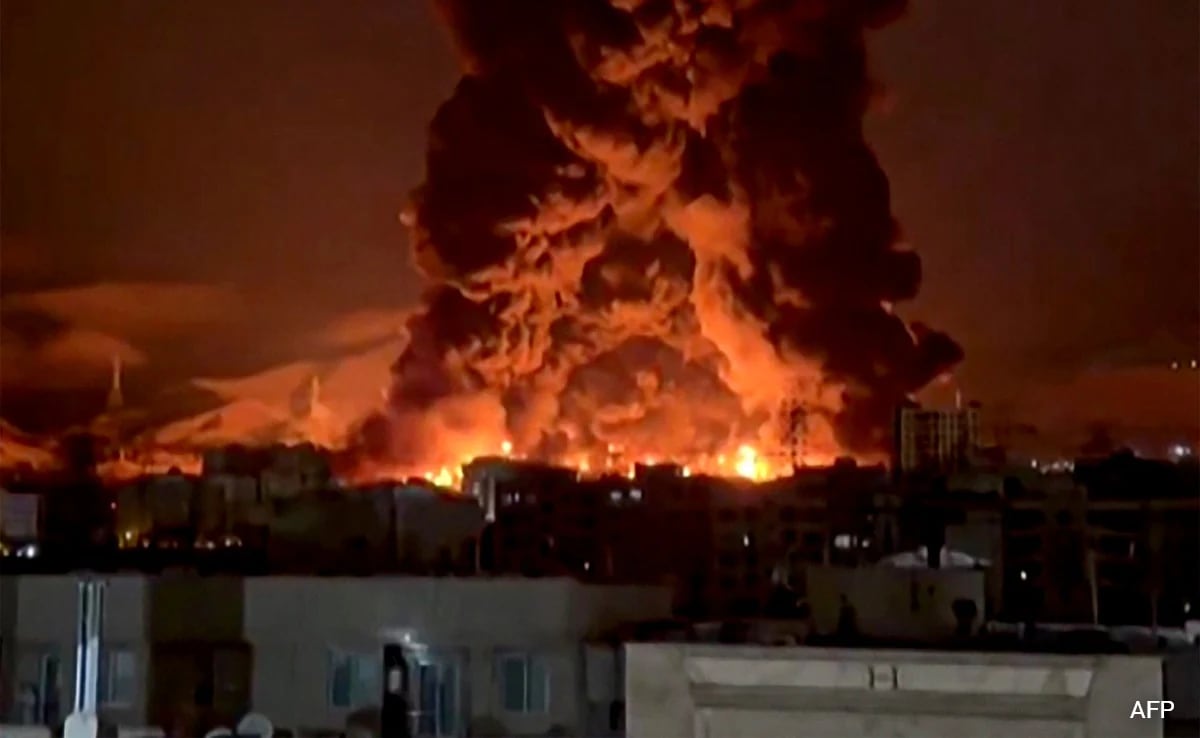
(File photo: Since the war started, Israel has struck a number of oil facilities in Tehran)
Under Netanyahu's influence, Trump also withdrew the US from the Iran nuclear deal negotiated by the Obama administration, which Tehran had adhered to. Iran began enriching uranium to levels close to weapons-grade only after Trump pulled the US out of the deal. It was also Trump who supported Netanyahu's brutal military campaign in Gaza following Hamas's invasion of Israel in 2023. He even sanctioned the judges of the World Court who issued an arrest warrant against Netanyahu for alleged war crimes.
Most Israelis have seen Iran as their most important security challenge for years and agreed with Netanyahu that its Islamic regime with an advanced nuclear programme posed an existential threat to the Jewish state. The Ayatollahs have never hidden their wish to wipe Israel from the face of the earth. Under the previous Supreme Leader, Ali Khamenei, Iran funded, armed and trained anti-Israel groups such as Hezbollah, Hamas and the Houthis. Israel, however, has managed to degrade most of these groups and kill their leaders and commanders in the past three years.
Netanyahu's Awkward Timing
Even so, the timing of Netanyahu's push for a joint military operation against Iran raised eyebrows even in Israel. The strikes came when he was under increasing criticism for the security failures that allowed the 2023 Hamas attack, which resulted in the death of 1,200 Israelis and 251 others being taken hostage. Netanyahu was also facing a corruption trial, and his popularity was waning ahead of the October elections. Therefore, he aimed to regain public support, which he had enjoyed during the early stages of the Gaza war.
For Netanyahu, the Iran conflict is also a useful distraction that has gained even more political significance after the Gaza ceasefire put into question the logic of that conflict - with the release of hostages, he couldn't justify military action in Gaza. Israelis are tired of endless wars where ordinary citizens, as military reserves, have to participate in military conflicts. Netanyahu's policies on Gaza and West Bank settlements have also isolated Israel on the international stage.
Also Read | Iran Outlines 3 Conditions To End War With US, Israel
But as happens during wars, Netanyahu has managed to unite his country once again in favour of military action. After years of suffering from missile attacks by Iran's proxies, they are in favour of destroying its military capability to harm them and even bringing regime change in Tehran. Iran and its proxies have killed at least 3,500 Israelis since the turn of the century. No wonder that last month, a poll in Israel found that 59% of Israelis supported joining an American attack on Iran.
Americans No Longer Support This War
But in the US, the picture has been different. Fewer Americans than ever share Israel's aims. On the eve of the launch of the current military operation in Iran, a Gallup poll found that more Americans now sympathise with the Palestinians than with the Israelis. According to the survey, 41% of respondents express greater sympathy for the Palestinians, compared with the 36% who side with the Israelis.
This is the first major military conflict in which an American administration lacks majority public support. Only 41% of the US public supports this war, according to an analysis of various polls by The New York Times. Even the Iraq war of 2003, during which the public was misled by the George W Bush administration into believing that Saddam Hussein possessed weapons of mass destruction, had the backing of 76% Americans.
Goodbye To Powell Doctrine
The late Colin Powell, who was the Chairman of the US Joint Chiefs of Staff during the first Iraq war in 1991, developed a war doctrine that stated that war should be the last resort, used only after all political, economic, and diplomatic efforts have been exhausted. If the US must go to war, it should have a clear objective, public support, and an exit strategy, according to the doctrine. Since then, most military campaigns have largely adhered to the Powell doctrine, except for the current war against Iran.
It lacks a clear objective, public support, and an exit strategy. Trump didn't feel the need to explain to the public why the war against Iran was necessary at this time. He has also been changing his goals since the start of the military campaign - from regime change to destroying Iran's military to demanding complete surrender, and then asserting that he should be involved in the appointment of Iran's next supreme leader.
Trump's war with Iran is driving up gas prices. Americans shouldn't be stuck paying the bill for his bad decisions. We need to end this war and do more to lower costs for families. One thing we can do immediately to help is suspend the federal gas tax and bring some relief at the… pic.twitter.com/W3vJbwnEKJ
— Senator Mark Kelly (@SenMarkKelly) March 6, 2026
The US-Israeli military operation that began on February 28 did achieve big success on the first day as it assassinated Ali Khamenei and dozens of senior officials, military leaders and commanders of the Islamic Revolutionary Guard Corps. With their overwhelming airpower, the US and Israeli military managed to destroy a large number of military and economic targets in Iran.
Only, Iran Seems To Have A War Plan
Trump had hoped that he would replicate his Venezuela plan. But Iran's response has deflated his enthusiasm and exposed gaps in US planning and strategy. Iran's Islamic regime had been planning for this war scenario for more than 20 years. After last year's Israeli and US military attacks, Ali Khamenei had developed a strategy that would allow field commanders to mount a military response even after his death and the collapse of a central command structure.
Iran's plan, which it has implemented from day one of the war, is to take the conflict to the enemy, escalate and impose economic costs on it. The US military is now admitting that it underestimated Iran. As part of its political strategy, Iran has widened the conflict beyond its own territory and Israel to more than a dozen Gulf states, threatening their stability. Gulf states can't attack Iran in retaliation because their public will see that as taking Israel's side and its backer, the United States, against a fellow Muslim nation and a victim of aggression.
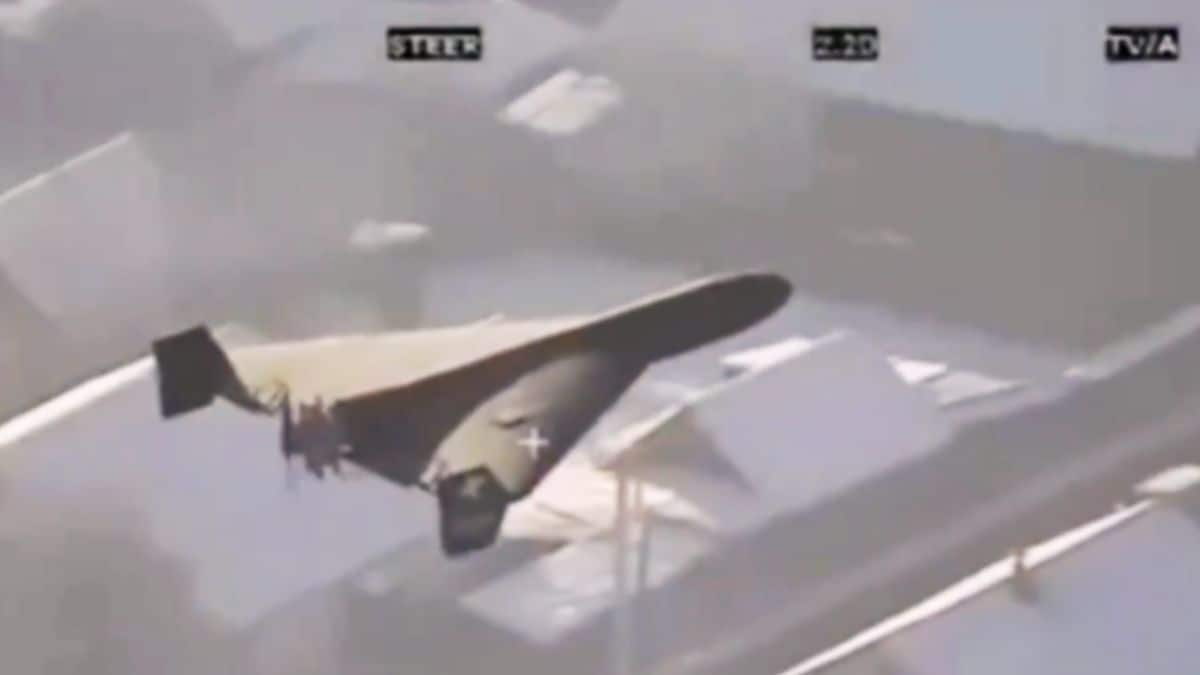
(In photo: A picture of Iran's Shahed drones, which, along with its other low-cost weapons, have overwhelmed America's defence arsenal)
The cost of war in Iran was more than $11.3 billion in just six days, according to the Pentagon. Petrol prices in the US have shot up to their highest level in three years. Stock markets across the world are falling. Economists are already warning of high inflation and even recession if the war continues.
Will This Be Trump's Vietnam?
Trump now appears to be looking for an exit strategy. On Monday, he sought to calm markets by saying that the US military was "very far ahead of schedule" and the war could end soon. But Tehran has declared that it will decide when to end the war. Even the Israeli military believes that Iran still has at least a quarter of its ballistic missiles left. Out of its force comprising 400,000 regular army personnel and 125,000 Republic Guards Corps, only a few thousand might have died, according to Israeli estimates.
Iran's strategy appears to have put Trump and, to some extent, Netanyahu in a bind. They obviously did not plan for Iran's reaction to their air raids. In the manner Iran has escalated the conflict, the two leaders might find themselves in a war that could prove to be another Vietnam. Netanyahu may not mind that, as a prolonged conflict could suit his political plan. But for the US, it will be a disaster.
Iran's 'Horizontal Escalation'
Iran is deploying a strategy of 'horizontal escalation', according to Prof Robert Pape, director of the University of Chicago Project on Security and Threats. Horizontal escalation occurs "when a state widens the geographic and political scope of a conflict rather than intensifying it vertically in a single theatre," he writes in an essay published in the journal Foreign Affairs.
Such a strategy was employed by the North Vietnamese and Vietcong forces, who outflanked the US in 1968. The result was the US losing the Vietnam War despite winning nearly all battles. General Colin Powell's doctrine aimed to prevent another Vietnam conflict. However, Trump, by his nature, would be the last person to follow such a doctrine.
Once again, Trump's impulsive decision has been proven wrong by the realities on the ground. Netanyahu, on the other hand, has achieved what he wanted, using Trump to fulfil his political strategy. But as the war escalates on Iran's terms, Israel will also lose. Its isolation will grow, the economy will be in more turmoil, and the Israeli public will feel more insecure.
(Naresh Kaushik is a former editor at the Associated Press and BBC News and is based in London)
Disclaimer: These are the personal opinions of the author
-
Opinion | As UN Interviews Its Next Chief, The Interviewers Have Some Explaining To Do

On the panel sit governments whose wars, vetoes, and unpaid dues have helped make the organisation ineffective.
-
Opinion | Trump-Xi Meet: What China Can Give America, And What India Could Lose
If Trump can secure some of what he wants directly from Beijing, India's immediate value to Washington could change in particular areas.
-
A New 'Axis'? 87 Years After Pact Of Steel, A New European Far-Right Tie-Up
Nearly nine decades after Nazi Germany and Fascist Italy formalised their alliance, senior figures from Germany and Italy's far-right appeared together at a political rally on Sunday.
-
Opinion | 'Blackmail' Diplomacy: Why India Can't Be A Pawn In US' War On Russia
The new sanctions bill is both blackmail and hypocritical: blackmail because it seeks to change India's principled stand, and hypocritical because the US has provided exemptions to others, and itself.
-
Blog | Katrina Kaif, And The Very Indian Problem Of Too Much 'Audacity'
The remarkable thing about many Indian trolls is not that they have opinions, but that they expect - get this, Katrina Kaif, no less - to care about them.
-
Mamata Banerjee Drew Her Party's Symbol By Hand. It's Now Tied To An Indira Gandhi Case
The Election Commission's method for settling such disputes became central in the seminal Congress split of 1969, when Indira Gandhi fought the old guard. The poll body weighed three tests then.
-
Bruised, Limping, Unbowed: Sia Says She Will Be Back On The Bike Soon
There was pain in Sia's steps, anger in her words, and something else - a quiet determination that the road would not be taken away from her.
-
Exclusive: 16 Months After Op Sindoor, Pak Still Fixing Runway India Broke At Sargodha
Sargodha's PAF Base Mushaf lies about 172 km northwest of Lahore and roughly 200 km west of the India-Pakistan border, near Amritsar.
-
Blog | I Lost My Entire Family In Kanishka Bombing. 41 Years Later, Canada Wants The Case Closed
We made the trek through tragedy to search for people in Cork, where I spent 25 days sifting through bodies and body parts in a makeshift morgue to identify our loved ones.
-
Opinion | Pak's Drone Deal With A US Firm Is No Windfall. But India Must Still Be Worried
American military aid to Pakistan has remained suspended since January 2018, during Trump's first term, but a commercial arms sale is separate from this arrangement.