



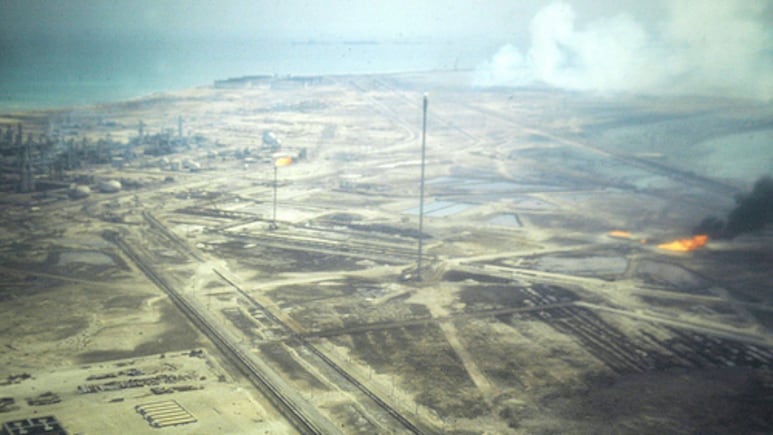
- Oil prices surged sharply after missile attacks halted Saudi Aramco's Ras Tanura refinery.
- Tanker traffic through the Strait of Hormuz largely stopped amid US-Israeli strikes on Iran.
- Ras Tanura processes 550,000 barrels daily, making its shutdown a global supply shock.
Oil traders woke up to a nightmare on Monday. A refinery thousands of kilometres from India's shores went dark, the world's most critical oil chokepoint seized up, and crude prices ripped higher in a single, violent session.
Missiles and drone debris forced Saudi Aramco to halt operations at Ras Tanura, a 550,000-barrel-per-day refinery and export hub on the kingdom's east coast. At the same time, tanker traffic through the Strait of Hormuz, the narrow passage that carries roughly one-fifth of global oil supply, largely stalled as shipowners recoiled from escalating US and Israeli strikes on Iran.
Brent crude leapt roughly 9–13% in a day into the high-$70s and low-$80s. West Texas Intermediate surged more than 9% into the low-$70s. The tremors travelled straight to Dalal Street and Mint Street.
What Is Ras Tanura?
Ras Tanura is one of the Middle East's largest refineries and a key artery for Saudi crude and fuel exports. Even a precautionary shutdown tightens global supply instantly. Layer that with shipping paralysis in Hormuz and the oil market prices risk before it counts barrels.
Toronto-based finance professional and crypto investor Shah Faisal Shah called the shutdown and blocked strait a global "Inflation Nuke," arguing that "550,000 barrels/day offline + a blocked Strait of Hormuz = A world running on empty."
He went further: "Oil +10% in a day = CPI +0.5% in a month," warning that hopes for aggressive rate cuts have "gone up in smoke with the Aramco tanks."
The math is not mechanical. Inflation pass-through depends on how long crude stays elevated and how governments cushion fuel costs. But sustained higher oil would complicate policy, including for the Reserve Bank of India.
RBI's Delicate Moment
India's headline inflation had cooled sharply, easing to 2.1% in June 2025 and touching a historic low of 0.25% in October, staying well within the RBI's 2–6% band. It stood at 2.75% in January under a revised data series.
The Economic Survey noted India recorded one of the steepest declines in inflation among major emerging markets in 2025, alongside 8% GDP growth in the first half of FY2026.
Before the Middle East escalation, Nomura's Aurodeep Nandi described India as enjoying the rare mix of solid growth and subdued inflation.
Higher crude now threatens that balance. Costlier oil feeds into transport, food and manufacturing, making it harder for the RBI to ease rates later this year. Bankers believe escalating US-Iran tensions could pressure both the rupee and bond yields.
Rupee Under Watch
The rupee had recently stabilised, strengthening 1% in February to close at 90.97 per dollar, supported by foreign inflows and RBI dollar sales. It had earlier touched a record low of 92 per dollar and was the worst-performing Asian currency in 2025.
HDFC Bank warned that escalating West Asia tensions and firmer crude could pressure the dollar-rupee pair into the 91–93 range in the near term, depending on supply disruption through Hormuz. The bank expects the RBI to step in to curb sharp swings but cautioned that "near-term spikes in oil prices could weigh on the currency" and widen the current account deficit.
A sustained $10 rise in crude, HDFC estimates, could expand the deficit by 40–50 basis points. India holds crude inventories covering around 74 days of consumption and can ramp up Russian or US purchases if needed, but costs and transit times would rise.
JM Financial's scenario analysis is blunt. Limited retaliation could add $5–10 per barrel. Direct damage to Iranian infrastructure could lift prices $10–12. Disruption in Hormuz could push crude above $90. A broader regional conflict could send it past $100.
Historically, Hormuz has never been blockaded for prolonged periods, even during the 1980s wars, HDFC noted. But probability and duration are the decisive variables.
India's exposure runs deeper. Nearly 80% of LNG imports come from West Asia, with about 60% transiting Hormuz. Dubai, affected by regional airspace closures, is India's top supplier of rough diamonds and second-largest gold source, handling 50–60% of annual gold imports of 800–850 tonnes.
Track Latest News Live on NDTV.com and get news updates from India and around the world

