





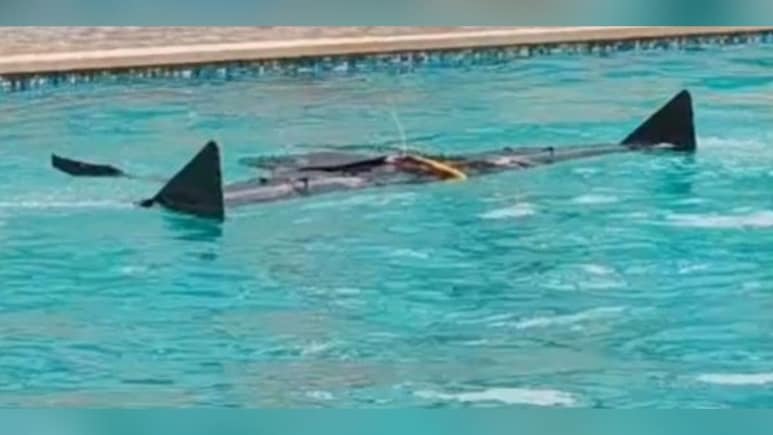
- Drones play a key role in modern warfare across multiple global conflicts and borders
- Bengaluru startup AquaAirX developed Avataar, India's first amphibious drone for air and water
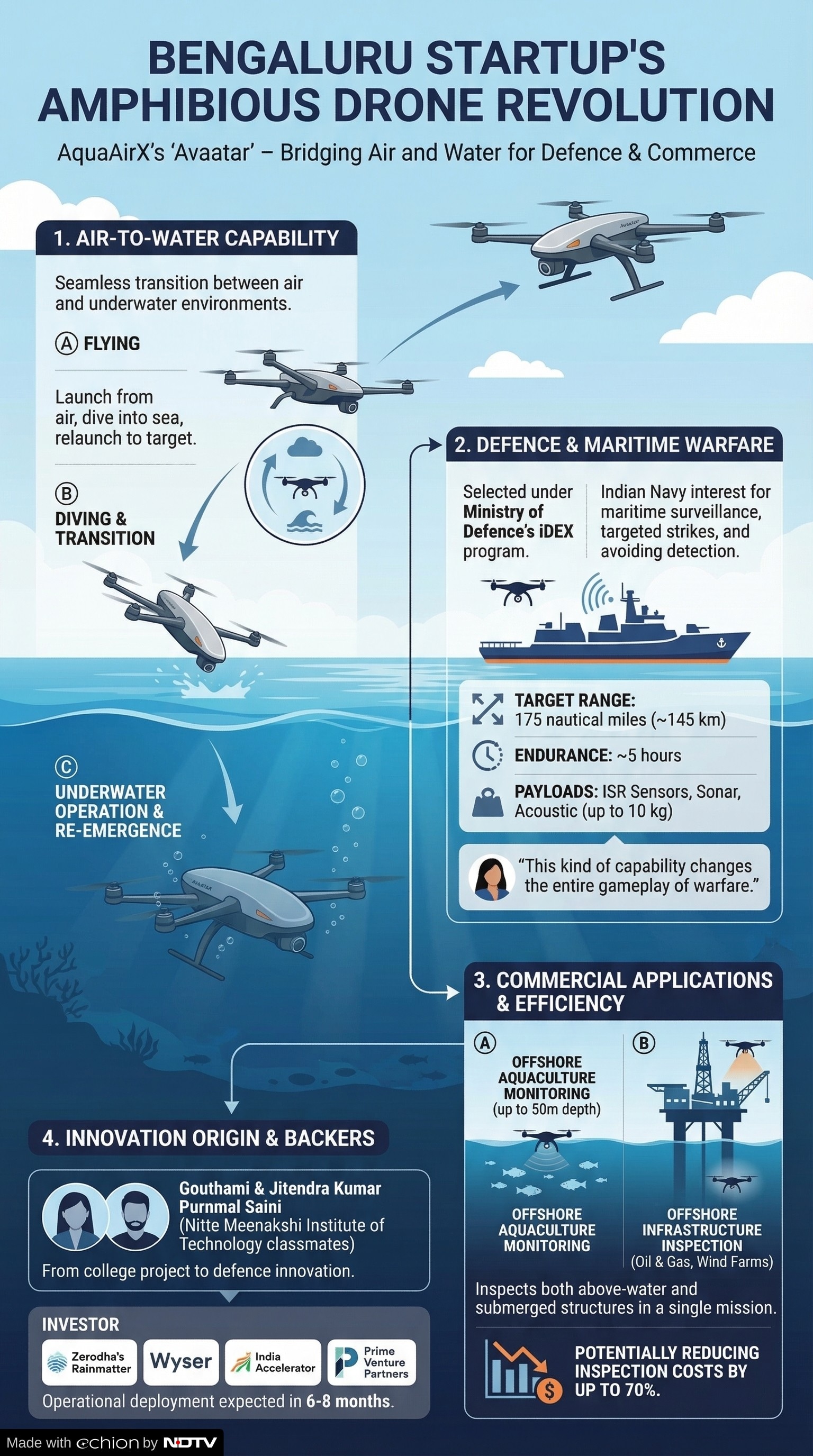
- Avataar carries 10 kg payloads, transitions between flying and underwater operations seamlessly
From the battlefields of the Middle East to the frontlines in Ukraine, drones have emerged as one of the most decisive tools in modern warfare. In the ongoing tensions involving Iran, Israel and the US, unmanned aerial vehicles have been extensively used for surveillance, targeted strikes and maritime monitoring.
Similarly, the Russia-Ukraine war has shown how relatively low-cost drones can disrupt conventional military strategies, carry out precision attacks, and gather real-time intelligence.
Even closer home, India has increasingly relied on drones along its borders with Pakistan and China for surveillance and counter-intrusion operations.
As the role of unmanned systems expands across military and commercial domains, innovation in drone technology is accelerating worldwide.
In Bengaluru, often called India's startup capital, a young company is trying to push those boundaries by building one of the country's first amphibious drones capable of operating both in the air and underwater.
A startup called AquaAirX, founded by two engineering classmates from Nitte Meenakshi Institute of Technology, has developed a drone platform that can fly, dive into water, operate underwater, and then re-emerge to continue aerial operations.
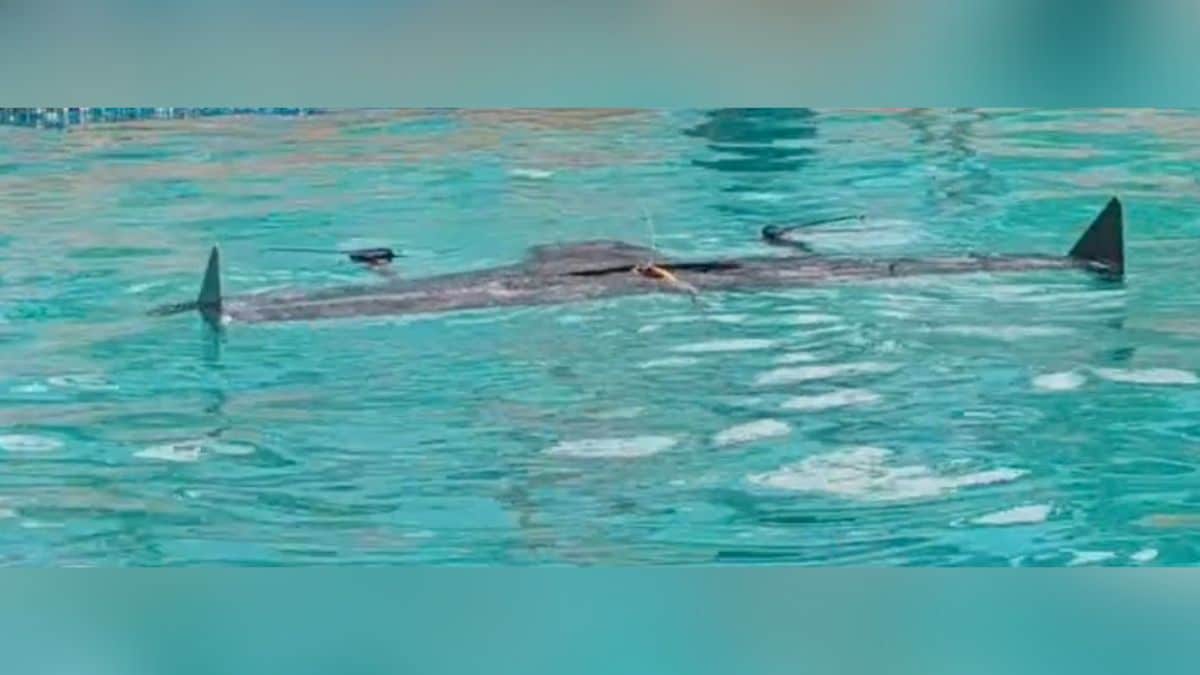
The drone, called Avataar, is designed to perform missions across two different environments - air and water, something the founders say could significantly expand the capabilities of unmanned systems.
The drone can carry payloads of up to 10 kg and is designed to be launched from the air before diving into the sea and relaunching toward a target or surveillance mission.
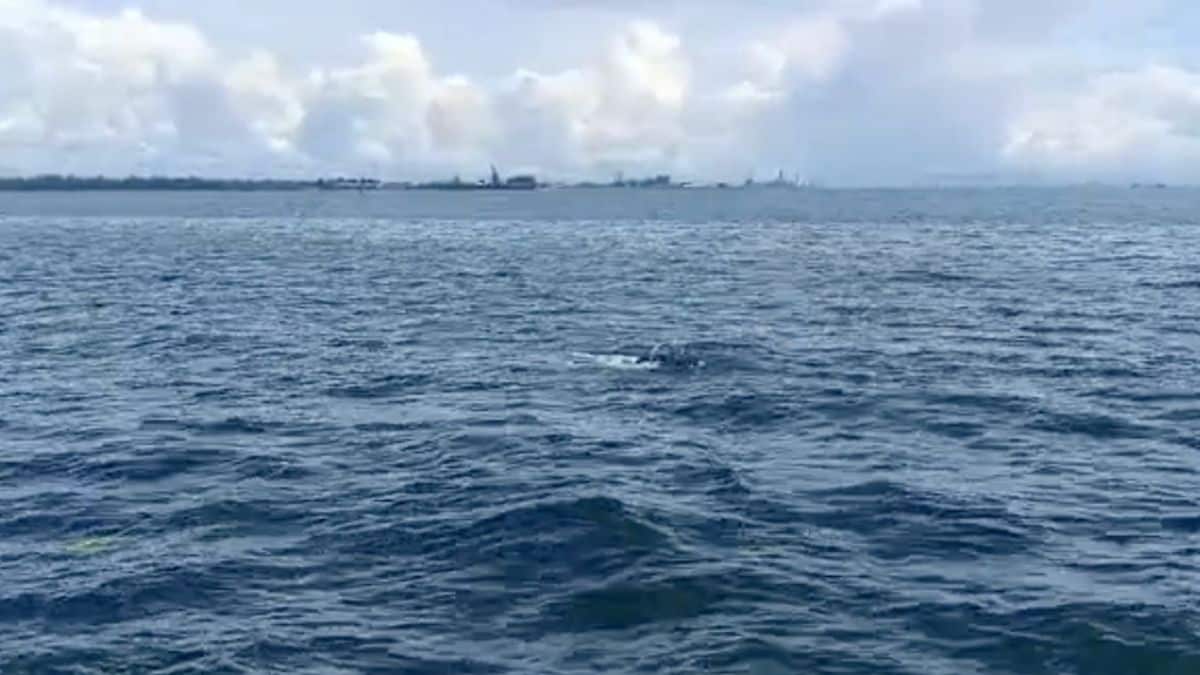
The startup has already conducted pool trials and independent platform tests, demonstrating that the drone can transition between air and water operations. Advanced aerial trials and open-water testing are currently underway.
From College Project To Defence Innovation
The company was co-founded by CEO Gouthami and CTO Jitendra Kumar Purnmal Saini, who studied aeronautical engineering together.
Gouthami told NDTV the idea emerged while the two were still engineering students working on UAV (unmanned aerial vehicle) systems.
"We were building UAVs during our engineering days and had participated in multiple competitions and DRDO projects. During the Covid period we started asking ourselves why should UAVs operate only in the air? Why can't the same system transition underwater as well?" she said.
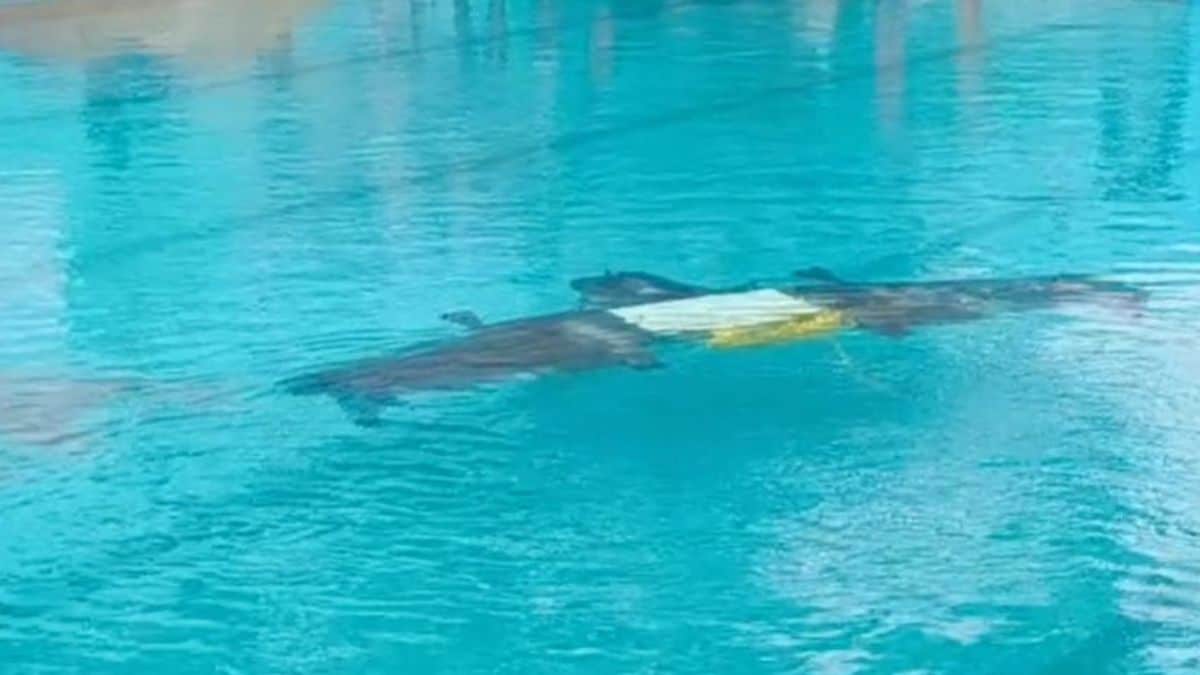
The founders began researching hybrid air-and-water vehicles and discovered that several countries were investing heavily in such platforms.
"We decided to take a risk and work on this idea instead of taking up regular jobs. Luckily, things worked out for us," she added.
Filling A Technological Gap
According to Saini, the idea was born from a gap between aerial drones and underwater vehicles.
"Aerial drones can fly but cannot land on water or dive. Underwater drones operate only below the surface and require large vessels and crews to deploy them," he said.
"Launching underwater drones today requires expensive ships and complex logistics. Our idea was to create a platform that can transition between air and underwater environments seamlessly."
So, the amphibious drone platform can be deployed quickly without large vessels, significantly reducing operational costs and deployment time.
Defence Applications
The founders say the platform could have major defence applications, particularly in maritime warfare. Gouthami pointed to recent conflicts to explain how such systems could be used.
"If you look at the Iran-Israel conflict or other global conflicts today, unmanned systems are increasingly dominating warfare. UAVs, underwater vehicles, and autonomous systems are being used to take down major assets," she said.
She added amphibious drones could potentially fly from shore, reach a target area, dive underwater to avoid detection, remain submerged during a mission, and then re-emerge.
"This kind of capability changes the entire gameplay of warfare," she said.
"The drone is being designed with a target range of about 175 nautical miles (around 145 km) and an endurance of roughly five hours. It will support modular payloads including ISR (intelligence, surveillance and reconnaissance) sensors, sonar systems and acoustic sensors depending on the mission."
Interest From The Indian Navy
The startup has been selected under the Ministry of Defence's Innovations for Defence Excellence (iDEX) programme, an initiative aimed at supporting deep-tech defence startups.
According to the founders, the project has been taken up with interest from the Indian Navy, which is closely monitoring the development of the platform.
The company expects to have a fully operational amphibious drone within six to eight months, aligning with timelines under the iDEX programme.
Commercial Use Cases
Beyond defence, AquaAirX also sees significant opportunities in commercial industries that operate offshore.
"One key use case is marine and aquaculture monitoring, particularly for large sea farms where crops grow underwater at depths of up to 50 metres. Currently, such monitoring requires boats and remotely operated underwater vehicles (ROVs). Amphibious drones could fly over the farm, gather aerial data and then dive underwater to inspect crops," said Saini.
Another sector the company is targeting is offshore infrastructure inspection, including oil and gas platforms and offshore wind farms. According to the founders, inspections of submerged structures today require vessels, ROVs (remotely operated vehicles) and large operational crews.
"An amphibious drone could inspect both above-water and submerged structures in a single mission, potentially reducing inspection costs by up to 70 percent," Gouthami said.
The startup got funding from investors including Zerodha's investment arm Rainmatter, Wyser, India Accelerator, and Prime Venture Partners.
The founders say the funding will help accelerate research and development and move the platform towards operational deployment by the end of the year.
Track Latest News Live on NDTV.com and get news updates from India and around the world

