






India-New Zealand FTA: India and New Zealand have signed a historic free trade agreement, described by leaders as a "once-in-a-generation" pact that deepens economic links with added people movement and trade benefits.
This deal goes beyond trade in goods. It also opens new doors for students, workers and everyday buyers in India. Here's how. Follow Markets Live Updates
What Students Get - Stronger Pathways, Better Options
1. Easier Study and Work Visas
Under the pact, New Zealand will offer dedicated visa lanes for Indian professionals and students. This includes:
- 5,000 Temporary Employment Entry visas for Indian skilled workers each year.
- 1,000 Work & Holiday visas for youth travel and jobs.
This means more Indian graduates and young workers can live and work in New Zealand after study.
2. Post-Study Work Clarity
A key benefit for Indian students is clearer and longer post-study work rights:
- Up to 3 years of work after a STEM degree.
- Up to 4 years for doctorate holders.
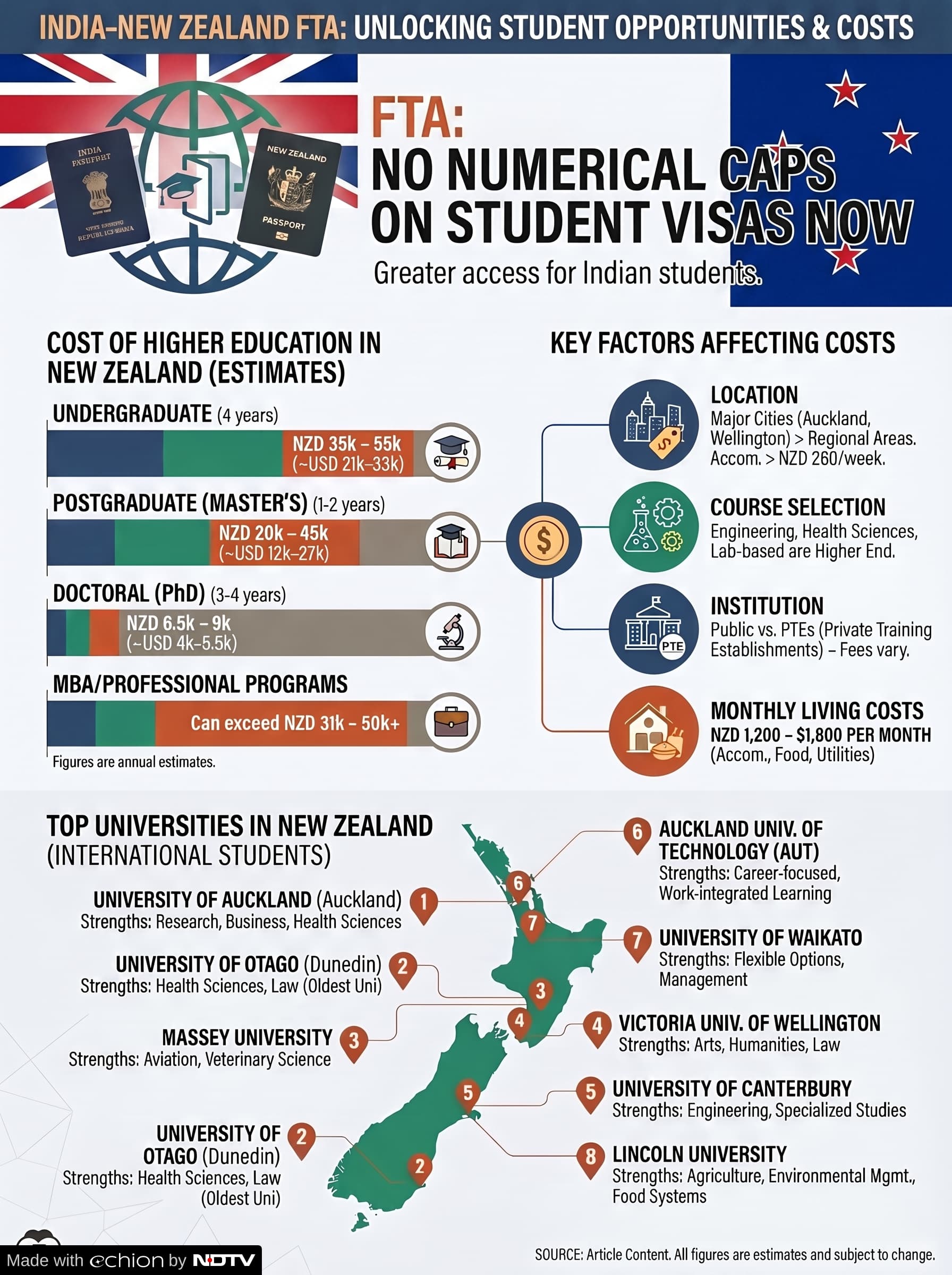
- No strict numerical caps on student-linked visas now.
These changes give students more confidence that their time in New Zealand can lead to real job opportunities.
Amarpal Chadha, Tax Partner EY India, "The India-New Zealand FTA marks an important step in formally embedding skilled people mobility within a trade framework, through a dedicated temporary employment entry visa pathway allowing up to 5,000 Indian professionals to work in New Zealand for stays of up to 3 years. The inclusion of high demand sectors such as IT, engineering, healthcare, alongside iconic Indian occupations like AYUSH practitioners, yoga instructors, reflects a deliberate focus on services-led growth and workforce collaboration."
He added, "In addition, the introduction of an annual Working Holiday Visa quota of 1,000 young Indians, permitting multiple entry for up to 12 months, further strengthens global exposure, skill acquisition and people-to-people linkages between the two countries."
3. Real-World Learning and Jobs
Nikhar Arora, Founder & CEO of Mentoria, says this deal is about more than degrees. It builds a predictable bridge between study and real work, with degrees co-designed with industry and strong scholarship and career linkages. Students now choose smarter - not just prestigious - programs with solid paths into work markets overseas.
"This trade deal transforms the educational ecosystem from a one-way street into a truly integrated global partnership," Arora adds. He believes the agreement will create a talent pipeline that helps students bring new knowledge home to India after working abroad - especially in niche sectors like environmental science and agri-tech.
What Consumers Gain - More Choice, Better Prices
1. Duty-Free Products and Wider Choice: For Indian consumers, the pact means lower tariffs on many imported goods:
- New Zealand will slash tariffs on most of its exports to India, including fruit, wine, wool and wood products.
- Indian companies get 100 per cent duty-free access to New Zealand for thousands of products - from textiles to pharmaceuticals.
This can lead to better access and choice of quality goods for Indian buyers.
2. Impact on Food and Pricing: Raghunandan Saraf, Founder and CEO of Saraf Furniture, says the deal could help Indian agri and dairy consumers make more informed pricing choices. "Indian consumers could get access to a wide range of imports from markets in New Zealand once trade restrictions and tariffs begin to fall, particularly in the imports of dairy, food products, and wellness and agricultural products. This broader market availability and competition among sellers would allow for consumers to enjoy more price and quality options for goods and lower costs of production."
He added, "The removal of trade barriers and greater ease of compliance would also allow Indian entrepreneurs to direct their goods and services to an integrated trade market and relax a lot of the compliance challenges that they have faced in the past."
India-New Zealand Pact: Balanced Growth, Consumer Protection
The government has safeguarded sensitive sectors like dairy, edible oils and key agricultural products. India has chosen not to open all markets fully, protecting farmers and local producers while still gaining global linkages.
Agneshwar Sen, Trade Policy Leader at EY India, calls the pact a "significant win" for India's broader economy. "It opens mobility pathways for Indian professionals in IT, healthcare, engineering and education, while supporting India's ambition to be a Global Food Hub."
Track Latest News Live on NDTV.com and get news updates from India and around the world

