





For several decades, the rugged and densely forested Karrigutta hills symbolised the reach of Maoist insurgency along the Telangana-Chhattisgarh border.
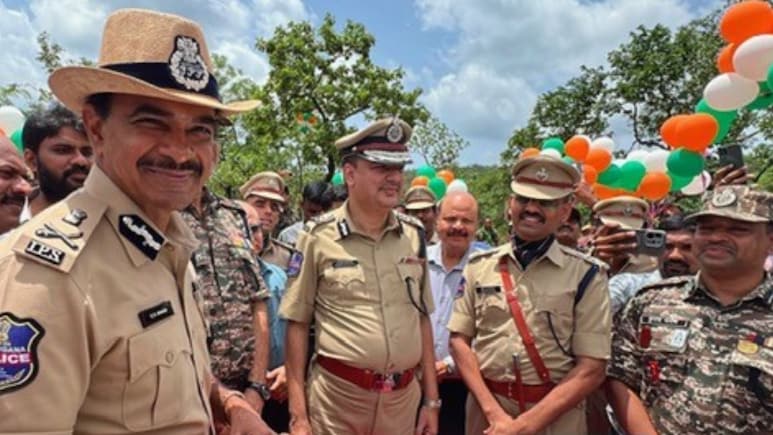
On Monday, Telangana DGP CV Anand's visit to the once-inaccessible stronghold of the Maoists showed how the region is now moving from a battlefield to a zone of roads, connectivity, tourism and development.
A landmark 21-day Operation Kagar, which became the turning point of left-wing extremism in Telangana and Chhattisgarh's Bastar regions, was launched on April 21, 2025, to flush out Maoist formations from the Karregutta hills.
The operation continued until May 11 and involved a massive mobilisation of central and state forces. Security forces reported 21 encounters, the deaths of 31 Maoists, recovery of 35 weapons and nearly 450 IEDs.
Now the hill and surrounding area are under the full control of police and paramilitary forces, while the state government is slowly but steadily developing the area with roads and other facilities.
The geography explains why Karrigutta became so important to the Maoists. The hill range stretches nearly 60 km along the interstate border, with a width of roughly 5-20 km. Its steep slopes, rocky terrain, caves, dense forests and difficult access made it a formidable defensive position.
Security agencies estimated that around 300-350 armed cadres had established themselves in the hills, including elements of the PLGA and its technical units.
The area had also emerged as a refuge for senior Maoist formations after security forces increased their presence in Bastar.
Operation Kagar was followed by a wave of surrenders. Telangana recorded hundreds of Maoist cadres surrendering, including cadres from Chhattisgarh.
Telangana Police reported that 820 underground cadres surrendered between 2024 and 2026, while 2025 alone saw 509 surrenders. In April 2026, Telangana said it had effectively ended armed Maoist activity in the State after another 42 cadres surrendered.
In April 2026, 47 Maoists from Chhattisgarh, including members of the South Bastar Division, surrendered before Telangana Police, demonstrating how the weakening of the insurgency was spilling across the interstate border.
Against this backdrop, Anand on Monday inspected road works, unfurled the National Flag and released white doves as a symbol of peace.
"After 50 years, peace has returned to this region," Anand said, outlining plans to transform Karrigutta into a tourism destination while respecting environmental and legal requirements.
The DGP said the Pamuru-Chalamadava road had been completed, with further connectivity works planned. He credited the CRPF, Greyhounds, Telangana Police, CoBRA and Chhattisgarh Police for restoring security and assured surrendered Maoists of rehabilitation through financial assistance, land and livelihood opportunities.
Track Latest News Live on NDTV.com and get news updates from India and around the world

