






Months after a burial dispute from Bastar reached the Supreme Court, exposing the deep fault lines between law, faith, and tribal tradition, a fresh and violent clash erupted in Chhattisgarh's Kanker district, turning another funeral into a flashpoint of unrest.
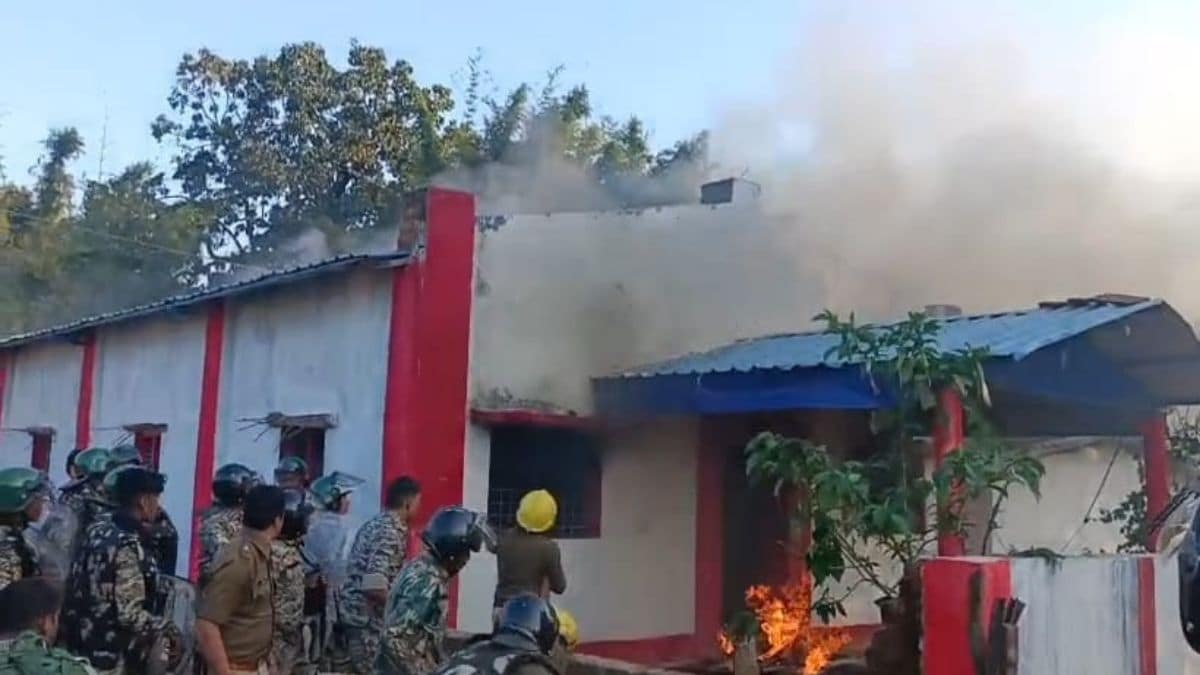
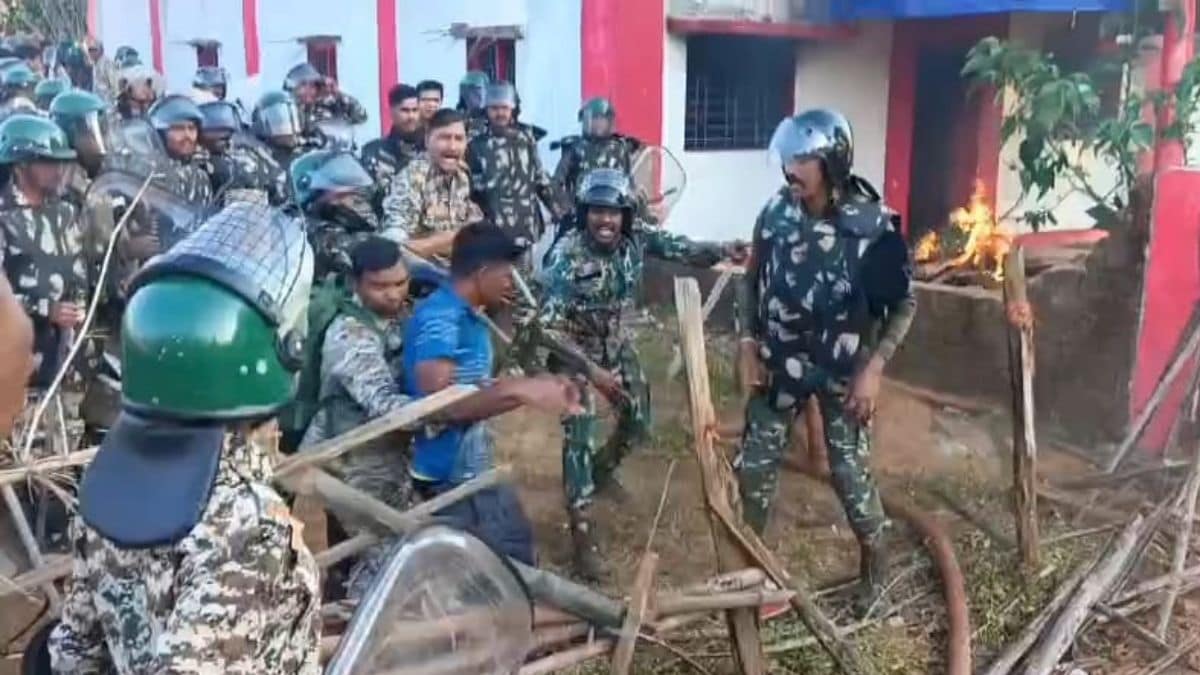
Tension between the tribal community and Christians spiralled out of control over the burial of a body, leading to arson, baton charges, injuries to police officers and journalists, and the imposition of prohibitory orders at Bade Tewda village in Kanker's Amabeda.
The violence unfolded on Thursday when members of the tribal community objected to the burial of Chamra Ram, father of village sarpanch Rajman Salam, whose family had converted to Christianity. What began as protests soon turned violent.
Eyewitnesses said tribals armed with sticks chased members of the converted community. In retaliation, Christians chased and assaulted the tribals. The situation rapidly escalated first, the sarpanch's house was vandalised, then a village church was set on fire.
The violence did not stop there. A mob of over 3,000 people marched to Amabeda and burned another church. The crowd began moving towards a third church, prompting urgent police intervention. As clashes continued despite heavy police presence, forces resorted to a lathi charge to disperse the mob. Several villagers were injured, along with journalists covering the violence.
Senior police officers including ASP Antagarh Ashish Bansod were injured. The administration banned large gatherings and sealed off the village.
The villagers alleged the burial of the sarpanch's father in the same location violated long-standing tribal customs and administrative norms, which require burials to take place only in designated grounds and with community consent.
For two days, villagers protested, demanding the body be exhumed. On Thursday, a joint police-administration team exhumed the body under tight security. The body was later taken out of the district and sent to Raipur.
Hindu organisations appealed to surrounding villages not to allow burial of converted individuals without administrative permission. The Kanker violence mirrors a wider crisis unfolding in tribal Chhattisgarh.
Earlier this year, the burial of Subhash Baghel, a pastor from Bastar, became a national issue, eventually reaching the Supreme Court. His body lay in a freezer for three weeks as villagers refused burial in the ancestral village cemetery.
The Supreme Court delivered a split verdict - one judge calling the restriction discriminatory, the other ruling that burial grounds cannot be chosen arbitrarily and must comply with law and public order.
That case underlined a growing gap between constitutional rights and ground realities in Fifth Schedule areas governed by the PESA Act, where gram sabhas wield significant authority to protect tribal traditions.
In Kanker district alone, pastors and priests have been banned from entering 14 villages, with boards citing the Fifth Schedule and PESA Act. Villagers argue this is necessary to protect tribal identity and culture, while Christian families say they are being socially boycotted even relatives are afraid to visit them.
With over 350 burial-related disputes reported in Chhattisgarh in the last two years, especially in Bastar and Kanker, the issue is no longer about a single grave. It is about identity, faith, land, tradition, and power.
Track Latest News Live on NDTV.com and get news updates from India and around the world

